


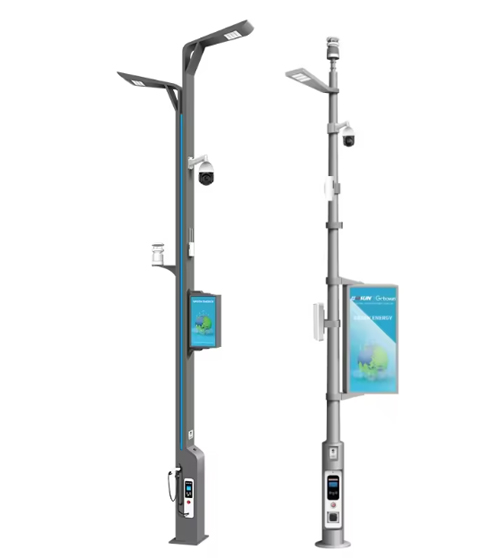
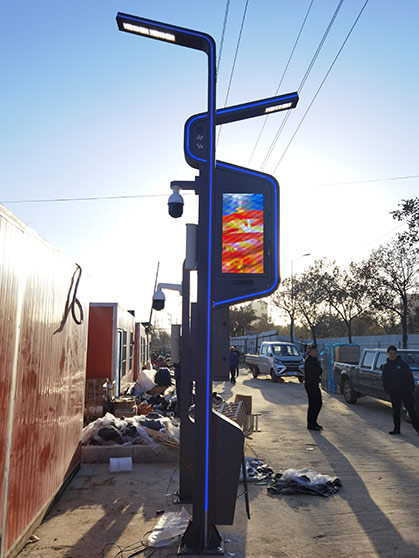
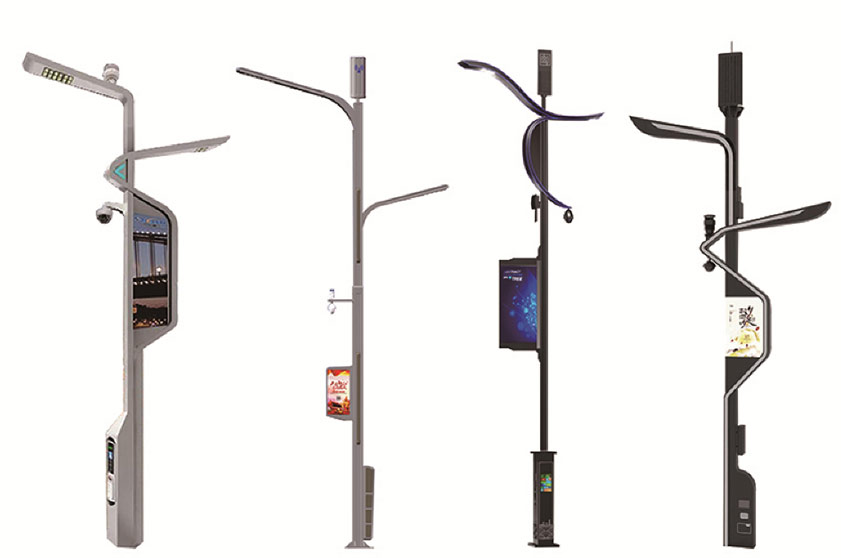
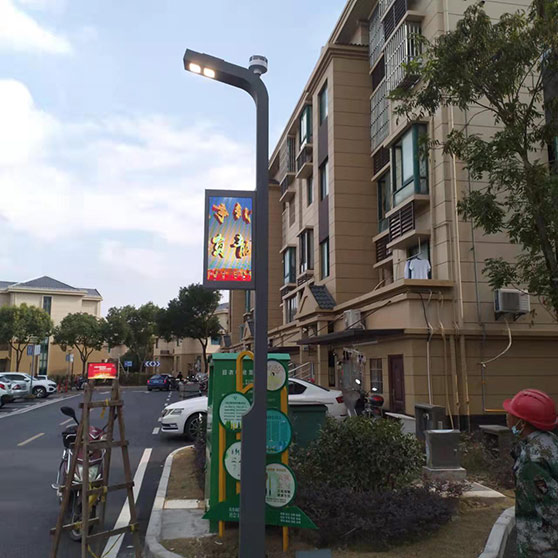
A smart street light with CCTV is best specified as a steel pole assembly plus defined equipment interfaces. A buyer should identify the selected camera and luminaire, their positions and masses, wind-facing data, power and data routes, bracket connection, service access and base/foundation design basis. The pole proposal can then be checked against the actual equipment. A generic “CCTV-ready” label does not prove that a particular camera will fit, that its view will be unobstructed or that its network is operational.
The order must separate what Jieyao is quoting from what the project owner or another contractor supplies. Depending on the agreement, the pole, arms, brackets, doors or anchor interface may be included; camera, luminaire, control software, network service, utility connection, civil works and commissioning are not assumed to be included. Final supplied scope and acceptance records belong in the quotation and approved drawings. No public safety, crime-reduction, energy-saving or service-life result follows automatically from mounting a camera on a light pole.
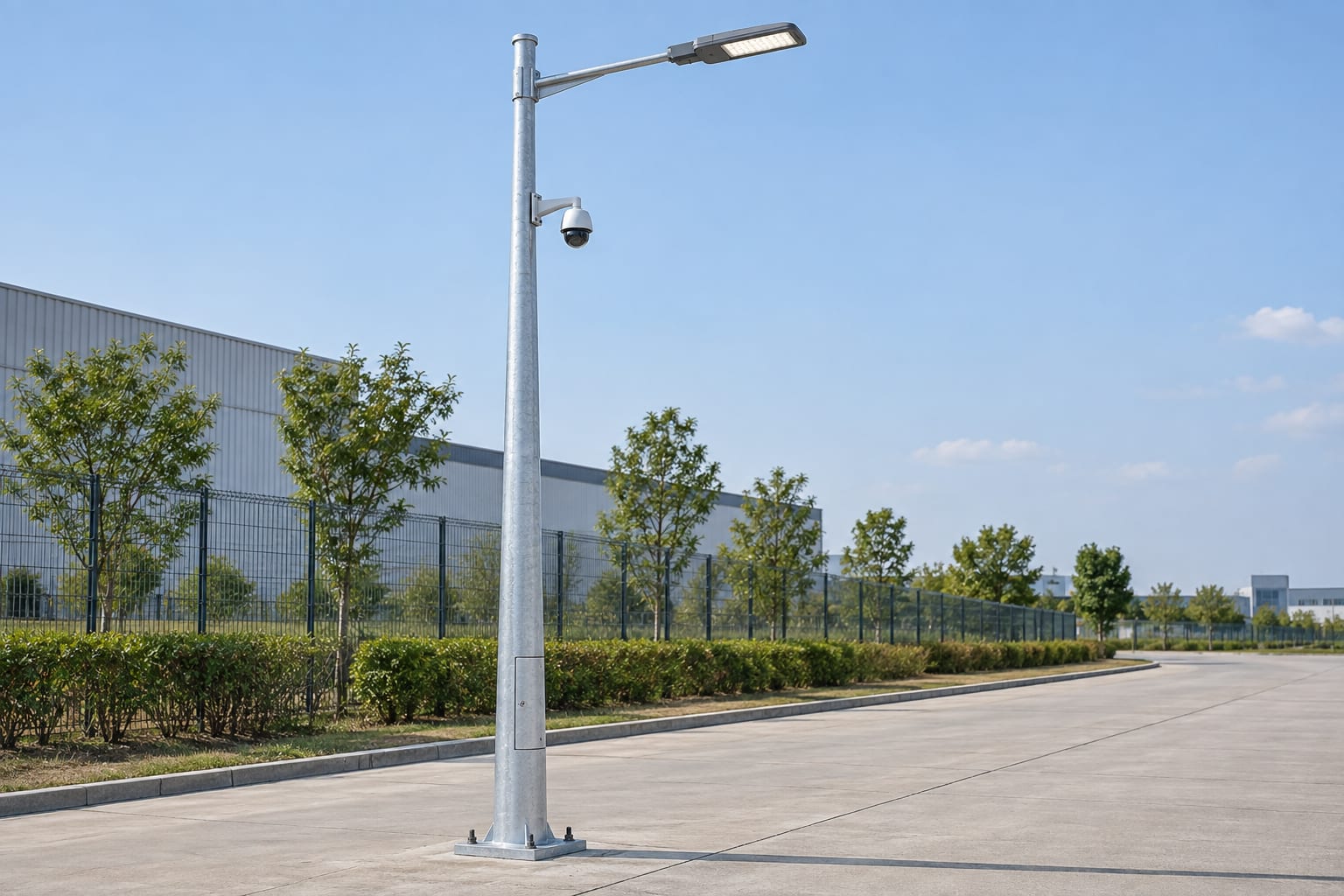
The camera needs a mounting height, azimuth, tilt envelope and maintenance reach that work with the desired view and road geometry. The lighting designer independently coordinates luminaire position and optical aiming. Do not force both devices onto one bracket without checking load path, vibration, access and replacement space. Put every selected or reserved device on a common elevation drawing so clashes are visible before fabrication.
The camera and luminaire brackets should connect through approved structural details. The pole designer needs the combined equipment mass, projected-area information required by the governing wind method, bracket reach and attachment elevation. A retrofit to an existing pole also needs the original drawing and condition survey; matching diameter alone does not establish spare structural capacity. The replacement and retrofit site-survey checklist covers that separate field investigation.
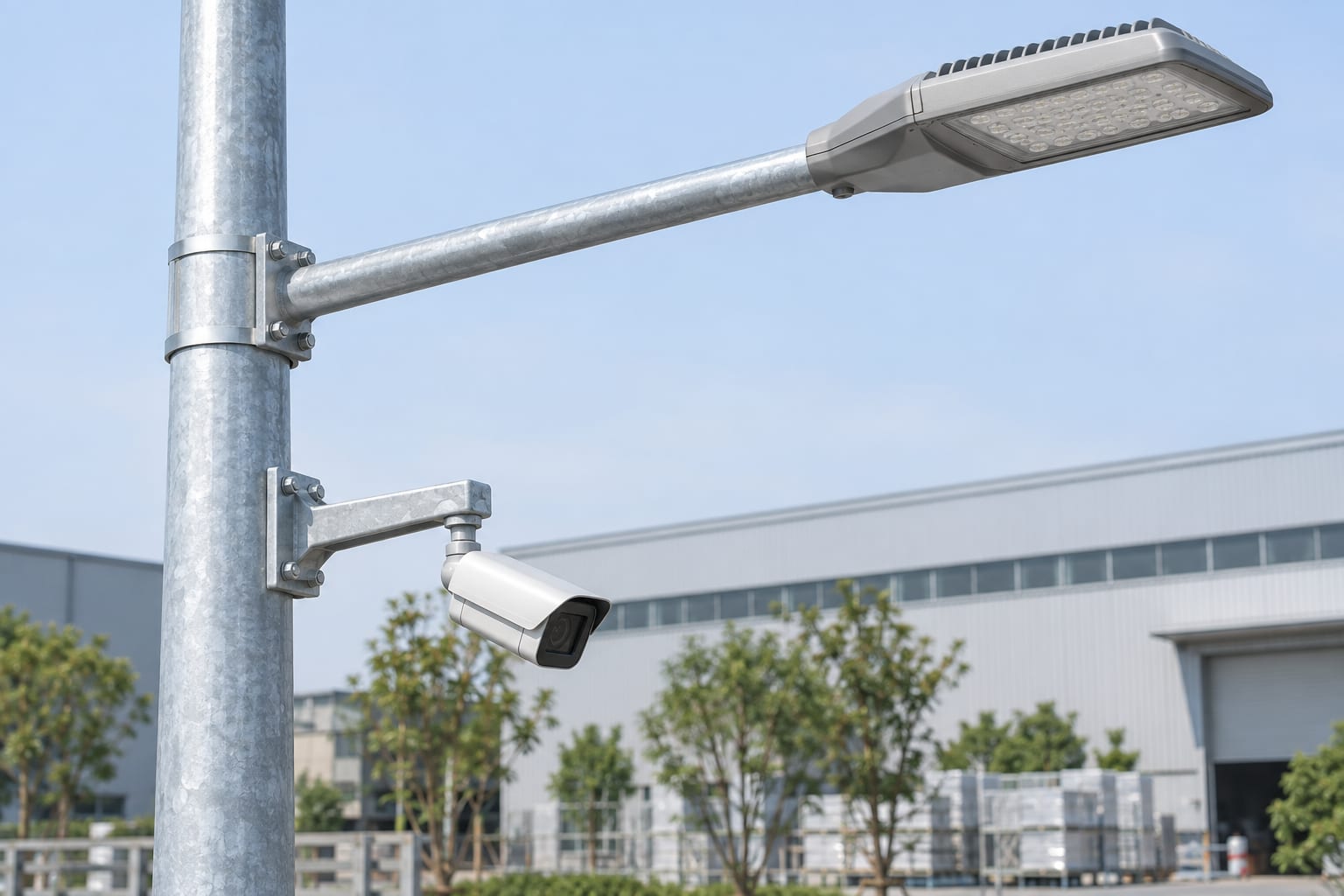
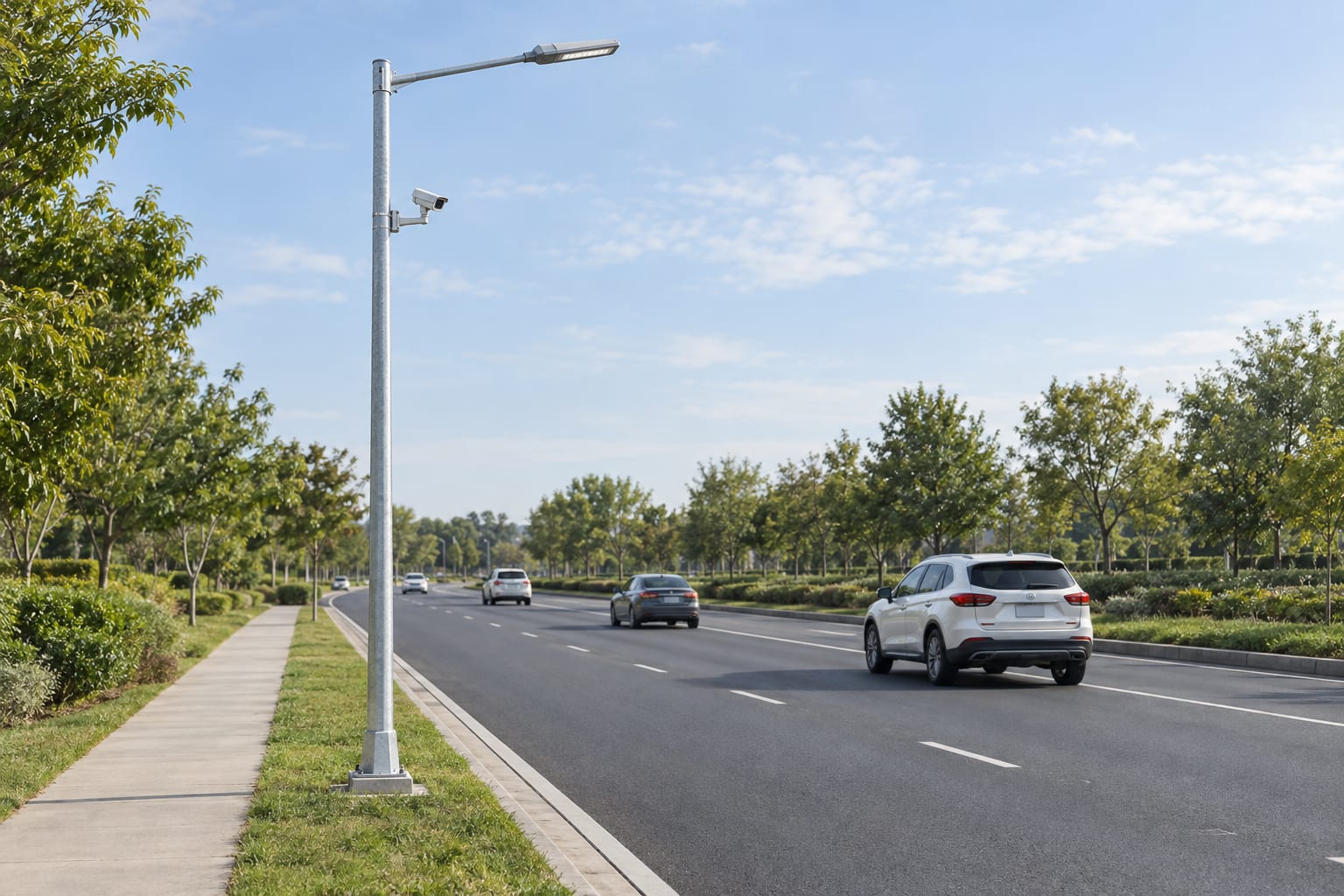
Use the first table as a quotation comparison tool. The entries are questions to allocate, not blanket claims about Jieyao's standard supply. Ask every bidder to mark included, excluded or owner-supplied items and identify whose approved document controls the interface.
| Package element | Confirm in the RFQ and quotation | Required handoff |
|---|---|---|
| Steel pole, arms and brackets | Geometry, material, finish, bolt/weld connections and spare allowance | Approved pole/arm/shop drawings |
| Camera and lens assembly | Exact model, mass, mounting, viewing and electrical/network needs | Equipment data sheet and bracket interface |
| LED luminaire | Model, mass, wind data, arm fit and optical responsibility | Luminaire schedule and mounting detail |
| Power, earthing and data | Supply point, isolation, protected routes, demarcation and cable space | Electrical/network interface drawing |
| Cabinet, door and lock | Compartment size, access, cooling needs and key custody | Service-access and enclosure schedule |
| Base, anchors and civil works | Base reactions, anchor geometry, conduit location and foundation owner | Coordinated structural/civil drawings |
| Inspection and handover | Witness points, fabrication evidence, equipment commissioning responsibility | Record index by asset or pole mark |
This page describes a configurable pole interface. It does not promise a camera protocol, video-management platform, cybersecurity feature, network throughput, ingress rating or certification unless the exact ordered equipment and evidence support that statement. The shop drawing checklist helps the project team close those interfaces before release.
Power, protective earth and data paths should be shown on a coordinated drawing. The electrical and network designers determine segregation, protection and termination requirements for the selected equipment and local rules. A service door must provide usable access to the intended terminals while preserving the pole's structural and corrosion details. A loose loop of cable in a generic rendering is not a routing design. Identify the party that supplies glands, conduits, connectors and internal supports.
Equipment replacement should not require cutting the shaft or blocking the luminaire arm. Ask for bracket fasteners, service clearances and a way to isolate the camera or luminaire as applicable. If a cabinet is added, its mass, door swing and access zone enter the structural and site layout. The pole access-door and internal cable-routing guide explains the basic access decision in more detail.
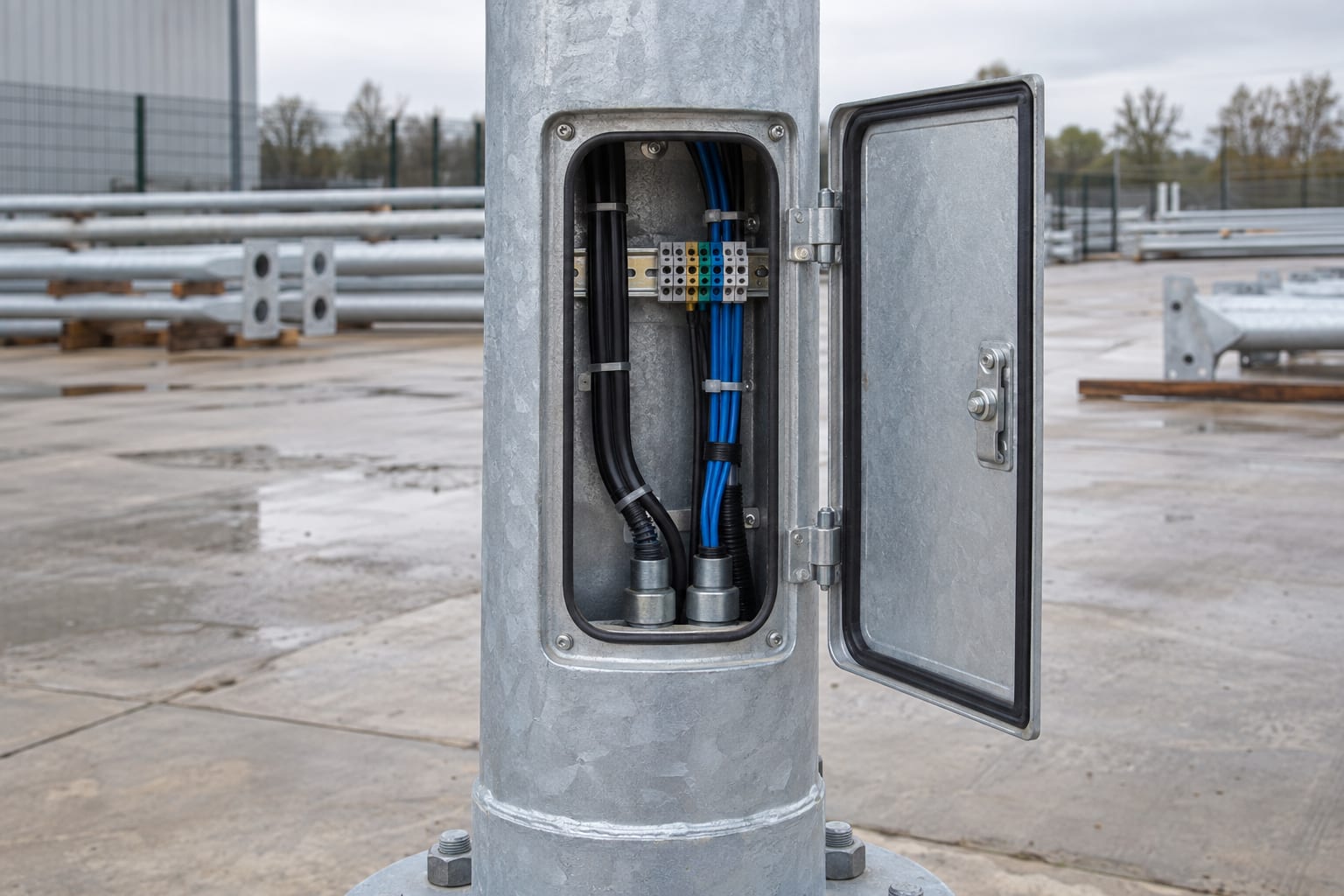
The structural designer must check the pole, attachments, bracket connections and base under the project design basis. Issue the resulting reactions and anchor arrangement to the civil designer. The foundation must suit site conditions and carry the same bolt circle and conduit positions as the approved pole drawing. Do not infer foundation dimensions from a catalog photograph or reuse an existing base without engineering review. The foundation and anchor-bolt guide addresses the civil handoff.
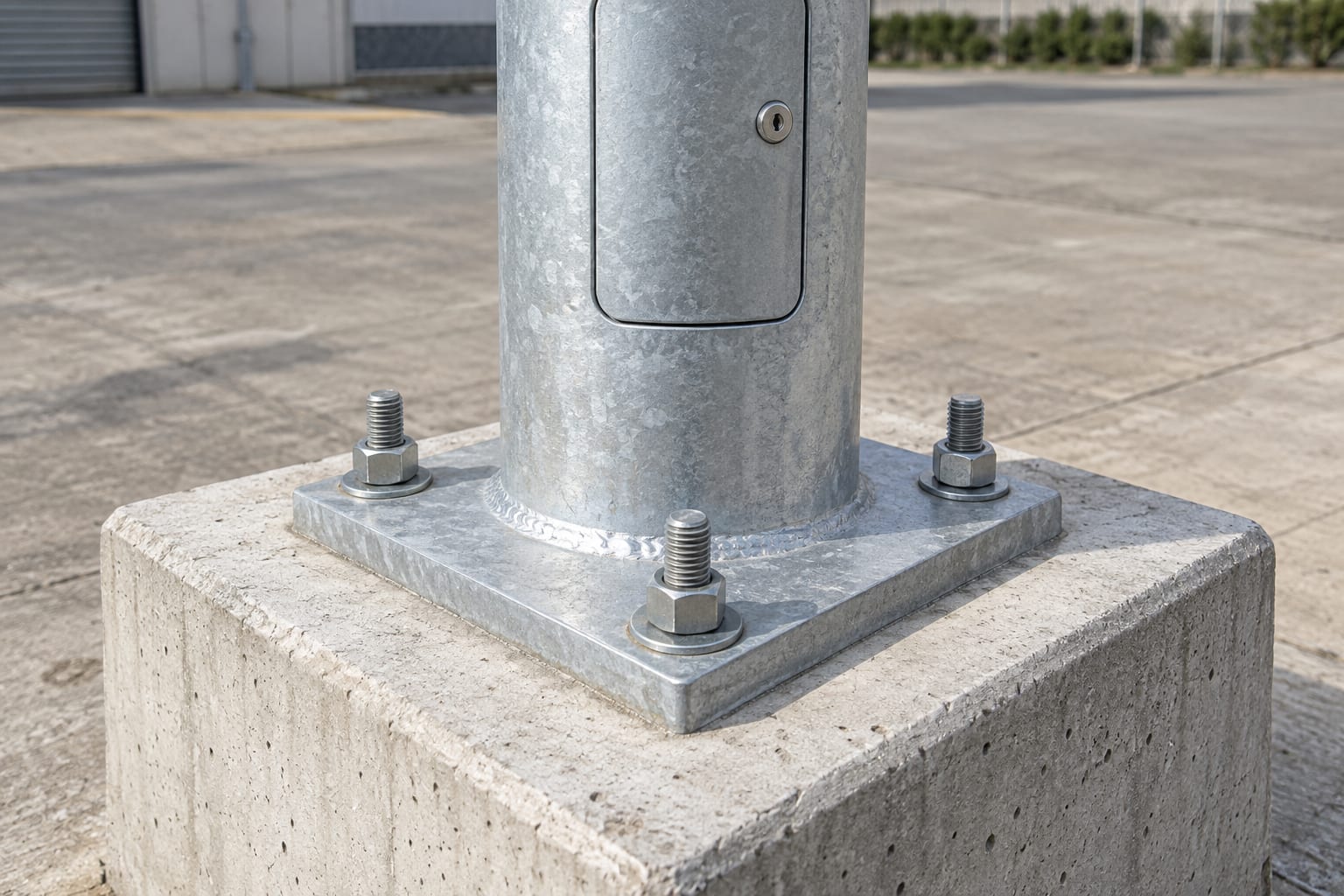
The second table is a decision and evidence comparison, not another supply list. A new configured pole can incorporate the chosen attachments in its initial design. A retrofit may be feasible only after the existing structure, corrosion state, foundations and access are documented. Neither route is universally cheaper or faster.
| Decision point | New configured pole | Existing-pole retrofit |
|---|---|---|
| Structural evidence | Design complete assembly and foundation interface with selected devices | Recover original drawings/loads and assess present condition plus new devices |
| Bracket and cable route | Incorporate approved openings and details before fabrication | Verify safe attachment and feasible protected route without unapproved cutting |
| Foundation and site | Coordinate new reactions, anchors and conduits with civil design | Verify existing base/foundation capacity and condition before reuse |
| Operations | Define camera/light access and responsibilities in the initial package | Plan outage, field access and as-built updates for changed asset |
For either route, freeze the equipment schedule before finalizing the shaft and mounting details. If a camera or luminaire changes, compare the replacement's mass, wind data, mounting and utility needs with the released design. Record the approved revision rather than treating a visually similar replacement as equivalent.
Before release, inspect the steel pole and brackets against the approved drawings, including connection fit, door function, coating continuity and the parts actually included in the order. Keep camera and electrical hardware supply separate in the packing list if those items are provided by others. Mark matched pole/arm/bracket sets for field assembly and protect finished surfaces from handling damage. Supplier factory inspection is not a substitute for site electrical commissioning or camera acceptance.
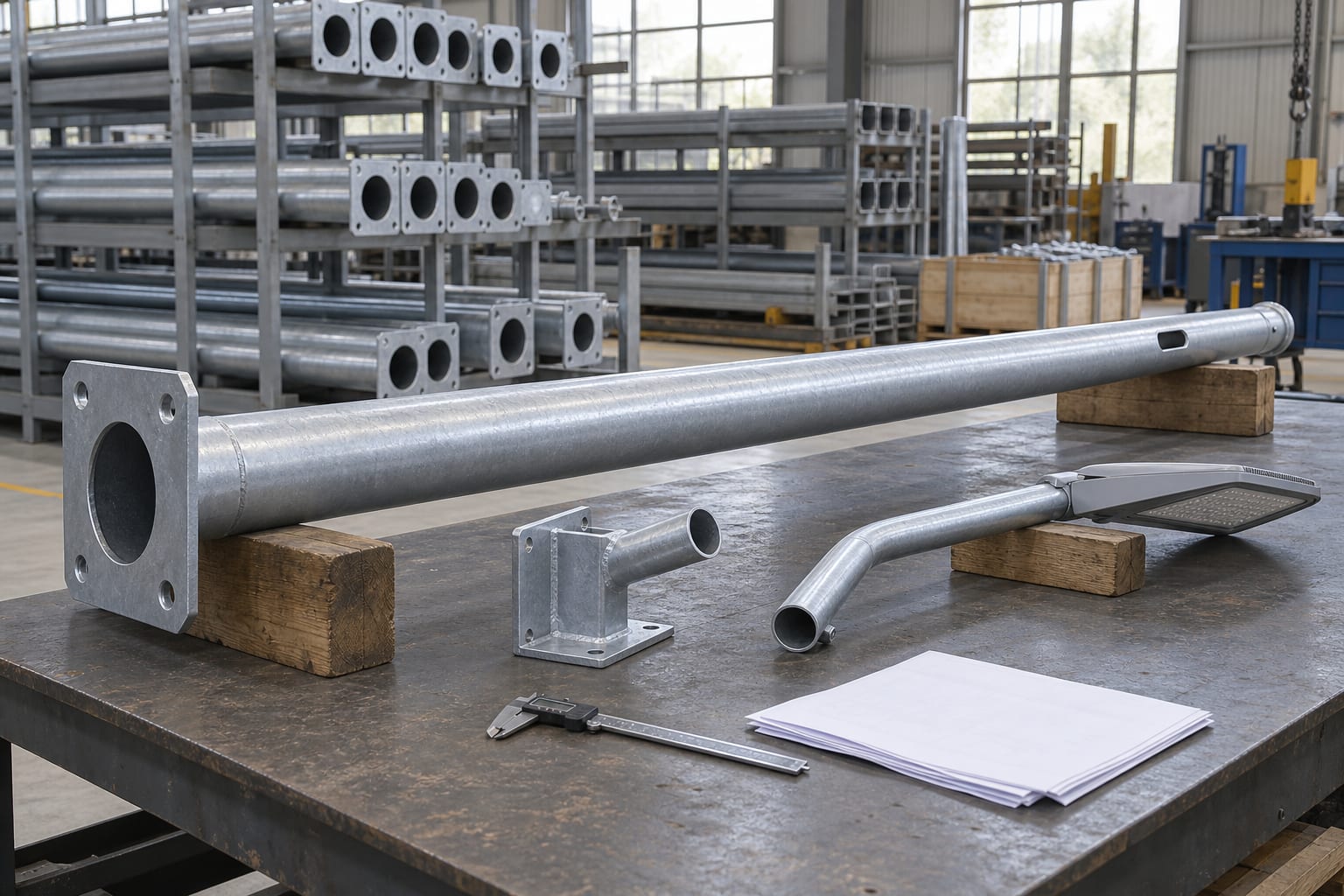
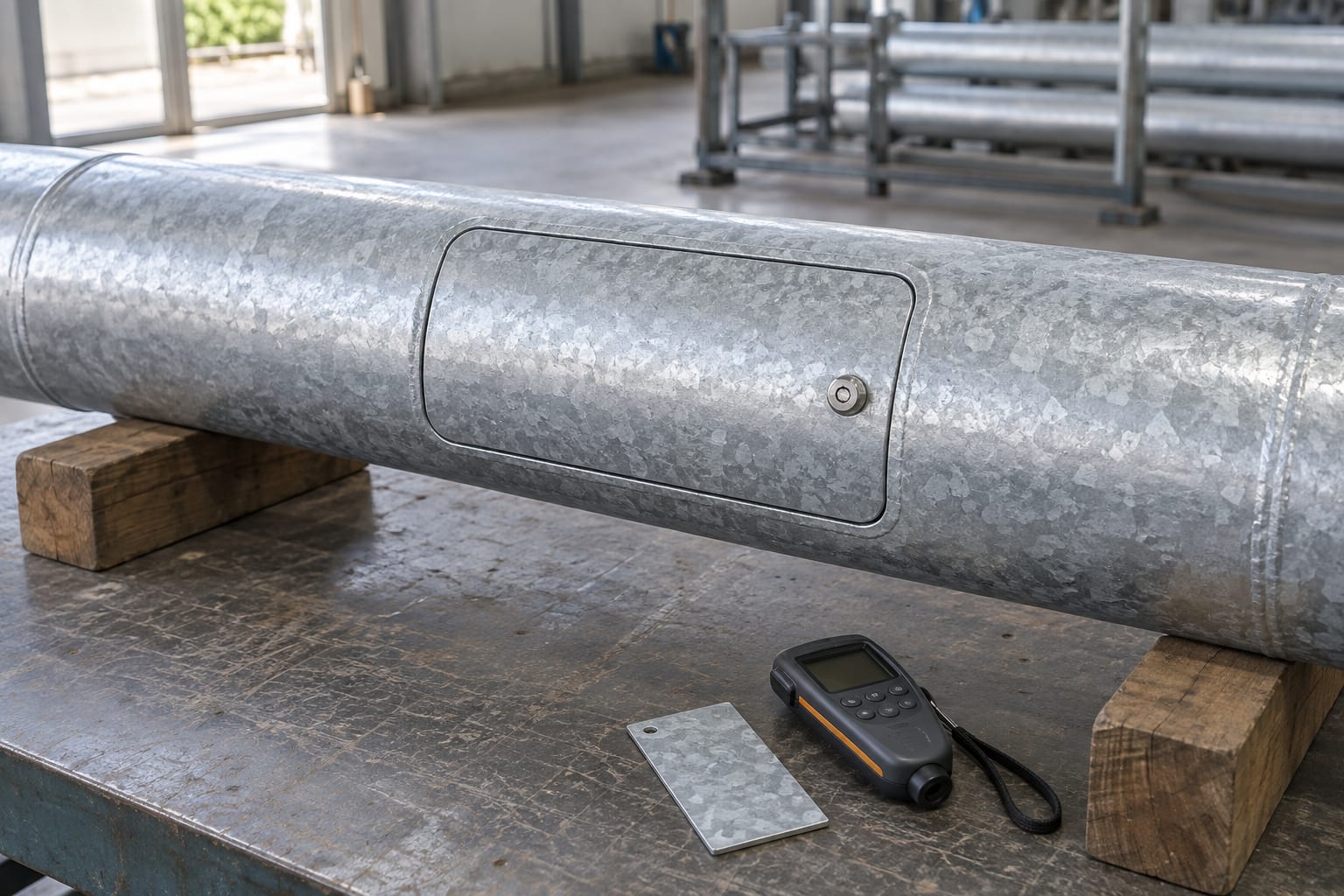
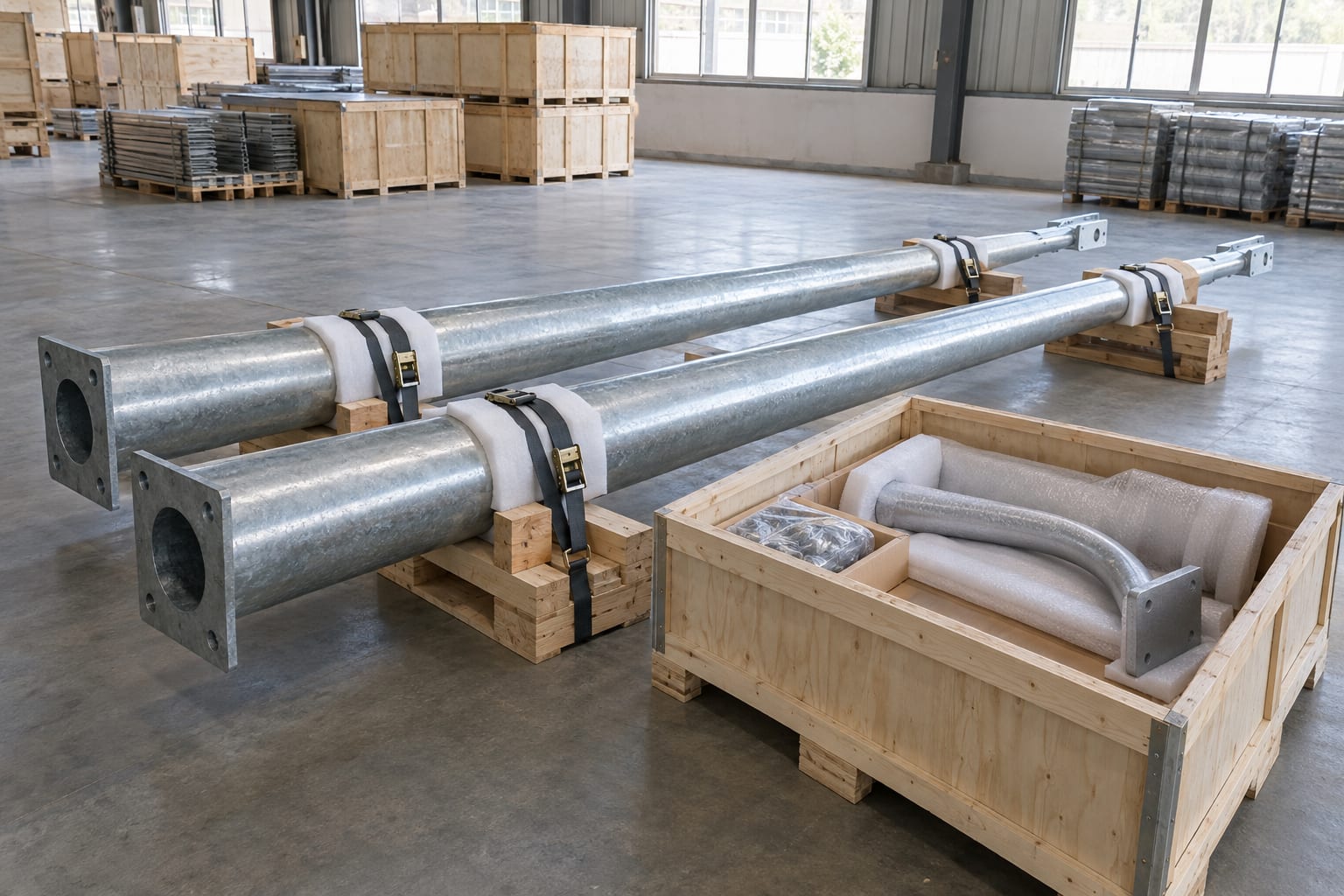
Send a site plan, pole positions, mounting height and arm schedule, camera/luminaire model data, bracket orientation, wind and foundation design basis, power/data demarcation, enclosure needs, finish/environment and the required drawing and inspection deliverables. Contact Jieyao with those controlled inputs for a project-specific pole and interface quotation. The response should state what is included, excluded and subject to later engineering confirmation.
Not unless the quotation explicitly includes the selected camera. The physical mounting interface and the electronic device are separate scope items.
It can be engineered for both when all equipment and site inputs are known. Do not infer capacity from height or appearance alone.
That depends on the contract. Network service, data security, platform software and commissioning need named owners and evidence.
Possibly, after the existing pole, attachments, foundation, corrosion state and cable route are surveyed and checked by the responsible engineer.
At minimum, the coordinated pole/arm/bracket arrangement, equipment and load schedule, service openings, base/anchors and utility routing should use the same controlled revision.
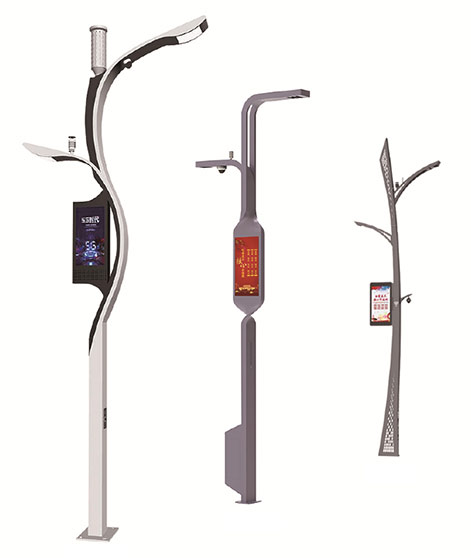
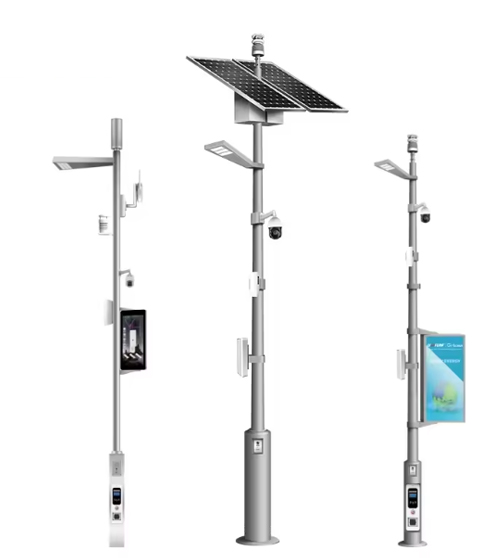
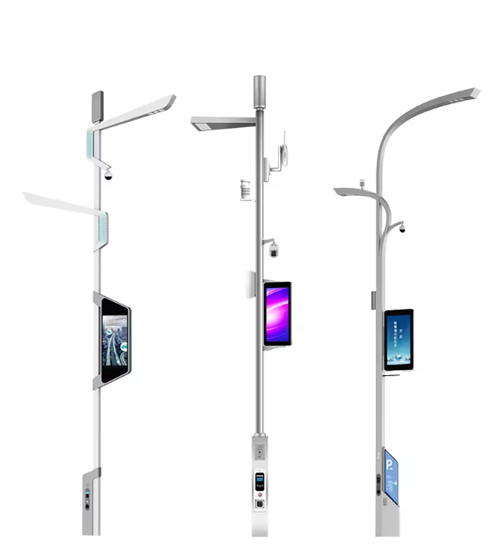
A smart street light integrates IoT technology. Beyond basic illumination, it features sensors and communication modules for remote monitoring, auto-dimming, and environmental sensing, serving as critical infrastructure for smart cities.
Common integrations include 5G micro-cells, CCTV surveillance, EV charging piles, environmental sensors (PM2.5/noise), LED advertising screens, public Wi-Fi, and emergency call buttons.
We support multiple mainstream protocols, including PLC (Power Line Carrier), LoRa, NB-IoT, Zigbee, and cellular connectivity via 4G/5G.
Although multiple functions are integrated, we use a modular design and "plug-and-play" connectors to significantly simplify on-site construction.
The core LED light source lasts over 50,000 hours, and the pole structure lasts over 25 years. Electronic sensors typically have an expected lifespan of 5-10 years.
Yes. We can customize production based on different voltages (110V/220V), communication frequency bands, and certification requirements (CE/UL/RoHS).
Our products are designed for temperatures from -40°C to +60°C. Internal components feature high-grade surge protection and efficient heat dissipation systems.
An SLC is a terminal device installed on each street light that executes dimming commands and feeds back electrical parameters and operational status.
Yes. By integrating light sensors or preset astronomical clocks, the lights can adjust automatically based on ambient brightness and sunrise/sunset times.
Yes. Via the CMS cloud system, you can remotely upload videos, images, or text messages from your office for cluster publishing.
Yes. We follow TALQ Consortium standards to ensure interoperability between smart street lighting devices from different suppliers at the management platform level.
The recommended spacing depends on pole height and lamp power. Typically, a 10m smart pole is spaced 30-35m apart to ensure lighting uniformity.
We possess full R&D capabilities for both hardware and software, extensive international project experience, and a highly competitive manufacturing chain, providing you with a one-stop solution from design to delivery.
Absolutely. By significantly lowering electricity consumption and reducing unnecessary maintenance mileage, it is a vital tool for achieving "carbon neutrality" goals.
Contact Us
Get a custom lighting solution and quotation for your project. Outdoor lighting manufacturer in Yangzhou, ChinaAbout Jieyao LightingYangzhou Jieyao Lighting Equipment Co., Ltd. is an outdoor lighting manufacturer focused on solar street light systems and high mas... Do you have any questions or requests?
Email: jay@jieyaolighting.com

Click to Chat.
Im online now.