

Short answer: Store galvanized lighting poles above the ground on stable supports, keep shaft and accessories identified by pole mark, separate contact surfaces so air can circulate, allow rainwater to drain, and protect openings, threads, electrical parts and finished surfaces until erection. Check condition at receipt and again before lifting. A tight, wet bundle or an untracked arm/base component can create avoidable rework even when the shipment arrived in good condition.
The contractor should identify a level, load-bearing laydown area outside traffic and excavation paths, with vehicle and crane access that does not require repeated reshuffling. Confirm the storage method with the pole drawings, packing list and coating requirements. Use supports that spread load and prevent a tapered shaft from rolling or bearing on an arm, door frame, flange edge or welded attachment. Restrain stored lengths against movement under the site plan. Do not infer a universal support spacing from an article; long or sectional poles need their own handling instructions.
Keep piece marks, drawing revisions and packing references visible. Separate segments, arms, base covers, anchor hardware and fasteners by pole mark or a traceable container ID. A generic pile of similar-looking parts can conceal mismatched spigots, bolt patterns or handed arms. Keep inspection evidence linked to the original delivery record, including photographs of any issue first seen after the handover from the carrier.
| Stored item | Preserve/identify | Check before release to erection |
|---|---|---|
| Pole shaft or mast segment | Mark, orientation, supported length and coating; protect open ends | Straightness, seams, access-door frame, coating and fit-up surfaces |
| Arm, bracket and adapter | Corresponding shaft/location mark and compatible connection | Geometry, fastener set, cable edge protection and coating |
| Base plate and anchor set | Pattern, thread protection and drawing revision | Hole/rod fit, clean bearing faces, intact threads and nuts/washers |
| Access door and small fittings | Protected, labelled kit with keys and fasteners | Gasket, hinge, retention and correct door/shaft match |
| Electrical or smart equipment | Manufacturer packaging and environmental limits | Model, serial, dry enclosure, connectors and interface condition |
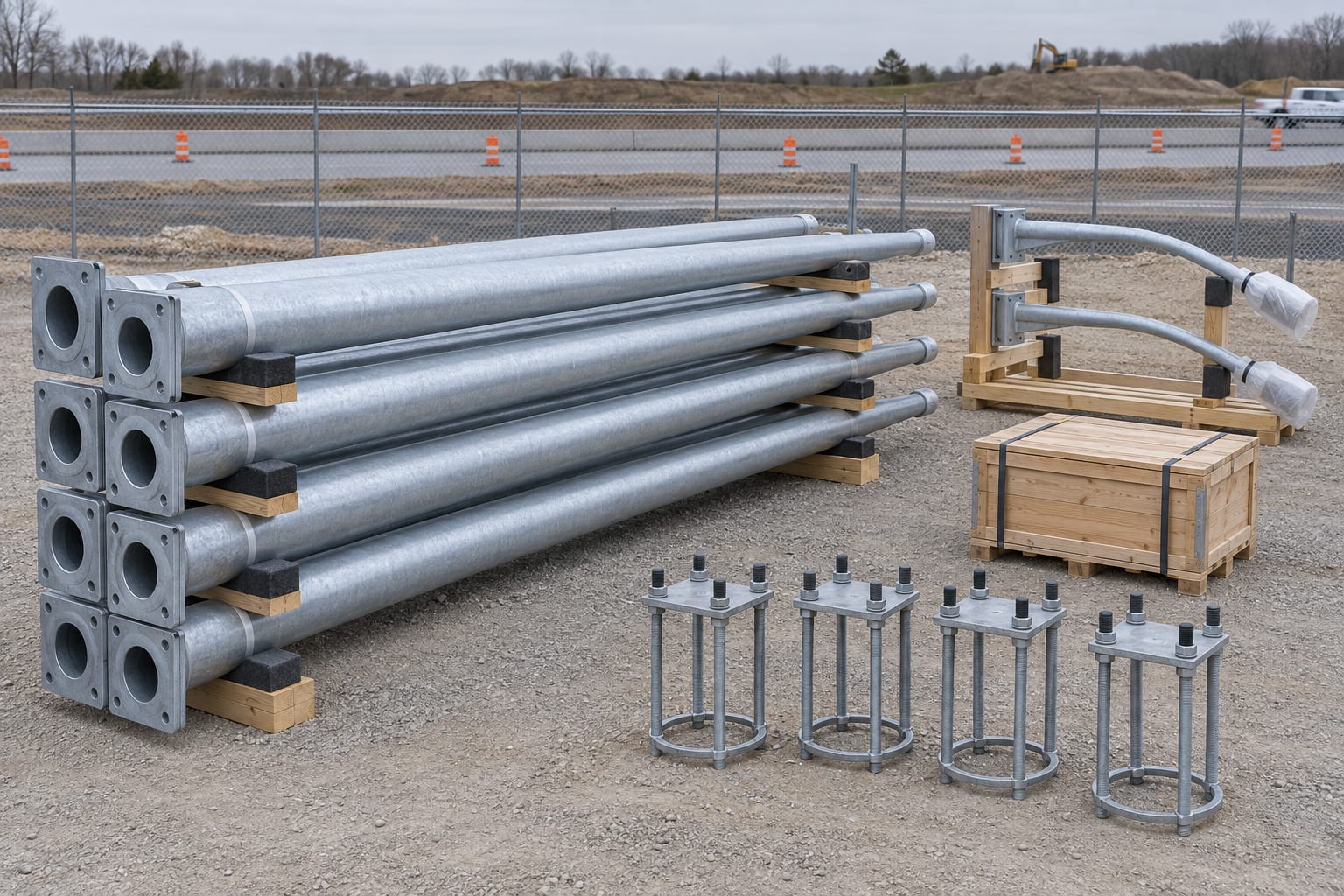
Galvanized shafts on timber supports, with arms and anchor cages kept apart; verify actual piece marks against the delivery record.
For shipment-stage controls before the truck arrives, use the separate export packing and container-loading checklist. This page begins at the site laydown area.
Newly galvanized surfaces need air circulation. The American Galvanizers Association notes that closely nested wet articles can develop wet storage stain because moisture is trapped where airflow is restricted. Under-cover, dry, ventilated storage is preferable. If outside storage is unavoidable, raise and separate the pieces with suitable spacers and arrange drainage rather than wrapping damp galvanized metal tightly for a long hold. Keep water from collecting in shaft interiors or on horizontal plates. A tarpaulin should shed weather without trapping condensation against the coating.
Do not label every pale zinc deposit a structural failure. Record its location and extent, dry and separate the parts, and assess the coating against the applicable project/galvanizing acceptance criteria. Heavy deposits, bare steel, flaking, deep gouges or uncertain coating integrity require an approved inspection and disposition. Do not grind, paint or chemically treat the surface based solely on a web checklist; use the project repair procedure and coating specialist where needed. This guide is about storage prevention and release, not a substitute for the separate coating-inspection and repair guide.
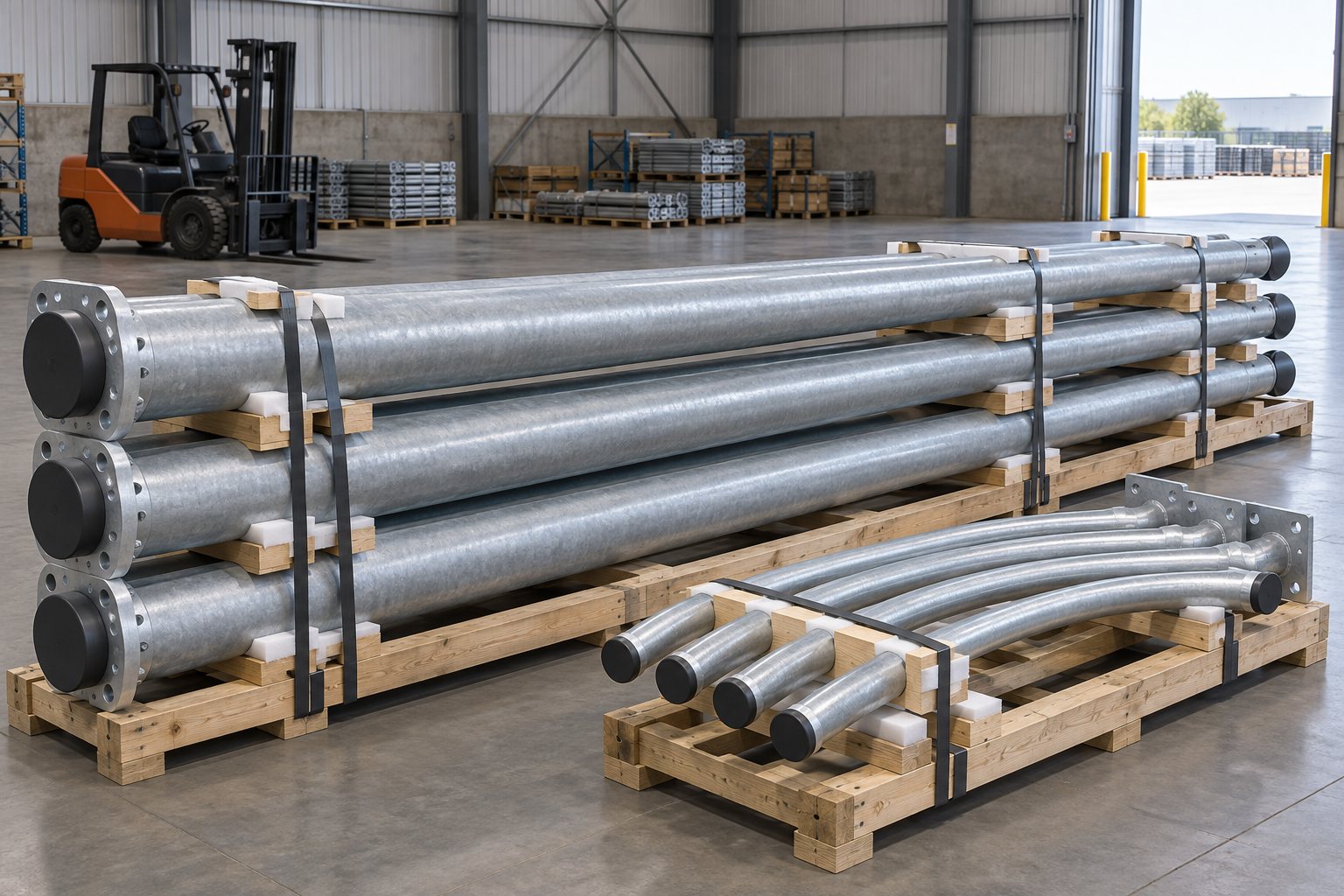
Padded galvanized shafts and separate arms held off the floor on timber supports indoors.
Close or cover access-door and cable openings in a way that does not trap moisture, deform gaskets or leave debris inside. Keep flange and slip-joint fit-up surfaces clean and protect anchor threads from impact and contamination. For a direct-burial pole, inspect the specified buried-zone finish and cable entry before it is obscured. For duplex-coated poles, prevent straps or spacers from abrading the decorative topcoat and follow the approved touch-up method if it is damaged.
Store luminaires, controllers, PV modules, batteries, CCTV/communication equipment and connectors to their manufacturer packaging and environmental instructions rather than assuming pole laydown rules apply to electronics. Record damaged or wet cartons before installation. A pole can be mechanically sound while its associated electrical kit is not fit for commissioning.
| Observation at laydown | Immediate record/action | Release decision |
|---|---|---|
| Wet, tightly nested galvanized parts | Separate, ventilate, drain and photograph affected surfaces | Inspect against coating criteria before stacking or erection |
| Bare steel or deep scrape at support/strap point | Mark location and retain photo/extent | Approved coating repair or replacement disposition |
| Missing or mixed piece marks | Compare packing list, dimensions and drawing revisions | Hold until location/configuration identity is restored |
| Bent arm, damaged door or mismatched flange | Preserve condition and check against approved detail | Engineer/supplier disposition before field modification |
| Damp electrical package or damaged connector | Quarantine the affected kit and document serials | Follow manufacturer and electrical inspector's disposition |
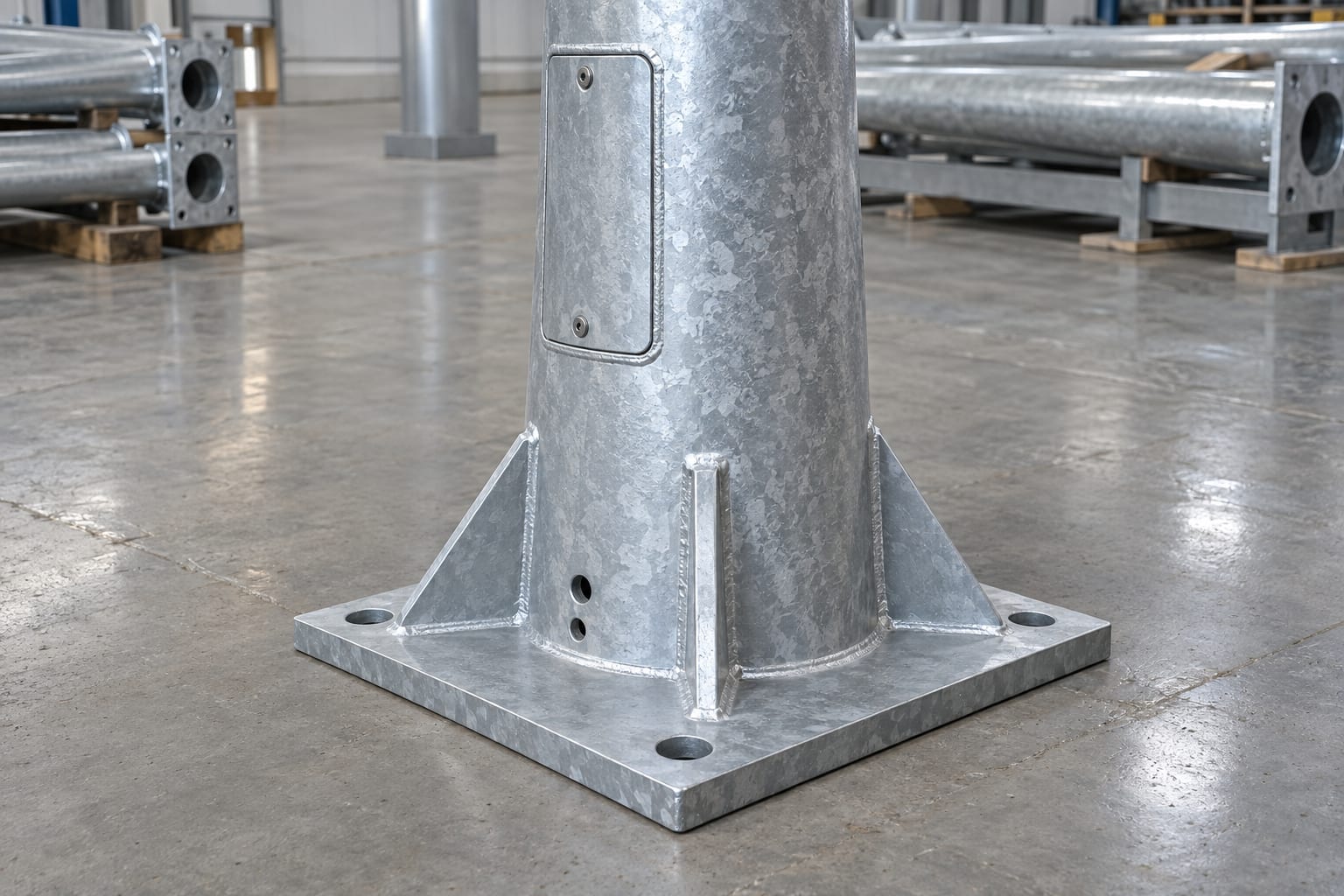
Galvanized pole base, access door and bolt-hole interfaces to protect during storage and handling.
For damage found at the carrier-to-site handover, document liability and disposition using the transit-damage inspection guide; this storage checklist covers deterioration or mix-ups during the site hold.
The release-to-erection check should be a second, documented handoff, not an assumption that the receipt inspection remains valid. Verify the correct pole mark and revision, component completeness, coating/finish condition, openings, fasteners, anchors and any unresolved nonconformance. Remove temporary packaging that could obstruct drainage, cable installation or lifting. Pass the updated condition record to the erection crew and retain it with the project asset file.
The buyer can include a storage plan in the RFQ or installation package: anticipated holding period, indoor/outdoor exposure, pole lengths and supports, identification method, inspection frequency, responsible party and repair approval route. These inputs affect packing, marking and site logistics without inventing a fixed storage life for every finish.
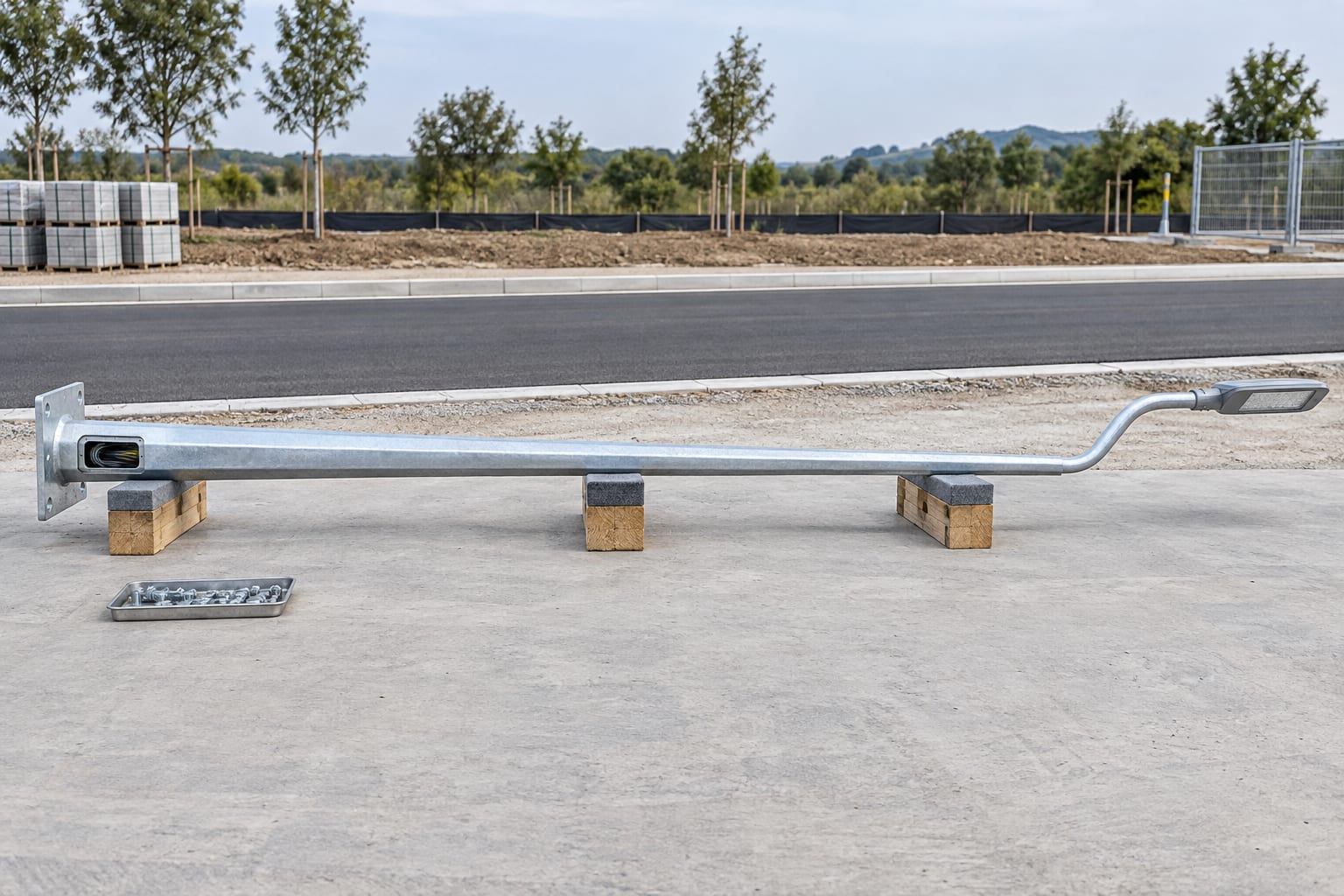
Pole and luminaire arm laid out on ground supports before lifting; verify assembly and hardware against the release record.
Yes, when the project storage plan controls support, separation, drainage, security and inspection. Dry, covered and ventilated storage is preferable; avoid prolonged tight, wet nesting.
Not automatically. Record and assess the extent against the specified coating acceptance criteria. Drying, ventilation and a qualified disposition matter more than guessing from colour alone.
Yes. Keep the original pole mark, drawing revision and associated arms/base/electrical kit traceable through laydown and lifting, especially where multiple configurations look similar.
Not without an approved design disposition. Field changes can affect the structure, coating, cable protection and contractual inspection record.
Contact Us
Get a custom lighting solution and quotation for your project. Outdoor lighting manufacturer in Yangzhou, ChinaAbout Jieyao LightingYangzhou Jieyao Lighting Equipment Co., Ltd. is an outdoor lighting manufacturer focused on solar street light systems and high mas... Do you have any questions or requests?
Email: jay@jieyaolighting.com

Click to Chat.
Im online now.