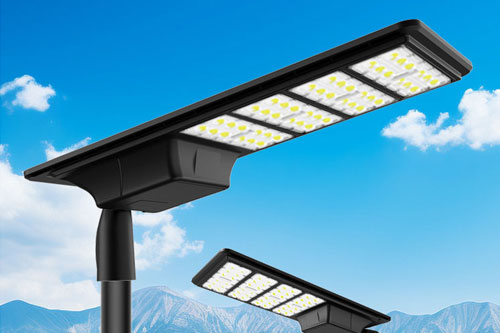


Short answer: A galvanized street light pole fastener schedule should identify each connection—not just one generic “galvanized bolts” line. Record the anchor, arm, luminaire, access-door and accessory hardware against the approved pole type, drawing revision, material and coating requirement. Where stainless steel, aluminum or another metal touches galvanized steel, review moisture exposure, contact area and any isolation detail. The responsible engineer must approve connection strength and tightening; a corrosion checklist is not a structural calculation.
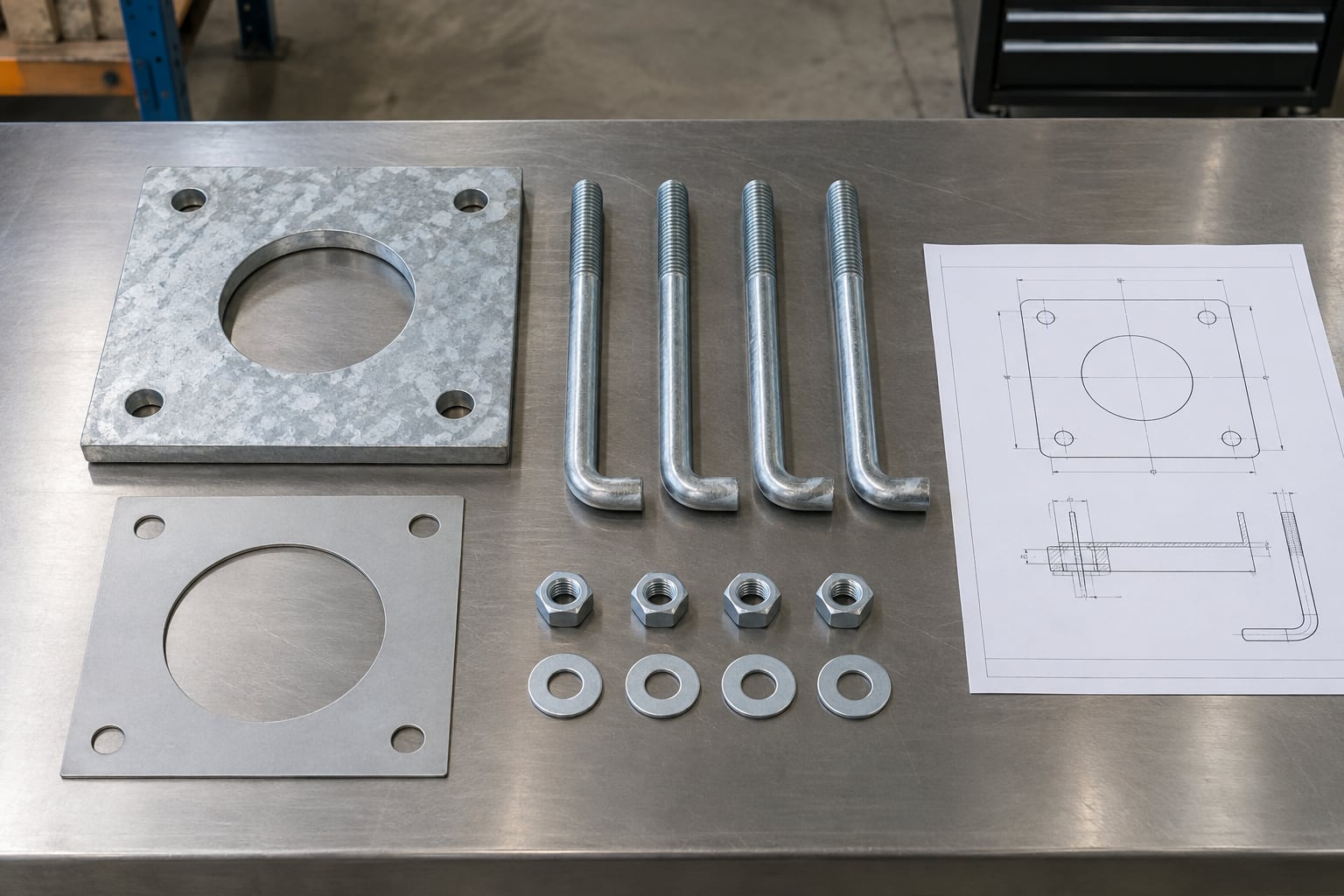
Base plate, anchor rods, nuts, washers and drawing need one agreed interface revision.
Start with the pole shop drawing and equipment list. The foundation and anchor-bolt guide addresses reactions and civil geometry; this page focuses on how the smaller supplied hardware is specified and checked. Do not substitute a nut or washer because its nominal thread appears to fit. Verify grade, dimensions, coating, engagement, locking method and supply responsibility as applicable. For installed poles, match replacement hardware to the asset ID and final approved drawing rather than a catalogue photograph.
| Interface | Buyer and supplier should record | Release check |
|---|---|---|
| Flanged base and anchors | Anchor material/grade, thread, nuts, washers, projection, coating and template reference | Same pole/base revision as the approved civil interface. |
| Arm-to-shaft connection | Bolt or clamp arrangement, hole pattern, bearing surface, locking and coating restoration where specified | Arm geometry and load basis match the released pole type. |
| Luminaire or tenon | Fixture fasteners, spigot size, insertion, rotation control and cable clearance | Actual luminaire interface, not nominal mounting height alone. |
| Access door and small brackets | Screw/hinge material, captive or replaceable parts, sealing, electrical continuity and service access | Door remains secure and maintainable under the project environment. |
| Loose spare hardware | Part code, approved equivalent, bag label, count and matching pole/lot ID | Receiving team can identify the correct installation location. |
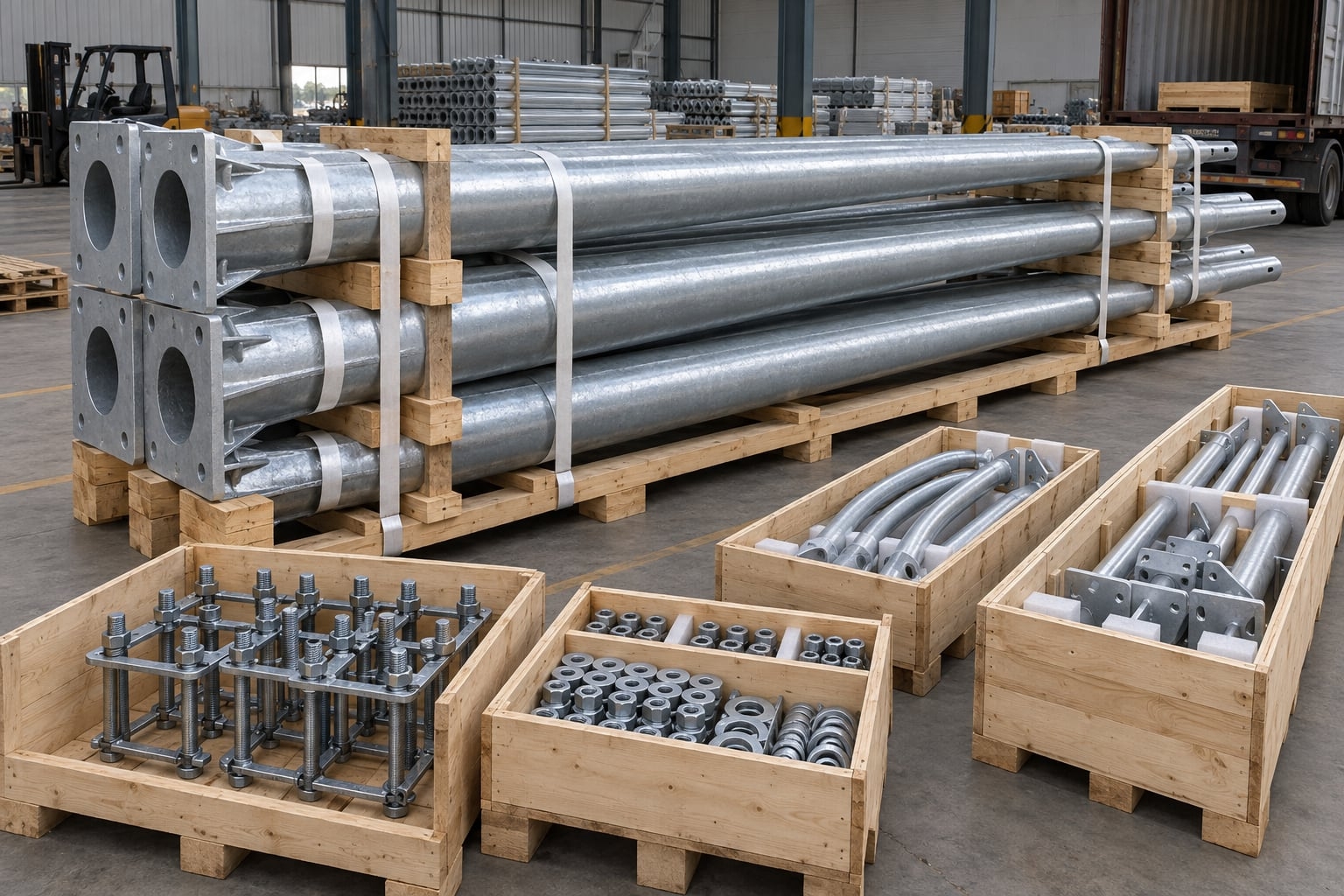
Loose hardware should remain identifiable by pole type and installation lot.
Galvanic corrosion needs an electrically connected metal pair and an electrolyte such as retained rainwater or salt-laden moisture. The contact-area relationship matters: a small zinc-coated component connected to a much larger, more noble metal surface can be more vulnerable than the reverse arrangement. The American Galvanizers Association's dissimilar-metal guidance and the British Stainless Steel Association's bimetallic-corrosion guidance explain why a universal “never mix metals” rule is too crude. Project exposure, drainage, materials and connection design must be reviewed together.
| Question | Evidence to request | Possible design response to evaluate |
|---|---|---|
| Which metals and coatings touch? | Fastener and bracket material, coating specification and contact drawing | Use compatible galvanized components where suitable; otherwise assess an approved separator or coating system. |
| Will the joint stay wet or salty? | Site exposure, drainage detail, crevice and maintenance access | Remove water traps and select a project-appropriate corrosion system. |
| How large is each exposed surface? | Contact area and exposed cathode/anode relationship | Review localized zinc consumption risk rather than relying on material names alone. |
| Will isolation affect the connection? | Structural load path, earthing/bonding and assembly procedure | Approve any insulating washer, sleeve or barrier with the responsible structural and electrical designers. |
| Can the joint be inspected later? | Door access, removable covers, fastener identification and maintenance plan | Keep a record of the selected detail and inspection method. |
Do not add an insulating pad to an anchor or bracket connection without checking bearing, preload, electrical bonding and the approved drawings. The coating inspection and repair guide covers finish acceptance after fabrication or damage; this fastener review should happen before the hardware is ordered.
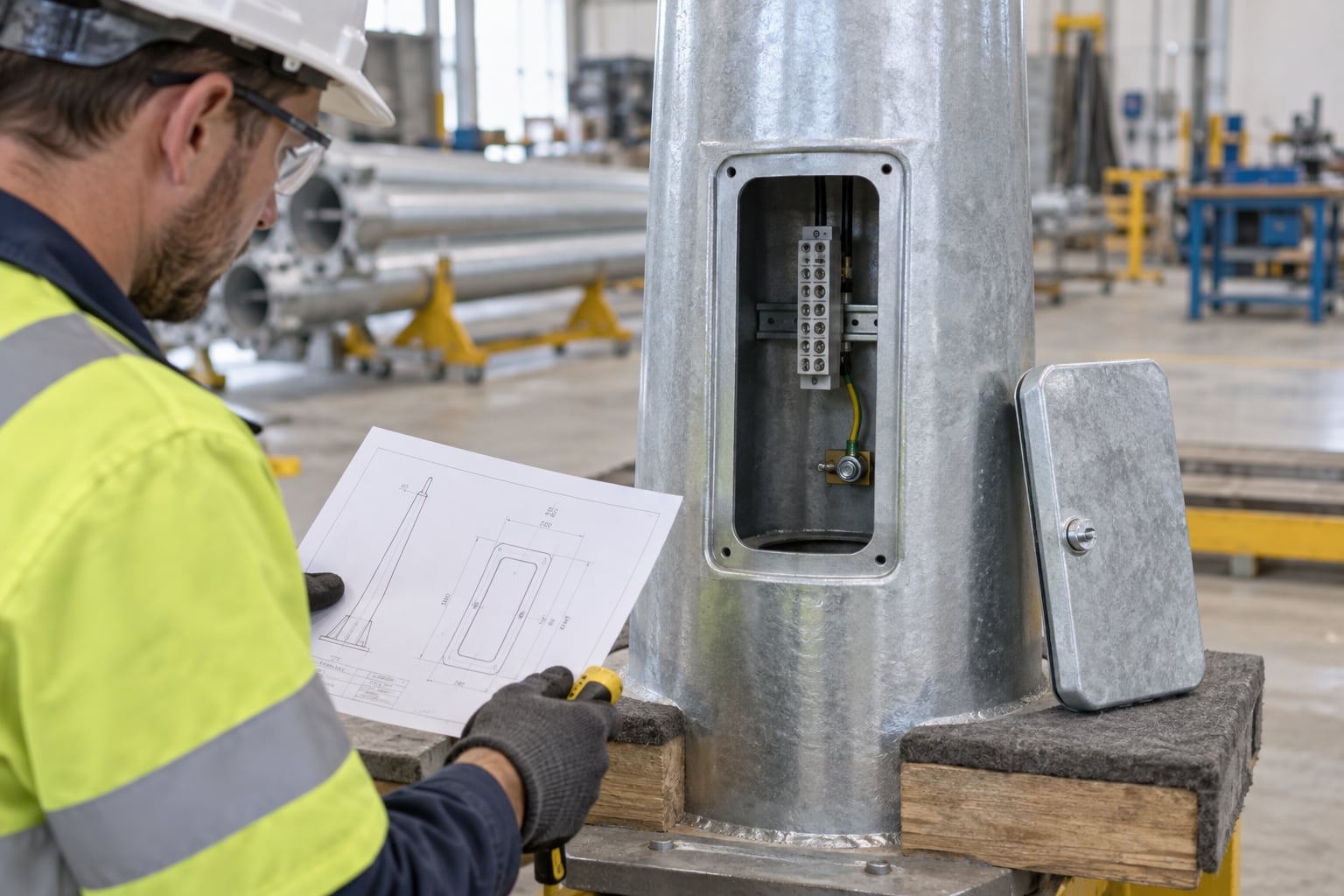
Door hardware must satisfy access, sealing and connection requirements without an unreviewed metal contact.
The installation team should use the project tightening and inspection procedure, not a website torque number. The pole erection checklist addresses fit-up, engagement and final checks; the spare-parts guide explains how to preserve identity when hardware is replaced. Record the installed fastener type, any approved material transition and the location/lot mark in the handover file.
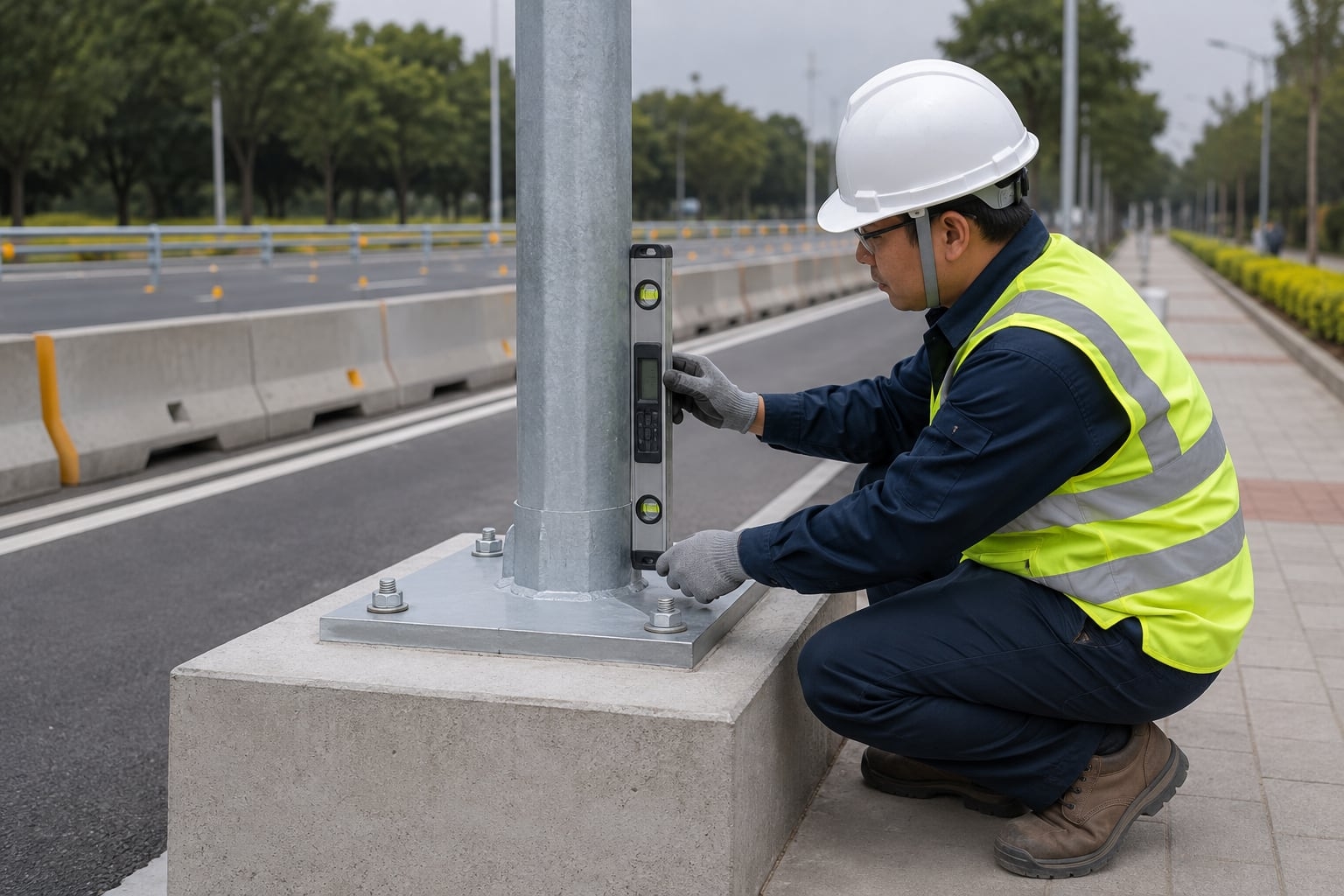
The assembled base connection should be checked as an approved system rather than as loose interchangeable parts.
Sometimes, but the decision depends on exposure, connected metals, contact area, connection strength and any approved isolation or coating detail. Request an interface review rather than a blanket yes or no.
No. The approved connection design and installation procedure must define the method for the actual anchor grade, size, coating and bearing arrangement.
Provide the pole/door ID, thread and length, head and locking arrangement, material/coating, sealing requirement and the latest approved drawing or sample record.
For an RFQ to Jieyao Lighting: Send the pole type and approved drawings, anchor/base schedule, arm and luminaire interfaces, environmental exposure, any stainless or aluminum attachments, electrical bonding requirements and a list of hardware included in the supply. The project team can then review a connection-specific schedule rather than a generic fastener allowance.
Contact Us
Get a custom lighting solution and quotation for your project. Outdoor lighting manufacturer in Yangzhou, ChinaAbout Jieyao LightingYangzhou Jieyao Lighting Equipment Co., Ltd. is an outdoor lighting manufacturer focused on solar street light systems and high mas... Do you have any questions or requests?
Email: jay@jieyaolighting.com

Click to Chat.
Im online now.