

Short answer: A replacement street light pole component is compatible only when its approved geometry, connection, loading, finish and electrical access match the installed asset or have been re-evaluated for the project. A matching height or visual style is not proof. When ordering spare arms, doors, anchor hardware or an entire pole, use the installed pole ID and approved as-built records as the starting point, then confirm the exact supply boundary with the manufacturer.
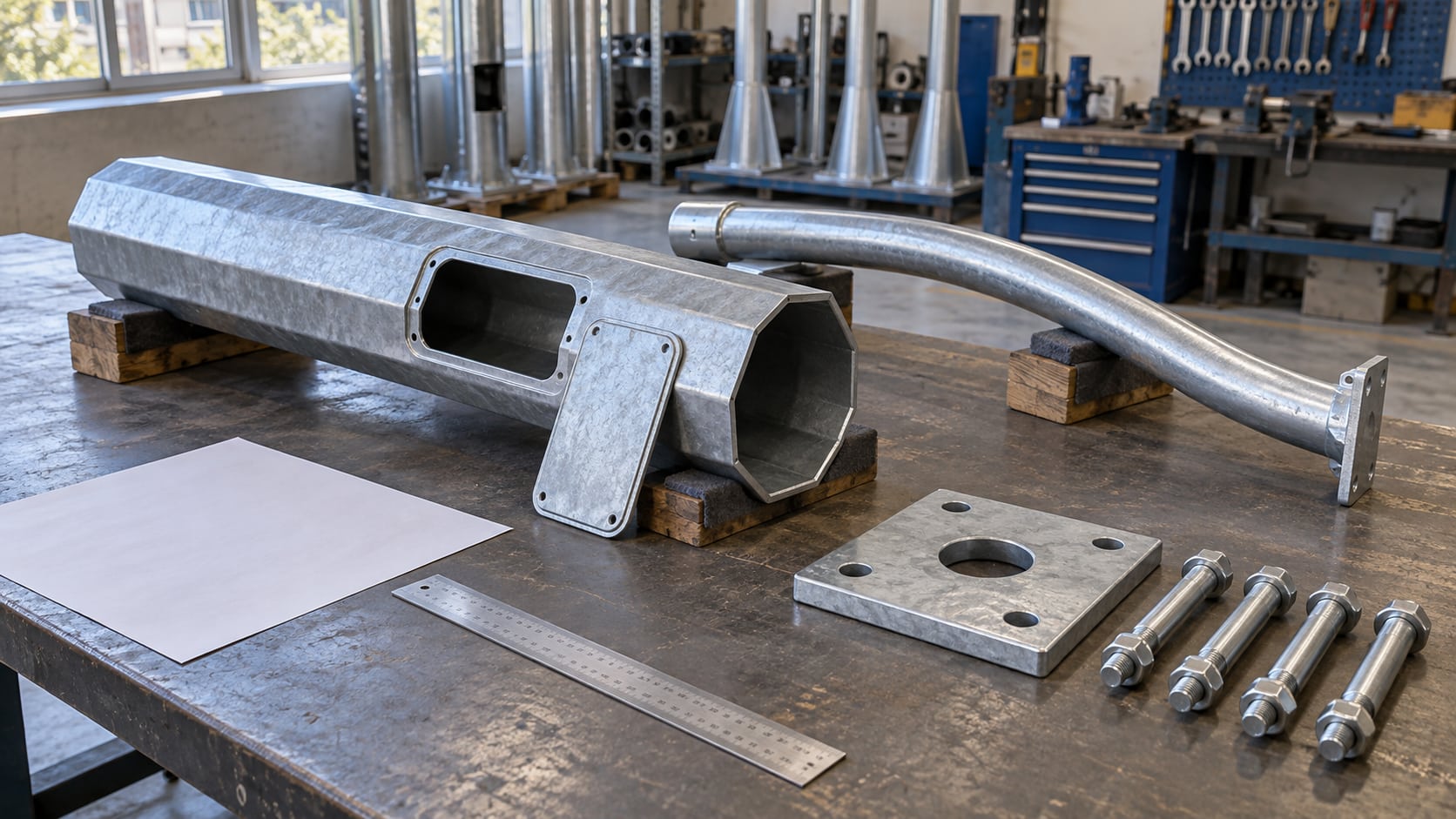
Check component geometry against the installed asset record.
Record the location, asset or pole mark, original manufacturer, purchase-order line, drawing revision and installation date where known. Check whether the pole is a standard repeat configuration or a project-specific variant. For an existing-pole replacement, the owner should also document damage, corrosion, settlement or changes to the attached equipment; an apparently matching spare does not correct an unsuitable foundation or altered loading.
The pole asset register guide describes the record chain from factory mark to installed location. The maintenance decision guide addresses whether a damaged structure should be repaired or replaced. This page addresses how to specify the replacement once that decision is made.
| Record | Why it is needed | If missing |
|---|---|---|
| Asset mark and as-built location | Connects the spare to the actual installed type and site. | Survey and photograph the pole; do not infer type from height alone. |
| Approved pole/arm drawing | Defines shaft form, arm outreach, bracket, flange and access openings. | Measure accessible interfaces and request engineering review. |
| Luminaire/equipment schedule | Defines mounting size, weight, projected area and added devices. | Collect current equipment data before assessing interchangeability. |
| Base and anchor record | Defines bolt pattern, plate, orientation and foundation interface. | Survey the installed base; do not drill or adapt holes without approval. |
| Finish and exposure specification | Aligns corrosion protection and appearance with the site. | Confirm environmental and owner requirements before manufacture. |
| Electrical access record | Defines door, terminal space, cable entry and grounding provision. | Have the installer verify the required access and cable path. |
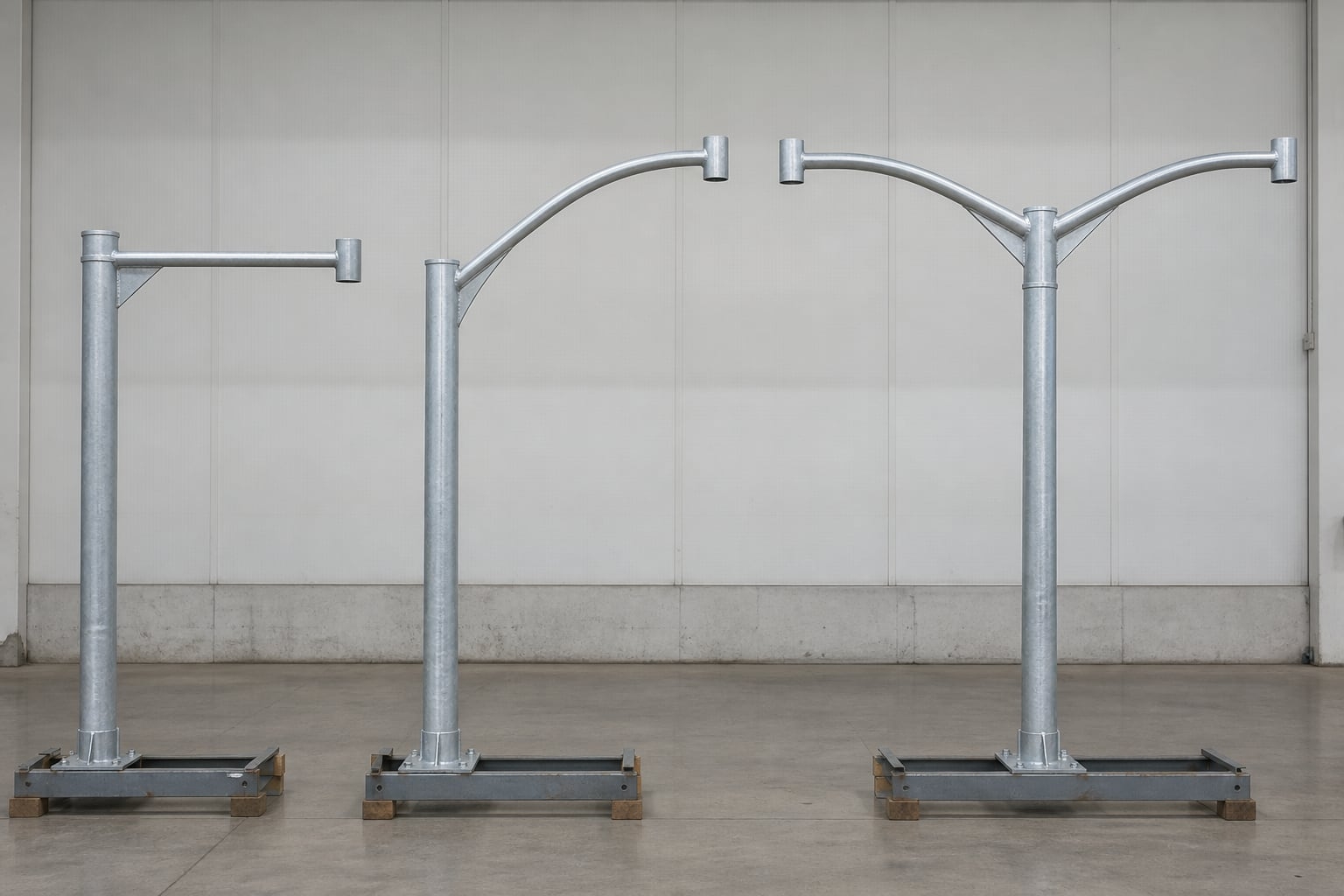
Arm configuration and luminaire position are part of the compatibility check.
A door cover, terminal hardware or luminaire adaptor may be replaceable without replacing the shaft, but only if its fit and intended function are confirmed. An arm or base connection is a structural interface. A different outreach, luminaire or bracket can change the actions on the pole. Do not assume a new arm can be bolted or welded onto an installed shaft solely because the outside diameter looks similar. Reusing an anchor cage with a replacement shaft likewise requires a verified bolt pattern, plate geometry and project engineer's acceptance.
The arm and luminaire interface guide details equipment-side dimensions; the foundation and anchor-bolt guide covers the civil interface. Record which party will assess those interfaces before the spare is ordered.
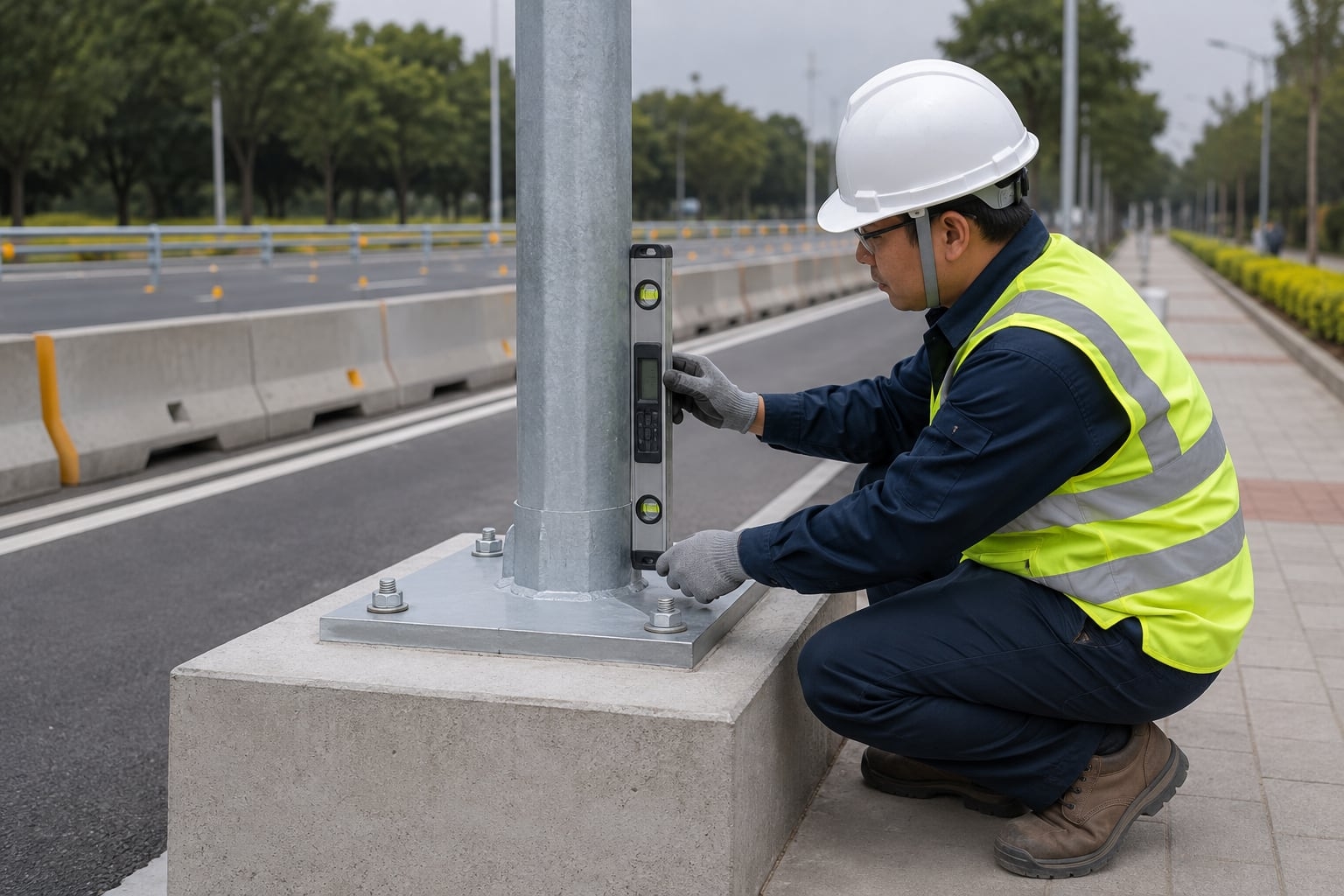
Existing anchor locations cannot be treated as interchangeable without dimensional verification.
| Proposed item | Compatibility checks | Release decision |
|---|---|---|
| Door or service cover | Opening shape, closure, sealing, tamper protection and safe access | Match the original detail or approve a documented substitute. |
| Luminaire adaptor | Spigot or slip-fit size, insertion, clamp, orientation and cable route | Confirm with the luminaire and pole drawings. |
| Arm assembly | Connection, outreach, angle, fixture load and finish | Require structural/interface review for any changed configuration. |
| Replacement shaft | Height, taper, door, arm, base, wind inputs and equipment schedule | Issue a controlled new pole drawing for approval. |
| Anchor hardware | Size, embedment, grade, projection, template and foundation condition | Coordinate with the foundation designer; do not infer from the plate alone. |
Ask for a quotation that cites the existing asset ID and approved drawing revision. State whether the supply includes the bare part, coatings, fasteners, anchor items, internal electrical accessories or a complete pole assembly. Require a distinct spare mark and packing-list reference so the site team does not confuse it with another height or arm type. On receipt, check the mark, protected finish, connection dimensions and supplied accessories against the release drawing before installation.
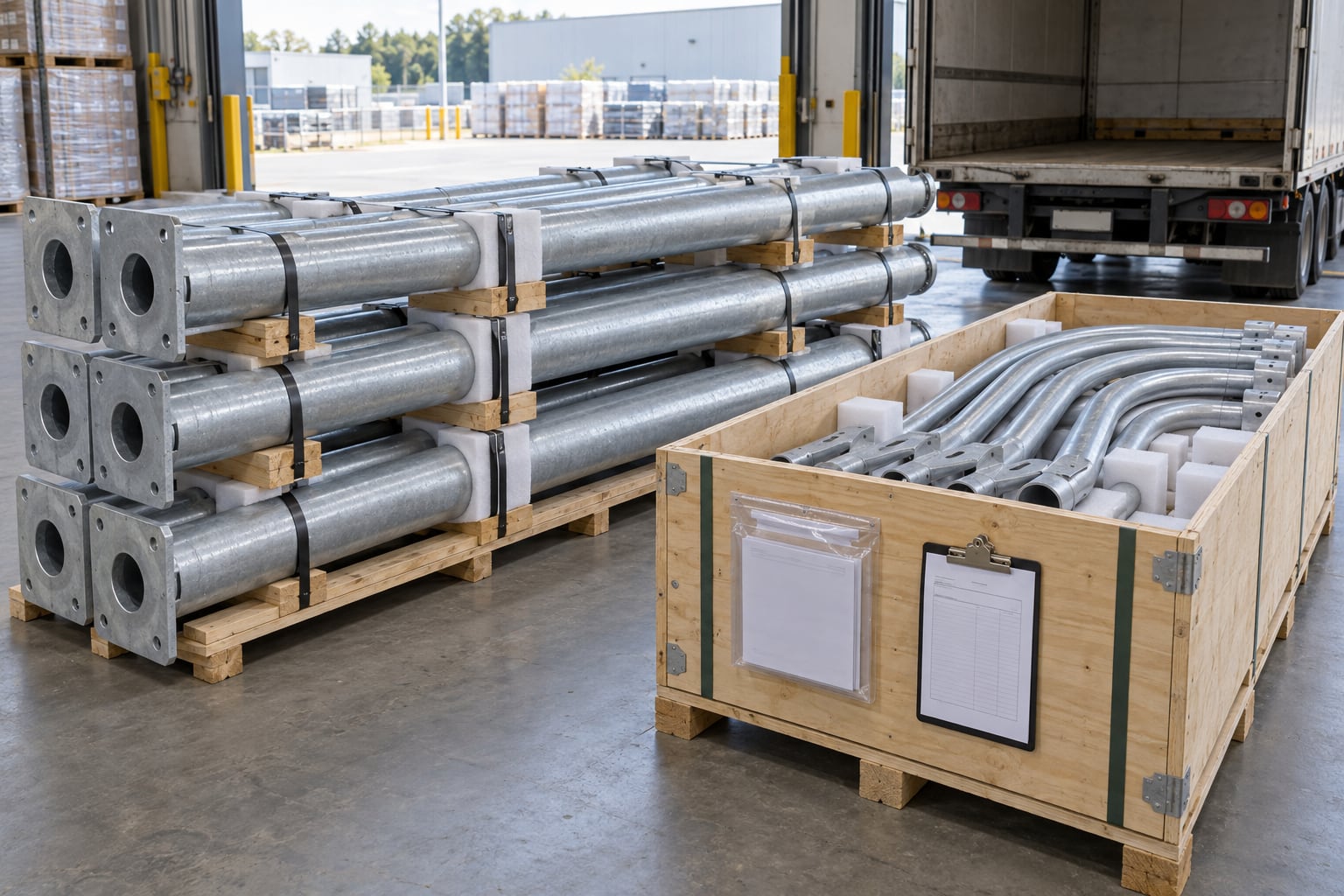
A spare-part mark should link the delivered item back to its approved asset and drawing.
No. Height does not establish the shaft, arm, base, load, luminaire or finish compatibility. Use the project records and engineering review.
Only after the bolt pattern, hardware condition, capacity and foundation interface are checked and accepted for the replacement configuration by the responsible designer.
Document the installed dimensions and equipment, ask the owner/engineer to establish a verified design basis, and identify all unresolved interfaces before ordering a structural spare.
For a replacement RFQ: Send Jieyao Lighting the asset/location ID, photographs, approved or surveyed dimensions, current luminaire and equipment data, base/anchor information, finish and scope of supply. A precise reorder package reduces the risk of a physically similar but incompatible component.
Contact Us
Get a custom lighting solution and quotation for your project. Outdoor lighting manufacturer in Yangzhou, ChinaAbout Jieyao LightingYangzhou Jieyao Lighting Equipment Co., Ltd. is an outdoor lighting manufacturer focused on solar street light systems and high mas... Do you have any questions or requests?
Email: jay@jieyaolighting.com

Click to Chat.
Im online now.