

China’s expressway lighting infrastructure is vast, and the selection of lighting systems directly impacts traffic safety and life-cycle costs (LCC). An inappropriate selection could lead to a 40% surge in long-term operating costs. Therefore, it is crucial to conduct a scientific evaluation of solar-powered systems versus grid-connected LED systems.
Based on field data collected from multiple actual road sections, this article conducts a quantitative comparison of core metrics—including luminous flux (brightness), energy efficiency, and O&M requirements—aiming to avoid marketing misrepresentations and provide an objective basis for decision-making in infrastructure projects.
Expressways (especially interchanges and ramp merge zones) have extremely high technical requirements for illuminance uniformity, glare control, and wiring practices (such as moisture protection for cable joints). Lighting selection must be based on a system-level engineering perspective—an integrated solution that encompasses luminaires, compliant light poles, weather resistance, and electrical protection (IP rating/impact resistance/surge protection).
Freeway Lighting Technologies Explained
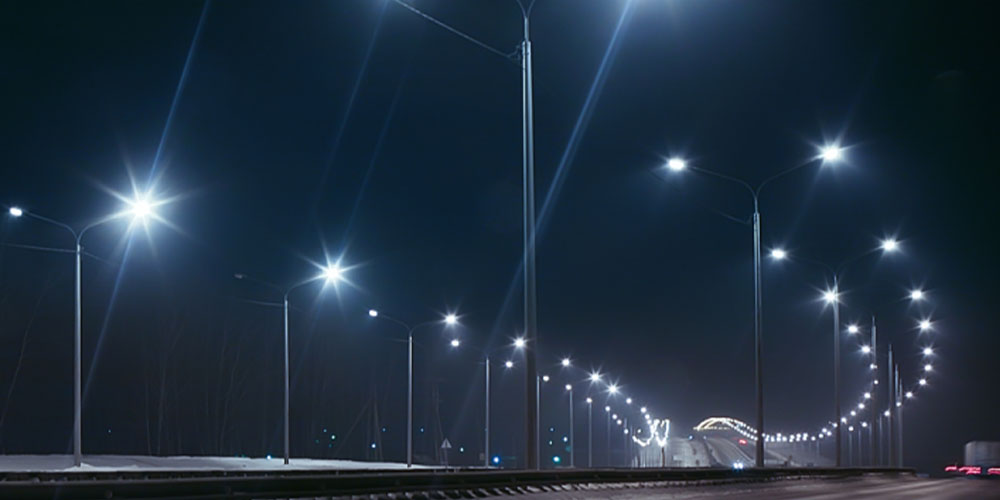
Modern highway lighting has fully entered an era of smart and low-carbon solutions. Traditional streetlights no longer simply “light up the road”; instead, they have evolved into comprehensive road lighting solutions that integrate high-efficiency light-emitting components, smart control systems, and new energy technologies.
How LED freeway lights work
Modern highway LED streetlights utilize solid-state lighting (SSL) technology, in which an electric current passes directly through semiconductor materials to excite photons, completely eliminating the light-emitting mechanisms of traditional high-pressure sodium (HPS) lamps that rely on filaments or gas discharge. In terms of energy efficiency, LED luminaires achieve a luminous efficacy of $70\sim120\text{ lm/W}$, demonstrating a technical advantage far surpassing that of traditional lighting; their rated lifespan ranges from 50,000 to 100,000 hours—3 to 4 times that of standard light sources—significantly extending maintenance intervals. Furthermore, precise light distribution control is a core feature of high-grade LED road lighting. Through directional optical design, light can be precisely projected onto the target roadway, effectively suppressing light spill and light pollution. Combined with intelligent control systems, LED luminaires support deep dimming ranging from 0% to 90% during periods of low traffic volume, maximizing energy savings while ensuring traffic safety.
How solar-powered freeway poles generate and store energy
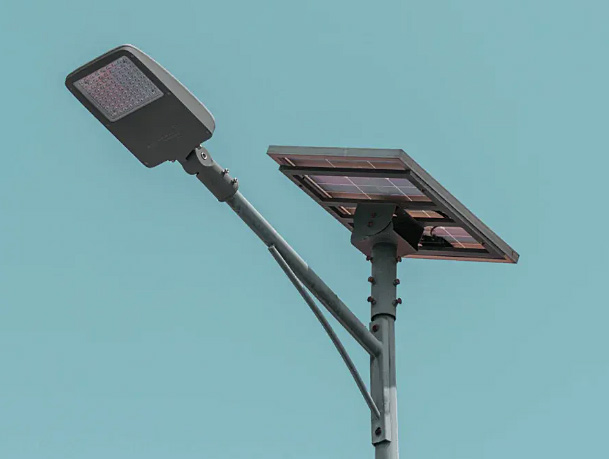
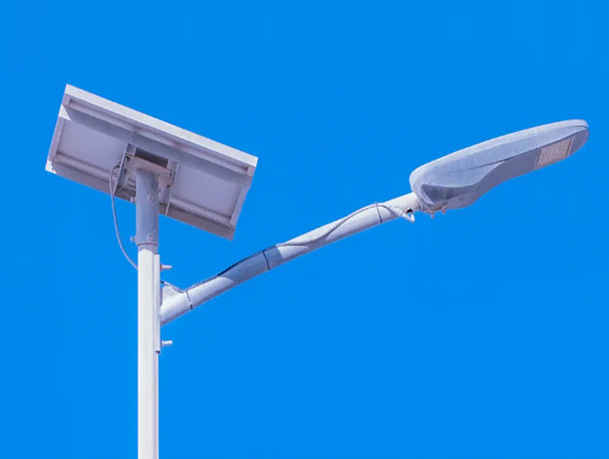
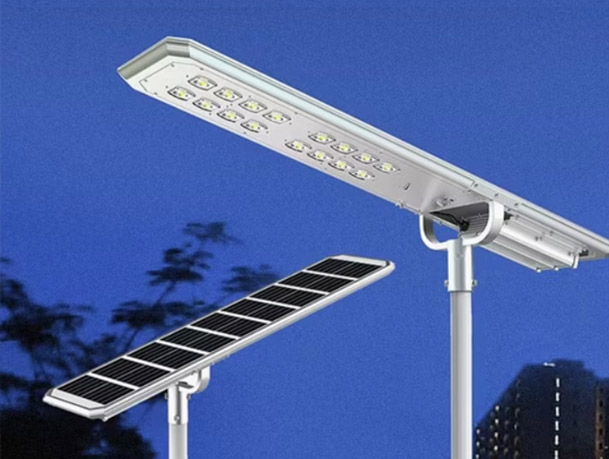
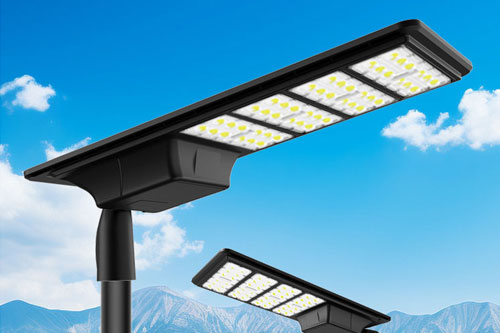
Solar-powered highway lighting poles are standalone, off-grid micro-energy systems. Their operating principle is based on the photovoltaic effect, using solar panels to convert light energy into electrical energy, which is then temporarily stored in an energy storage unit to power nighttime lighting.
The system primarily consists of the following core components:
Photovoltaic modules: Utilize high-efficiency crystalline silicon or thin-film semiconductor materials.
Energy Storage Unit: Equipped with long-life batteries designed for a service life of over 10 years.
LED Luminaires: High-efficiency light-emitting and light distribution units. Smart Controller: The system’s central control hub, responsible for managing daytime charging and controlling nighttime discharge logic.
Modern systems integrate intelligent power management algorithms such as “Power 365,” which dynamically optimize energy consumption based on seasonal changes and variations in solar irradiance, ensuring stable, uninterrupted operation throughout the year (365 days). These off-grid systems achieve 100% self-sufficiency in green electricity, completely independent of the traditional power grid.
Common use cases for each lighting type
For existing expressways with well-developed power grids and heavy traffic volumes, grid-connected LED lighting systems are typically the preferred choice. These systems offer excellent color rendering performance (Color Rendering Index, CRI, ranging from 70 to 90), significantly enhancing drivers’ ability to recognize road markings, traffic signs, and sudden obstacles; in critical intersections such as interchanges and ramps, their precise light distribution technology serves as a core pillar for ensuring driving safety.
In contrast, off-grid solar lighting systems offer unparalleled technical and economic advantages in the following specific scenarios:
Areas without grid coverage: Remote road sections far from the traditional power grid.
High-priority construction needs: Rapid deployment, with a single pole installation that can be completed within one day.
Areas with poor grid stability: Road sections prone to frequent power outages and rationing.
Areas with prohibitively high utility line installation costs: Sections where road excavation and the laying of long-distance power cables entail enormous costs.
Solar systems do not require complex cable splicing procedures or grid connection approvals. Although the initial procurement cost of lighting poles is higher, the extremely low construction and overall O&M costs make them a highly competitive alternative. Overall, these two modern lighting technologies are generations ahead of older lighting solutions, such as traditional high-pressure sodium lamps, in terms of visibility, overall energy savings, and full lifecycle maintenance requirements.
Real-World Performance Comparison: Solar vs LED
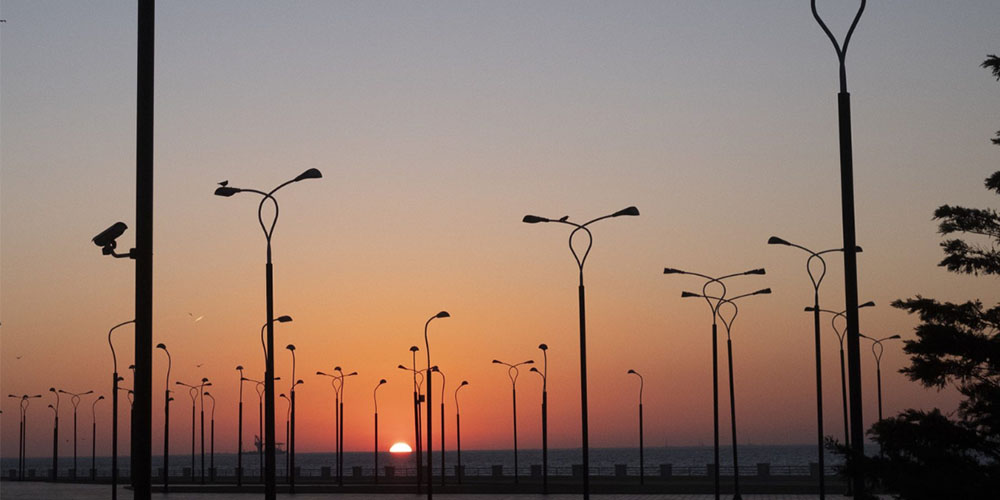
Based on an analysis of actual operational data from multiple pilot project sections, solar- and grid-powered LED highway lighting systems demonstrate significant performance differences under real-world road conditions. The following empirical comparison focuses on key technical indicators to determine the optimal suitability of each system under different operating conditions.
What “Roadway-Grade Freeway Light”Specs Look Like
The overall performance of highway lighting poles is determined by the following core quantifiable technical specifications:
Photometric Performance: Strictly control glare levels and ensure that illuminance uniformity meets standards; this metric has the highest verification priority in high-risk intersections such as interchanges and ramps.
Roadway Optics: Type II or Type III asymmetric roadway light distribution curves are used to ensure precise coverage of effective lanes with luminous flux and to minimize unnecessary light spill.
High Environmental Durability and Reliability: The entire luminaire must feature IP66-rated dust and water resistance, IK08/IK09-rated mechanical impact resistance, and be equipped with a 10–20 kA surge protection device (SPD) to ensure reliable all-weather operation in extremely harsh environments.
Integrated Structural System (Pole & Bracket System): The light pole and bracket must undergo system-level structural design. This includes providing wind load resistance calculations, foundation selection options, surface corrosion protection processes (hot-dip galvanizing + powder coating dual protection), and standard construction and installation drawings.
Freeway Light Decision Map (Solar vs Grid LED)
Guidelines for Selecting Highway Lighting Technologies:
Applications for Grid-Connected LED Systems:
Highway corridors with well-established existing power distribution networks and high power supply stability; particularly suitable for mainline interchanges and ramp areas with heavy traffic flow, frequent vehicle weaving, and extremely high requirements for light intensity continuity and uniformity.
Applications for Off-Grid Solar Systems:
Road sections in remote locations where the economic cost of trenching and cable installation is prohibitively high; or areas with urgent delivery requirements or poor grid stability (frequent power outages). Typical applications include rural road entrances, temporary construction projects, and areas without grid coverage.
Brightness and visibility in different weather conditions
Energy Consumption and Operating Cost Analysis:
Solar-powered and grid-connected LED lighting systems differ fundamentally in their energy consumption characteristics. Solar streetlights rely on self-generated photovoltaic power, resulting in zero electricity costs during their operational lifespan. In contrast, traditional grid-connected LED systems rely continuously on the public grid, incurring long-term electricity expenses. Taking a luminaire with a luminous flux of 6,500 lm per pole as an example, upgrading to a standalone solar power system can save approximately $120 in monthly electricity operating costs per pole.
Furthermore, in terms of grid resilience and disaster preparedness, off-grid solar systems offer significant self-sufficiency advantages. Since they operate completely independently of the external power grid, they can maintain stable lighting output during regional power outages or grid failures, thereby completely eliminating the risk of widespread blackouts caused by grid failures in traditional grid-connected road lighting systems.
Energy efficiency over 12-month usage
Operations and Maintenance Requirements and Reliability Analysis:
Although the reliability of both lighting technologies has improved significantly, their operations and maintenance models differ fundamentally. Off-grid solar systems require minimal routine maintenance, primarily consisting of periodic compliance cleaning of photovoltaic modules in dusty environments (approximately once every two months) and the periodic replacement of energy storage units every 5–7 years. In contrast, grid-connected LED systems require more frequent O&M, encompassing more complex inspections and routine patrols of electrical systems such as distribution networks and power lines.
In terms of component-level reliability, highway lighting relies heavily on industrial-grade LED drivers with a high Mean Time Between Failures (MTBF). Data indicates that high-end power supplies with an MTBF of 473,000 hours have a cumulative failure rate of only 4.6% over five years; in contrast, low-end power supplies with an MTBF of just 203,000 hours have a failure rate as high as 10.8% over the same period. Such failure rate distribution data serves as the core foundation for accurately calculating the long-term total cost of ownership (TCO) and life-cycle cost (LCC) of highway lighting assets.
Failure rates and maintenance frequency
Maintenance Requirements: Both technologies have improved in terms of technical maturity, but their maintenance models differ. Solar systems require low-frequency maintenance (cleaning panels every two months in dusty areas; replacing batteries every 5–7 years), while traditional LED fixtures require high-frequency maintenance focused on the electrical system.
Reliability and Life Cycle Cost (LCC): Highway lighting imposes stringent requirements on the system’s Mean Time Between Failures (MTBF). Data shows that after a 5-year operating period:
High-end drivers (MTBF 473,000 hours): Failure rate of only 4.6%.
Low-end drivers (MTBF 203,000 hours): Failure rate as high as 10.8%.
Conclusion: The difference in driver MTBF directly determines the long-term operating costs and asset value of highway lighting poles.
Installation and Infrastructure Considerations
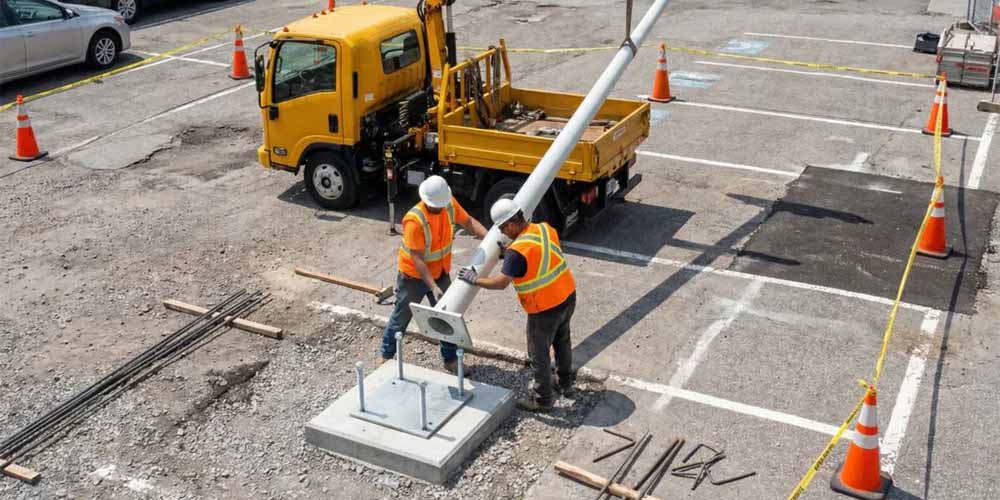
When evaluating LED highway light poles powered by solar energy versus grid power (mains power), the boundary conditions of the physical infrastructure often directly determine the success or failure of the project.
Freeway Light Pole Height & Spacing
Design Specifications for Light Pole Spacing and Height:
Balancing Spacing Benefits: Light pole spacing directly affects a project’s cost-effectiveness and lighting quality. Excessively dense spacing will sharply increase light pole procurement and installation costs (CAPEX); conversely, excessively wide spacing will result in dark spots on the ground and force the use of higher-wattage fixtures, thereby increasing energy consumption.
Spacing Ratio Rule: During the preliminary design phase, the spacing rule of 2.5–3 times the pole height is typically followed. In actual highway layouts, typical spacing ranges from 250 to 400 feet (approximately 76–122 meters).
Fine-Tuning: Following the preliminary layout, specialized geometric refinements must be made based on ramp geometry, road curves, interchanges, and the required illuminance uniformity.
Pole Height Selection: Given the wide lanes and high coverage requirements of expressways, pole heights are typically greater than those on urban roads, with a standard range of 25–40 feet (approximately 7.6–12.2 meters).
Freeway light pole wire splice requirements
Electrical Wiring Standards for Municipal Power Lighting on Expressways:
I. Wiring Locations and Connection Component Requirements
Underground wiring is strictly prohibited: All cable connections must be made within the access ports of light poles or ground junction boxes; direct burial of cables underground is strictly prohibited.
Connection Component Standards: Industry-certified pressure connectors or compression terminals must be used.
II. Three-Step Waterproof Sealing Process for Wiring
To completely block out moisture, the following three-step sealing process must be strictly followed at all wiring points:
Wrap with rubber-insulated self-adhesive tape (high-voltage self-adhesive tape)
Wrap with electrical insulation tape (PVC tape)
Apply/spray specialized sealant (waterproof sealant paste/sealant)
III. Wiring and Grounding Standards
Branch Circuit Specifications: The wiring entering the luminaire must use #12 AWG copper wire.
Equipment Grounding: The equipment grounding conductor (PE wire) must remain continuous from the grounding electrode (ground resistance test point) to the grounding terminal connector; interruptions are strictly prohibited.
Independent Circuits: For dual-head (dual-arm) units, each luminaire must be equipped with an independent wiring circuit and fuse assembly; sharing is not permitted.
Foundation and pole design differences
Each technology has its own installation method:
Aspect | Solar Light | Grid Light |
Trenching needed | No | Yes |
Cable length per pole | 0 m | 20-40 m |
Typical install time | 30 min/pole | 90 min/pole |
I. Analysis of Civil Construction Costs for Traditional Power Supply Systems
Scope of Work and Unit Prices: Grid-based power supply systems involve extensive civil engineering work, such as trenching, piping, and cable laying, with a benchmark cost of approximately $40 per square foot.
Typical Project Costs: Taking a traditional lighting project as an example, the cost of standard trenching and utility line installation can reach as high as $320,000.
II. Foundation Design and Installation Standards
Alignment and Waterproofing: Foundation design must ensure precise alignment between pipes and light pole access holes; waterproofing measures must be strictly enforced during construction and installation to prevent water from seeping into the foundation.
Safety and Compliance: Light pole foundations must be located away from the flow path of ditches and strictly adhere to the AASHTO (American Association of State Highway and Transportation Officials) 4-inch safety clearance rule.
Impact on freeway on ramp lighting zones
I. Lighting Configuration Standards for Road Ramps
The spacing of lighting on highway ramps is determined by the combination of pole height and luminaire power. The standard design specifications are as follows:
Overpass Configuration (50 ft): Uses 50-foot poles with 400W-equivalent LED luminaires; the standard spacing is 270 feet, with a lighting coverage radius of up to 60 feet.
Standard Configuration (40 ft): Use 40-foot light poles with 250W-equivalent LED luminaires; the optimal spacing is 220 feet.
II. Technology Selection and Application Strategies
Solutions for Remote Sections: For remote ramps and areas where excavation is not feasible (to avoid damaging existing underground infrastructure), solar-powered lighting systems are the preferred choice.
Comprehensive Evaluation System: Traffic management authorities have shifted their approach to selecting lighting technologies from a single assessment of “installation feasibility” to a dual consideration of “construction methods and comprehensive performance indicators.”
Cost Analysis and Long-Term Value
When assessing the financial feasibility of road lighting, the total cost of ownership (TCO) must be used as the key metric; the traditional “initial purchase price” does not accurately reflect the project’s actual financial burden.
Original highway light pole price comparison
Financial Comparison Analysis of Traditional LED and Solar Street Lights:
I. Direct Comparison of Initial Capital Expenditures (CapEx)
Traditional LED street light system: The baseline equipment purchase cost is $200,000 per unit, offering a significant advantage in terms of initial book value.
Split-type solar street light system: The baseline equipment purchase cost is $300,000 per unit.
Micro solar street lights (with poles): Flexible configuration options, with unit prices ranging from $500 to $5,000 per unit, suitable for specific scenarios.
II. Adjusted Cost Assessment (Considering the Complete System)
Although traditional LED systems have lower equipment procurement costs, when grid connection costs (civil engineering, trench excavation, cable laying, etc.) are factored in, the actual difference in total initial costs between the two systems narrows significantly because solar systems do not require grid connection.
Maintenance and replacement costs over 5 years
Comparison of Operating and Maintenance (OpEx) Costs and Total Life Cycle Costs:
I. Maintenance Cycles and Cost-Effectiveness
During the daily operation phase, traditional lighting fixtures and solar systems show significant differences in maintenance costs and frequency:
Traditional lighting systems: Light sources must be replaced annually, with cumulative maintenance costs of approximately $800 per fixture over 5 years.
Solar Lighting Systems: Energy storage batteries need to be replaced only once every 5–7 years, with a replacement cost of approximately $1,000 per unit.
II. Key Findings
Thanks to the architectural advantages of off-grid operation (which eliminates the need to consider complex underground cabling and grid synchronization issues), solar lighting technology can significantly reduce the overall O&M workload by 50%–60%.
Return on Investment Based on Energy Conservation and Reduced Energy Consumption
Analysis of Return on Investment and Economic Benefits of Solar Lighting Systems:
I. Payback Period and Life-Cycle Cost Comparison
Although the initial capital expenditure for solar systems is relatively high, their economic benefits over the entire life cycle are significant:
Payback Period: Solar highway light poles can achieve a static payback within 4 years.
5-Year Life-Cycle Costs (Per Pole):
Solar System: Approximately $4,800 per pole
Conventional System: Approximately $8,800 per pole (about 45% higher than the solar system)
II. Benefits from Reduced Operating Costs (OpEx)
Elimination of Electricity Costs: Solar technology achieves zero electricity consumption, directly eliminating electricity costs of approximately $20 per month per light for traditional fixtures. The energy-saving effects are particularly significant in high-density ramp lighting areas.
Long-Term Comprehensive Energy Savings: Based on a 20-year operational cycle, solar streetlights can significantly reduce the comprehensive operating costs of municipal lighting by 55%–75%.
Key Takeaways
Comprehensive Comparative Analysis Report on Solar-Powered and Grid-Connected LED Road Lighting:
I. Comparison of Key Performance Indicators and Cost-Effectiveness
Evaluation Metrics | Grid-Tied LED Systems | Solar Lighting Systems | Key Differences & Technical Benefits |
Initial Installation | Requires complex underground conduit/wiring. | Zero trenching; infrastructure-free. | Eliminates $40/linear foot trenching costs; reduces installation time from 90 to 30 minutes/pole. |
Operating Electricity | Continuous grid power consumption. | Zero utility cost. | Solar saves approx. $120/pole/month, cutting the 20-year lighting budget by 55% – 75%. |
Operational Stability | Weather-independent; highly consistent brightness. | Dependent on weather conditions and battery storage. | Grid-tied LED provides superior reliability under extreme weather conditions. |
Luminous Output | 4,500 – 12,000 lumens | 4,500 – 12,000 lumens | Both technologies deliver equivalent baseline brightness levels. |
O&M Requirements | Requires annual bulb replacement. | Reduces O&M demand by 50% – 60%. | Solar systems only require battery replacements every 5 – 7 years. |
ROI / Payback Period | Lower upfront cost, higher long-term OpEx. | Higher upfront cost, long-term maintenance-free. | Solar systems recoup their initial premium within 4 years through energy and O&M savings. |
II. Conclusions on Technology Selection and Application Recommendations
The selection of highway lighting technologies should be based on scenario-specific requirements:
Scenarios suitable for grid-connected LED systems: Suitable for major highways with high traffic volumes and key intersections and entry points. These areas have extremely stringent requirements for lighting continuity; grid-connected LED systems ensure highly consistent light output under any weather conditions, thereby maximizing traffic safety.
Applications for Solar-Powered Systems: Suitable for remote road sections, areas without grid coverage, retrofit projects involving existing infrastructure where excavation is impractical, or green projects focused on “energy self-sufficiency and carbon reduction.” Their excellent long-term return on investment can deliver greater financial value to municipal and transportation authorities.
FAQ
What are the main differences between solar and LED freeway light poles?
Comprehensive Comparison of System Architecture and Performance
System Architecture: Solar-powered light poles are off-grid, standalone units capable of generating their own electricity and storing energy; LED light poles, on the other hand, rely on the public grid for power.
Comprehensive Evaluation: Solar systems are characterized by “high initial capital expenditure and low long-term operating costs”; grid-connected LED systems, meanwhile, offer stable performance around the clock, with light output unaffected by weather conditions.
How do solar-powered freeway light poles work?
How Solar Streetlight Systems Work
Photovoltaic Conversion and Energy Storage: The system uses photovoltaic panels to capture solar energy and convert it into electricity, which is then stored in an integrated battery system through charging and discharging cycles to power LED lighting at night.
Smart Control: The core controller unit is responsible for regulating and managing the overall current to ensure the system’s reliability during all-weather and year-round operation.
Are solar freeway lights as bright as traditional LED lights?
Comparison of Light Output and Weather Adaptability
Light Output: Modern solar streetlight technology has achieved the same level of performance as traditional grid-connected LED systems, with standard lumen output ranging from 4,500 to 12,000 lm.
Weather Adaptability: Traditional grid-connected LED systems provide constant brightness under all weather conditions; in contrast, solar-powered systems may experience periodic fluctuations in light output during prolonged periods of overcast or rainy weather due to limitations in energy storage and sunlight availability.
Which lighting technology is more cost-effective in the long run?
Long-Term Economic Benefits and Budget Assessment
Long-Term Asset Value: Although solar systems require a higher initial investment, they offer a superior long-term return on investment (ROI) due to zero electricity costs and low maintenance frequency.
Municipal Budget Cuts: Over a 20-year lifecycle, solar streetlights can result in a significant reduction of 55%–75% in municipal lighting budgets compared to traditional grid-connected LED systems.
How do installation requirements differ between solar and LED freeway light poles?
Comparison of Construction Time and Infrastructure Costs
Solar Systems (Off-Grid): Eliminates the need for trenching and electrical connections to underground utility lines, resulting in minimal infrastructure requirements. Standardized installation of a single pole takes only 30 minutes.
LED Systems (Grid-Connected): These rely on large-scale civil engineering work (involving trench excavation, pipe laying, and cable installation). Installation time per pole can be as high as 90 minutes, accompanied by significant marginal civil engineering costs.
Contact Us
Get a custom lighting solution and quotation for your project. Outdoor lighting manufacturer in Yangzhou, ChinaAbout Jieyao LightingYangzhou Jieyao Lighting Equipment Co., Ltd. is an outdoor lighting manufacturer focused on solar street light systems and high mas... Do you have any questions or requests?
Email: jay@jieyaolighting.com

Click to Chat.
Im online now.