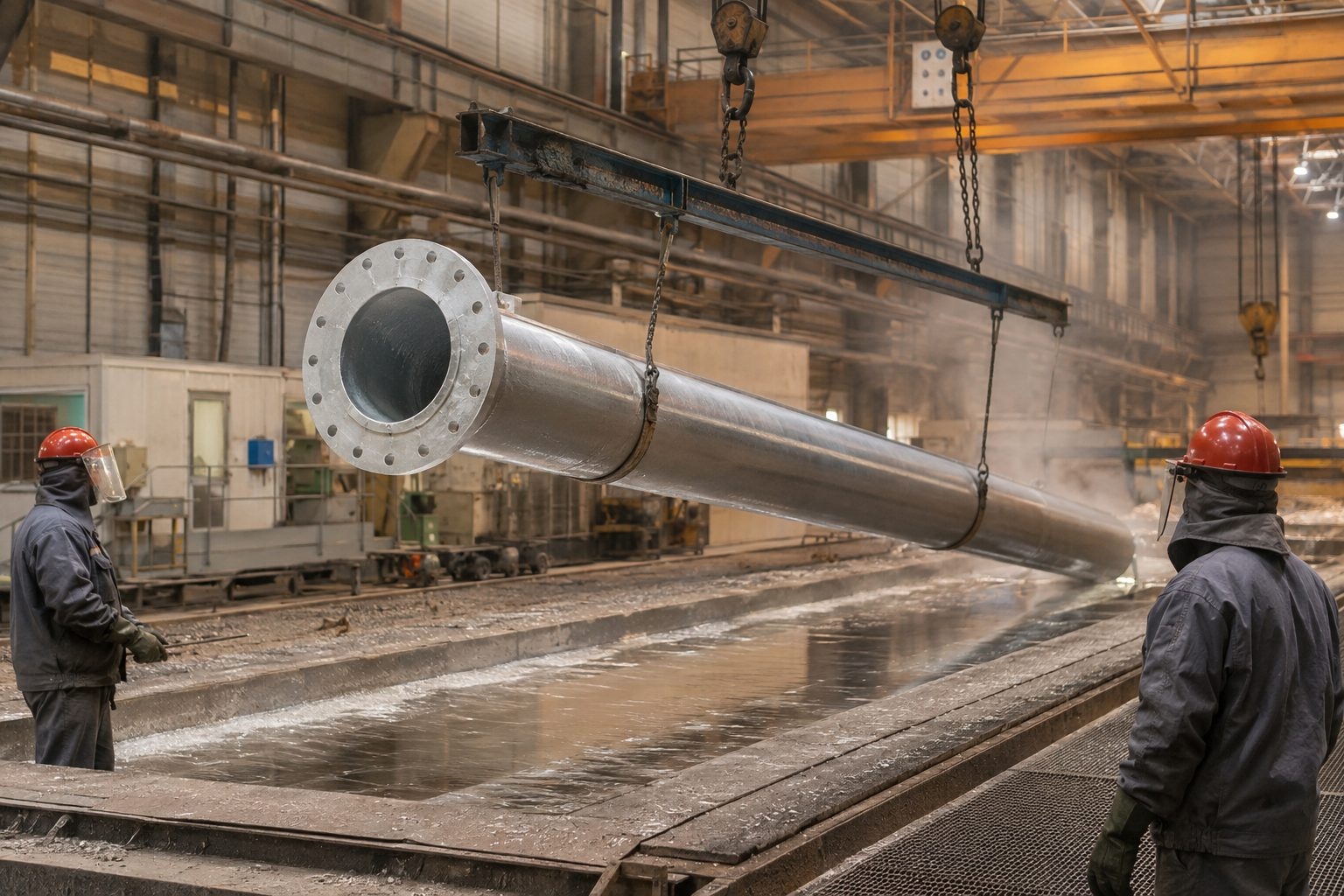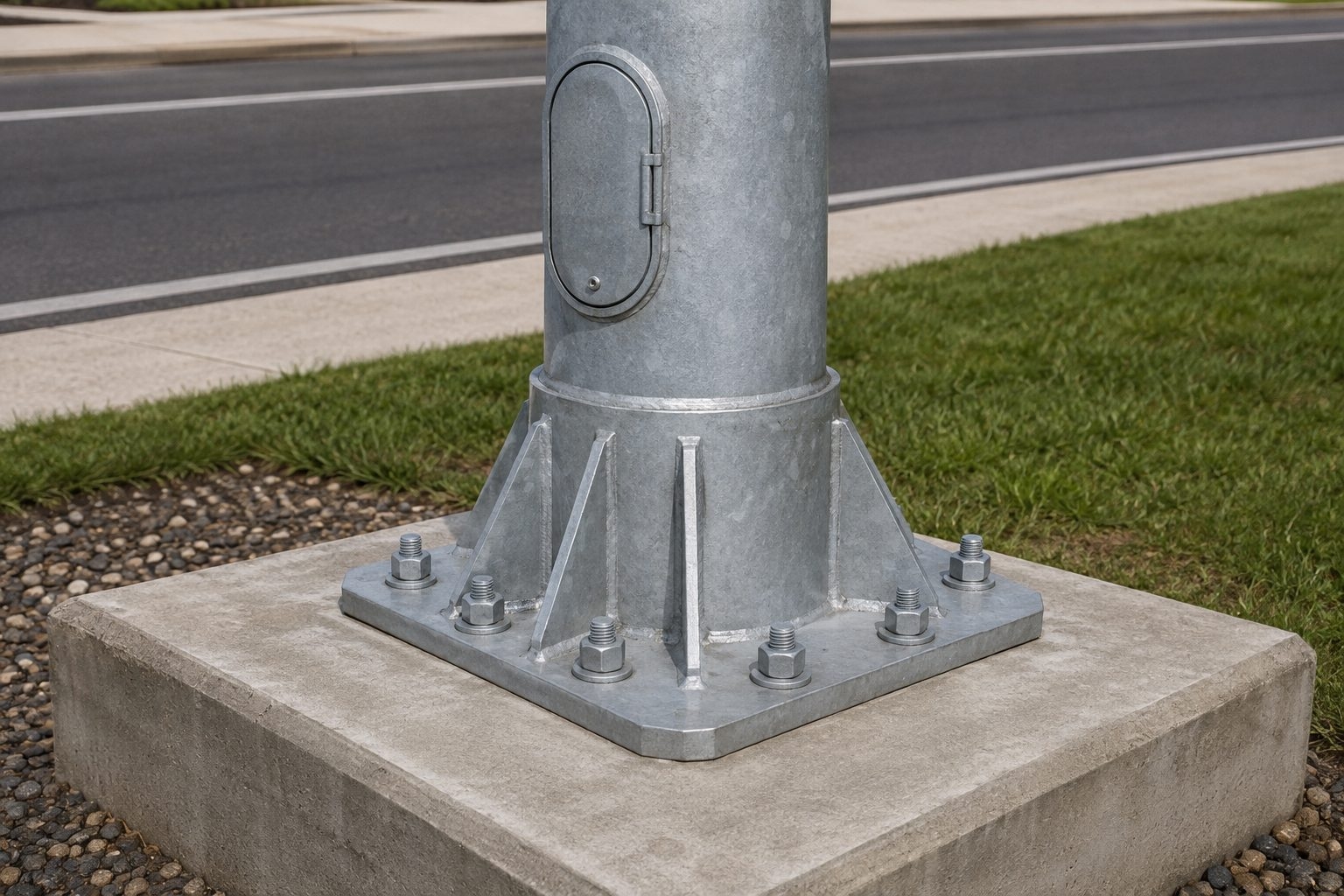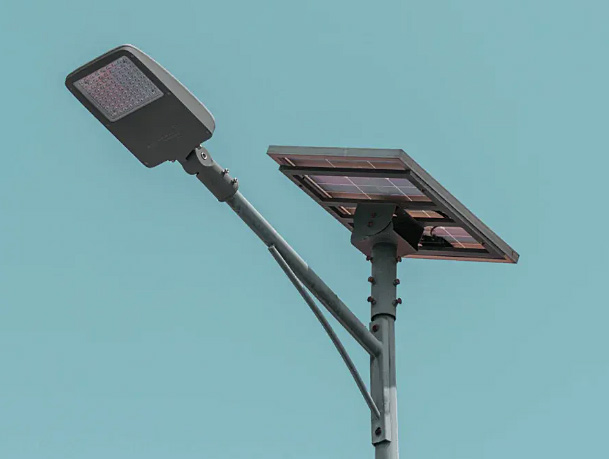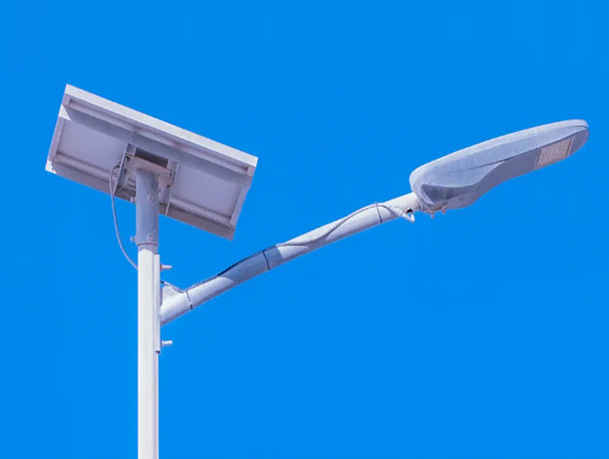


In accordance with the ISO 1461 standard, hot-dip galvanizing (HDG) is the preferred surface treatment for street light poles due to its exceptional corrosion resistance and long-term durability. Given its ability to effectively withstand harsh environments such as high salt fog and high humidity in coastal areas, this solution is widely favored in municipal engineering projects. By precisely matching the corrosion protection system to the C4 (highly corrosive) and C5 (extremely corrosive) environmental classes defined in ISO 12944, the structural safety and compliance of the facilities can be fundamentally ensured. Furthermore, the use of a “hot-dip galvanizing + powder coating” dual-protection system (Duplex System) not only significantly enhances protective performance and substantially reduces life-cycle costs (LCC) but also effectively minimizes the frequency of future maintenance.
Key Takeaways
Hot-dip galvanizing (HDG) has become the preferred solution for corrosion protection of streetlight poles in harsh environments due to its exceptional corrosion resistance. For highly corrosive environments (C4/C5) as defined by ISO 12944, municipal authorities can achieve synergistic protection and ensure system compliance by implementing a “hot-dip galvanizing + powder coating” dual-protection system (Duplex System). Combined with regular preventive maintenance and inspection programs, this solution not only effectively mitigates the risk of structural failure and enhances public safety, but also significantly extends the service life of the poles, thereby minimizing total life-cycle costs (LCC).

Part1: Corrosion Protection Systems for Street Light Poles
1.1 Corrosion Protection Systems: Importance
Streetlight poles in urban and coastal environments are constantly exposed to a complex corrosive environment characterized by high humidity, heavy precipitation, air pollution, and high salt fog. Without scientifically sound corrosion protection for the substrate, steel structures are highly susceptible to intergranular corrosion and oxidative rusting, which can damage the cross-sections of components and degrade their mechanical properties, leading to serious structural failure and public safety hazards. Therefore, the selection of a corrosion protection system must be precisely tailored to the target service life and the environmental corrosion severity level. Currently, the mainstream protective measures in the industry primarily focus on hot-dip galvanizing (HDG), powder coating, zinc-rich epoxy primers, and internal pipe wall coatings.
Corrosion Protection Method | Description | Application in Urban/Coastal Environments |
Hot-Dip Galvanizing | Provides sacrificial cathodic protection at coating defects. | Standard for steel poles, effective in moderate environments. |
Powder Coating | Protects the zinc layer from atmospheric consumption. | Enhances aesthetic and corrosion resistance, especially in aggressive environments. |
Zinc-Rich Epoxy Primer | Applied beneath powder topcoat for enhanced protection. | Recommended for base plate areas to combat aggressive corrosion. |
Internal Coating | Thin epoxy film or internal galvanizing. | Protects against moisture-induced corrosion inside hollow poles. |
1.2 Environmental Classes (C4, C5)
To ensure the precise selection of structural corrosion protection systems, the ISO 12944 standard establishes a scientific classification system for atmospheric corrosivity. The C4 (highly corrosive) category primarily covers highly polluted industrial areas and coastal environments with moderate salinity; the C5 (extremely corrosive) category focuses on regions with a strongly marine climate and heavily polluted industrial sites. A quantitative assessment of the environmental characteristics and typical application scenarios for these two categories is shown in the table below:
Corrosion Class | Corrosivity Level | Corrosion Rate (Carbon Steel) | Typical Environments | Protective Measures |
C4 | High | 50-80 µm/year | Industrial sites, coastal regions with moderate salinity, swimming pools, chemical plants | High-performance epoxy and polyurethane coatings, duplex systems, regular maintenance |
C5 | Very High | 80-200 µm/year | Coastal/offshore areas with high salinity, industrial areas with high humidity, polluted environments | Strong duplex systems, thick industrial coatings, rust-resistant steel, long-term design (15-25+ years), proactive maintenance |
1.3 Impact on Safety & Lifecycle Costs
Corrosion compromises the structural integrity of light poles, thereby elevating the risk of catastrophic failure and associated public safety hazards. Municipal investments in robust protective systems effectively mitigate emergency remediation and extend the service life of public infrastructure. Although hot-dip galvanizing (HDG) alone provides adequate corrosion resistance, its synergy with a powder coating (a duplex system) yields superior performance, particularly in highly corrosive C4 and C5 environments. Consequently, the strategic selection of such protective systems minimizes lifecycle maintenance expenditures and ensures stringent compliance with safety standards.
Part2: Hot-Dip Galvanizing

2.1 Process & ISO 1461 Standard
Hot-dip galvanizing (HDG) protects steel poles by forming a resilient zinc coating through a sequence of precise operations defined in ISO 1461. The process initiates with caustic cleaning to remove grease and soil, followed by pickling to eliminate surface scale. After two rinsing stages, the steel is immersed in a zinc ammonium chloride flux solution. The critical phase involves dipping the pole into a molten zinc bath, driving a metallurgical reaction that bonds the zinc to the steel substrate. Finally, a quench tank cools the pole, terminating further solid-state reactions.
Step | Description |
1 | Caustic cleaning to remove grease and dirt |
2 | Pickling to remove scale on steel or iron surface |
3 | Two rinsing processes |
4 | Zinc-ammonium chloride flux dipping |
5 | Dipping into the molten zinc bath |
6 | Dipping in quench tank to reduce temperature and inhibit undesirable reactions with the atmosphere |
This process yields a robust, self-healing coating. Through the sacrificial anodic protection of the zinc layer, the resulting zinc carbonate further enhances the corrosion resistance of the underlying steel.
2.2 Advantages & Cost Efficiency
The hot-dip galvanizing (HDG) process offers significant overall technical and economic advantages. First, this process demonstrates exceptional weather resistance and resilience to harsh environments, providing the base material with decades of maintenance-free protection and thereby significantly reducing the frequency of inspections and repairs throughout its life cycle. Second, from an economic perspective, although the initial coating cost of hot-dip galvanizing is higher than that of traditional painting or electroplating processes, its life-cycle cost (LCC) advantages are significant. Taking hot-dip galvanized utility poles as an example, they have a design life of 25 to 50 years with minimal maintenance requirements, making them an optimal solution for municipal infrastructure construction that combines long-term protection with high cost-effectiveness.
Treatment | Outdoor Durability | Maintenance Needs | Cost Direction |
Painted steel | Lower | Frequent repainting | Low upfront, higher over time |
Electro-galvanized steel | Low | Higher replacement risk | Low |
Hot-dip galvanized steel | Higher | Mostly inspection only | Medium upfront, lower overall |
2.3 Limitations & Strength Loss
However, the application of the hot-dip galvanizing (HDG) process still faces certain technical limitations. First, hot-working effects: Since the hot-dip galvanizing process involves exposure to high temperatures, it may trigger microstructural transformations in high-tensile steel, resulting in a slight decrease in its tensile strength; Second, geometric and dimensional constraints: Complex geometries or oversized components are prone to limitations imposed by process space and fluid dynamics during the galvanizing process, increasing processing difficulty; third, environmental adaptability bottlenecks: In highly corrosive marine environments (such as the C5 corrosion category specified in ISO 12944), the consumption rate of the zinc sacrificial anode layer accelerates significantly, thereby shortening the design service life of structural components.
2.4 Performance & Longevity
Field engineering survey data indicate that hot-dip galvanized (HDG) streetlight poles have a service life of 20 to 40 years in C4 (highly corrosive) environments, whereas their service life is reduced to 10 to 20 years in C5 (extremely corrosive) marine or industrial atmospheric environments. From the perspective of material protection mechanisms, this coating exhibits significant “sacrificial anode” cathodic protection properties. Even when the surface is mechanically scratched and the substrate is exposed, the zinc layer continues to provide long-term electrochemical protection to the steel substrate through preferential dissociation. This exceptional durability serves as the core guarantee for the safety and operational reliability of public infrastructure.
Atmosphere Class | Estimated Lifespan (Years) |
C4 (Industrial/Coastal) | 20 – 40 |
C5 (Heavy/Marine) | 10 – 20 |
2.5 Enhanced Protection: Powder Coating Combo
Research has shown that a “duplex system”—comprising a combination of hot-dip galvanizing (HDG) and powder coating—can produce significant synergistic protective effects. In this system, the outer powder coating not only provides the substrate with a highly durable, decorative surface but also contains corrosion inhibitors and UV stabilizers that effectively delay coating degradation. This composite coating system not only significantly extends the service life of utility poles and lengthens maintenance intervals but also enhances aesthetic appeal. Through regular surface cleaning and condition inspections, the protective potential of this system can be maximized, making it an ideal choice for highly demanding environments.
Note: In engineering practice, to meet the highest-level protection requirements in C4 (highly corrosive) and C5 (extremely corrosive) environments, municipal planning typically specifies a dual anti-corrosion system of “hot-dip galvanizing + powder coating” as the key technical standard for streetlight poles.
Part3: ISO 12944 C4 Standards
3.1 ISO 12944 Overview
The international standard ISO 12944 establishes the benchmark technical specifications for corrosion protection of steel structures worldwide, including infrastructure such as streetlight poles. This standard aims to provide scientific guidance to engineers and municipal decision-makers to ensure that protective coating systems are precisely matched to the severity of corrosion in specific environments. ISO 12944 classifies corrosion severity based on key environmental factors such as ambient humidity, atmospheric pollution levels, and the intensity of salt spray exposure: Among these, the C4 atmospheric corrosion class covers typical industrial areas and coastal regions with moderate salinity; while the C5 atmospheric corrosion class represents extremely corrosive conditions, primarily including offshore/marine areas and heavily polluted industrial zones. This quantitative classification matrix directly guides the scientific selection of protective coatings and serves as the core basis for ensuring the long-term durability and structural safety of steel structures.
3.2 C4 Classification & Requirements
Within the ISO 12944 standard system, the C4 corrosion category primarily applies to areas with high industrial activity or moderate coastal salinity. Due to the highly corrosive atmospheric conditions in such areas, streetlight poles in service face a significant risk of electrochemical corrosion. To address this, the standard recommends deploying a highly protective “three-coat system” in C4 environments—a protective architecture consisting of a zinc-rich primer, an epoxy intermediate coat, and a polyurethane topcoat.
Within this system, the surface preparation of the substrate plays a decisive role in the final performance: abrasive blast cleaning in accordance with ISO 8503 effectively controls the substrate’s surface roughness, ensuring that the coating exhibits excellent interfacial adhesion and long-term resistance to media penetration. Furthermore, structural design is equally essential; designers must avoid creating “moisture traps” in the geometric configuration and ensure that structural components provide adequate space for visual inspection and maintenance.
Requirement | Description |
Environment | Areas with high industrial activity and moderate coastal salinity. |
Coating System | Three-coat: zinc-rich primer, epoxy intermediate, polyurethane topcoat. |
Durability Range | High (H): 15 to 25 years until first major maintenance is required. |
Surface Preparation | Abrasive blast cleaning; must meet ISO 8503 standards. |
Design Considerations | Avoid moisture traps; facilitate inspections and maintenance access. |
3.3 Protective Coating Systems
In engineering practice, the scientific selection of a protective coating system depends heavily on the corrosion characteristics of the service environment and the design life of the structure. In a C4 corrosion environment, a “three-coat system” can establish a composite barrier that prevents the penetration of moisture, chemical media, and high-concentration salt spray. Its synergistic protective mechanism works as follows: a zinc-rich primer serves as the base coat, providing highly effective cathodic electrochemical protection through a “sacrificial anode”; the epoxy intermediate coat, with its dense molecular network, significantly enhances the system’s physical barrier properties and resistance to chemical corrosion; and the outermost polyurethane topcoat primarily serves to block solar ultraviolet (UV) radiation and resist atmospheric aging. This optimized combination of multifunctional coatings ensures that steel utility poles maintain their structural integrity and mechanical reliability for up to 25 years before the first major maintenance cycle.
3.4 Benefits & Challenges
A C4 protective coating system based on the ISO 12944 standard provides long-term and reliable corrosion protection for steel streetlight poles. Municipal decision-makers can thereby achieve significant marginal benefits, specifically in the form of substantial reductions in structural operation and maintenance costs and effective control of systemic safety risks. However, the effectiveness of this system is highly dependent on the quality of the preparatory surface treatment and strict control of construction processes. Although the initial construction cost is higher than that of conventional base coatings, its exceptional durability extends depreciation and maintenance cycles, thereby offsetting costs in terms of life-cycle economics (LCC). Furthermore, in C5 extreme corrosion environments with more severe erosion, it is necessary to upgrade to a higher-specification protective matrix or adopt a “dual corrosion protection system” to maintain an equivalent service life.
Note: Accurately identifying and matching the corresponding ISO 12944 atmospheric corrosion class is a core technical prerequisite for ensuring that municipal infrastructure, such as streetlight poles, effectively withstands regional environmental loads and remains safe and compliant throughout its structural service life.
Part4: Comparison: Galvanizing vs ISO 12944 C4

4.1 Durability & Real-World Performance
During their service life, outdoor streetlight poles must withstand the combined effects of precipitation, high humidity, salt fog, and atmospheric pollutants over the long term. Among the various surface protection technologies, the hot-dip galvanizing (HDG) process provides long-term corrosion protection lasting for decades by forming a dense zinc-based alloy layer on the steel substrate; meanwhile, the C4 protective coating system, based on the ISO 12944 standard, effectively blocks medium penetration in highly corrosive environments through a composite barrier mechanism involving multiple coating layers. In contrast, a single powder coating, due to its relatively weak physical barrier, often faces the risk of premature failure under extreme or harsh operating conditions. Research and engineering practice have shown that a “duplex system”—a composite structure combining hot-dip galvanizing and powder coating—can produce significant synergistic protective effects and demonstrate the highest durability, making it the optimal technical solution for addressing extreme corrosive environments such as coastal areas or highly polluted industrial zones.
Protection Method | Durability (Years) | Real-World Performance | Suitability for Street Light Poles |
Hot-Dip Galvanizing Only | 20–40 (C4), 10–20 (C5) | Good in moderate environments | Standard for urban/coastal areas |
Powder Coating Only | 5–10 | Poor in aggressive climates | Not recommended |
HDG + Powder Coating | 25–50 | Excellent in harsh conditions | Ideal for C4/C5 environments |
ISO 12944 C4 | 15–25 | Reliable in high-corrosivity | Best for industrial/coastal sites |
In municipal infrastructure planning, decision-making bodies typically prefer to specify a dual-protection system (Duplex System) that combines hot-dip galvanizing and powder coating. This process selection is intended to maximize the potential of the material’s barrier and cathodic protection synergies, thereby minimizing the risk of premature structural failure and safety-critical failures caused by environmental degradation.
4.2 Cost: Initial & Lifecycle
From an engineering economics perspective, both the hot-dip galvanizing (HDG) process and the C4 protective coating system based on the ISO 12944 standard involve significantly higher initial capital expenditures (CAPEX) than conventional single-coat paint systems or standard powder coatings. However, over the long-term service life, these high-protection technologies demonstrate superior intertemporal economic efficiency by significantly reducing the frequency of structural component repairs and the costs of unplanned replacements. Among the various options, the “hot-dip galvanizing + powder coating” duplex system has the highest initial investment cost; however, thanks to its virtually maintenance-free nature, its life-cycle cost (LCC) is minimized. In contrast, standalone ISO 12944 C4 coating systems have a low tolerance for errors in surface pretreatment and on-site application processes. Consequently, they require high-standard, specialized condition monitoring and preventive maintenance in the later stages, which to some extent increases operating and maintenance expenses (OPEX).
Protection Method | Initial Cost | Maintenance Cost | Lifecycle Cost | Value for Money |
Hot-Dip Galvanizing Only | Medium | Low | Low | High |
Powder Coating Only | Low | High | High | Low |
HDG + Powder Coating | High | Very Low | Very Low | Excellent |
ISO 12944 C4 | High | Medium | Medium | Good |
4.3 Maintenance Needs
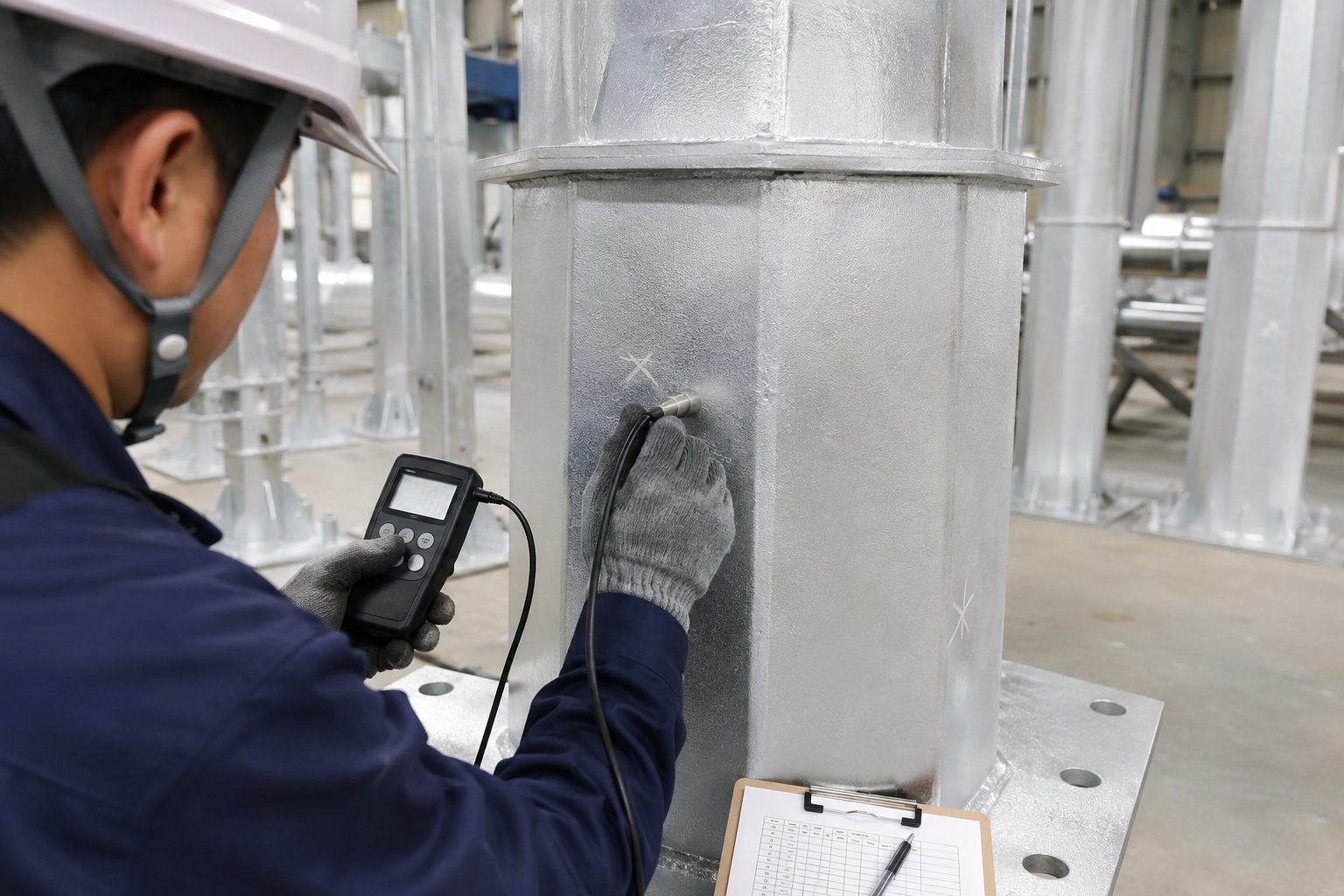
Routine maintenance strategies are a decisive factor in ensuring that streetlight poles meet their design service life. There are significant differences in the inspection and condition assessment standards for different protective systems: hot-dip galvanized (HDG) components require only a routine technical condition inspection once every 24 months, whereas the C4 protective coating system based on ISO 12944 requires a higher frequency of inspections and periodic assessments of coating thickness evolution. In contrast, single-layer powder coatings are prone to premature failure due to the physical barrier’s inherent limitations, often resulting in high unplanned repair costs. Quantitative damage and failure analysis indicates that in highly corrosive coastal (C5) environments, the annual corrosion rate of unprotected steel substrates can reach 80 to 150 mu, which can lead to macro-structural safety hazards within 3 to 5 years of service. From a life-cycle cost (LCC) perspective, every 20 mu of protective coating loss results in an 18% surge in operational and maintenance costs over the structure’s service life. Therefore, it is crucial to establish a comprehensive routine inspection mechanism conducted every 24 months, encompassing both macroscopic visual inspections and microscopic coating thickness measurements. When the area of localized zinc layer peeling or depletion exceeds the threshold (i.e., exposed area greater than 5 cm² per square meter), targeted surface repair and reinforcement procedures must be initiated immediately. By implementing such a standardized, periodic preventive maintenance plan, decision-making bodies can effectively prevent sudden catastrophic failures of infrastructure and ensure the scientific, compliant, and precise preparation of municipal operating budgets.
4.4 Compliance & Regulations
In the field of surface engineering and protective coatings, the hot-dip galvanizing (HDG) process strictly adheres to the ISO 1461 international standard, which establishes criteria for the quantitative assessment of zinc coating thickness on metal substrates and overall metallurgical quality. Concurrently, the C4 protective coating system under the ISO 12944 standard sets stringent technical requirements for the substrate’s surface preparation, coating process control, and durability in service environments. Municipal decision-making and management bodies must establish a comprehensive compliance review mechanism to ensure that all types of infrastructure strictly conform to the aforementioned international standards, thereby eliminating at the source the risk of civil liability arising from premature structural failure and effectively safeguarding public safety. It is worth noting that engineering practice has shown that the “hot-dip galvanizing + powder coating” duplex system typically achieves protective performance metrics that significantly exceed the minimum requirements of current regulatory standards, thereby providing redundant assurance for the long-term safety margin of infrastructure.
Protection Method | Relevant Standards | Compliance Level | Regulatory Suitability |
Hot-Dip Galvanizing Only | ISO 1461 | High | Standard |
Powder Coating Only | None | Low | Not recommended |
HDG + Powder Coating | ISO 1461 + ISO 12944 | Very High | Exceeds requirements |
ISO 12944 C4 | ISO 12944 | High | Standard |
4.5 Environmental Factors
In summary, environmental humidity, salt fog flux, and atmospheric pollution characteristics are the key environmental load factors that determine the service performance of protective coating systems. The international standard ISO 12944-6 clearly defines different levels of atmospheric corrosivity and their corresponding durability ranges, and establishes standardized laboratory accelerated corrosion test regimes for each level. For the more severe operating conditions found in offshore and tidal zones, the ISO 12944-9 standard introduces specific environmental adaptability considerations, with prescribed test cycles lasting up to 4,200 hours. In terms of testing methodology, cyclic aging tests simulate the synergistic effects of multiple factors under real-world conditions by alternately exposing samples to ultraviolet (UV) radiation, condensation-induced wet heat, salt spray, and low-temperature freezing. The damage tolerance of coatings is quantified through scoring evaluation, which involves intentionally introducing specific scratches to the coating surface and then precisely measuring the width of interfacial delamination and undercutting. Furthermore, by incorporating cathodic disbondment and full seawater immersion tests, it is possible to systematically evaluate the coating’s interfacial electrochemical stability and resistance to medium penetration under long-term service conditions.
Based on these rigorous testing criteria, significant technical differences emerge in the environmental adaptability and degradation patterns of various surface protection processes across different service environments. Experiments and engineering practice have shown that the hot-dip galvanizing (HDG) process exhibits excellent weather resistance in moderately corrosive atmospheres, but the consumption rate of its sacrificial anode layer accelerates significantly in marine environments with high salt fog; in contrast, the C4 protective coating system based on ISO 12944 effectively resists industrial pollution and erosion from coastal saline-alkaline media through its dense, multi-layered composite barrier; Meanwhile, the “duplex system”—a combination of hot-dip galvanizing and powder coating—utilizes synergistic effects to simultaneously block the penetration of solar ultraviolet radiation, high-concentration salt spray, and moisture, making it the optimal technical solution for withstanding harsh climatic conditions. In contrast, a single powder coating is highly susceptible to early electrochemical failure and loss of protective effectiveness when exposed to the combined effects of high humidity and high salt spray. Therefore, designers must ensure that the protective system is precisely tailored to specific regional environmental factors in order to establish the foundational guarantee for the long-term mechanical reliability and structural compliance of infrastructure.
Part5: Practical Considerations
5.1 Installation & Handling
The engineering installation and post-treatment processes for steel streetlight poles are critical to ensuring they achieve their designed service life. The hot-dip galvanizing (HDG) process involves immersing the steel substrate in molten zinc; through interfacial diffusion reactions, it forms a metallurgical bond layer with extremely high bonding strength, creating a robust electrochemical and physical corrosion-resistant barrier. In coastal (C4/C5) environments, construction personnel must strictly adhere to process specifications to ensure that the average thickness of the zinc protective layer is no less than 85 mu, thereby effectively resisting dynamic corrosion caused by high salt fog flux and high ambient humidity. However, relying solely on the C4 coating system under the ISO 12944 standard often fails to effectively suppress localized pitting corrosion and intergranular propagation induced by high concentrations of chloride ions. Therefore, for extreme marine environments classified as C5, designers tend to specify a “hot-dip galvanizing plus additional protective coating” composite “duplex system,” which significantly enhances environmental adaptability and extends the service life of structural components through synergistic interface effects. Furthermore, quality control during pre-construction logistics and on-site assembly is equally critical to preventing premature structural failure. Installation teams must implement strict measures to prevent deformation and mechanical damage, thoroughly eliminating localized abrasions or coating delamination during transportation and hoisting. Standardized on-site processing throughout the entire process can fundamentally prevent early electrochemical failure caused by microscopic interface defects, thereby ensuring that infrastructure strictly complies with technical requirements for specific environmental classifications throughout its entire life cycle.
5.2 Maintenance Planning
Municipal planning and operations and maintenance management agencies must develop systematic preventive maintenance plans to ensure the structural safety and core design functions of steel streetlight poles. Research indicates that implementing standardized operations and maintenance procedures can effectively curb the occurrence of unplanned, emergency repairs, thereby maximizing the service life of infrastructure across its entire lifecycle.
Standardized Procedures for Preventive Infrastructure Operation and Maintenance:
1. Periodic Structural Health Monitoring: Routine cycle of 3–5 years. Establish a long-term assessment mechanism and conduct a comprehensive structural integrity assessment every 5 years under normal conditions; in highly corrosive extreme environments, the inspection cycle must be shortened to once every 3 years.
2. Early Diagnosis of Multi-Physics Field Damage: Routine inspections. Conduct periodic macro-level inspections, focusing on the early detection and diagnosis of electrochemical corrosion spots on the substrate surface and microscopic fatigue cracks induced by dynamic loads.
3. Internal Fluid Dynamics Management: Prevention of Internal Water Accumulation. Periodically clear and maintain the unobstructed flow of internal drainage holes in the flange base plate area to eliminate condensate accumulation, thereby fundamentally preventing localized concentration cell corrosion in the oxygen-deficient environment inside the cavity.
4. Repair of Microscopic Interface Defects: Localized Surface Modification. For minor mechanical scratches or coating delamination defects that appear locally, strictly perform surface cleaning and pretreatment, supplemented by patching and repair using a high-zinc-content zinc-rich primer to reconstruct the electrochemical protective barrier.
5. Stress State Adjustment of the Anchoring System: Management of Fastener Preload. Conduct stress testing and secondary torque rebalancing on the leveling nuts of the embedded anchor bolts to ensure an even distribution of external load stress along the flange perimeter.
5.3 Lifecycle Cost Assessment
Life-cycle cost (LCC) assessment serves as a core quantitative tool for decision-making bodies to compare and optimize protective technology solutions. Technico-economic analysis indicates that the hot-dip galvanizing (HDG) process demonstrates an excellent intertemporal economic barrier effect; not only does it significantly reduce initial capital expenditures (CAPEX), but thanks to its virtually maintenance-free characteristics, subsequent annual operating and maintenance expenditures (OPEX) also remain at an extremely low level. In contrast, traditional composite coating systems exhibit a completely opposite cost curve: such solutions typically require higher upfront capital investment and, over their service life, incur periodic preventive maintenance and repair costs due to barrier degradation.
Protection System | Initial Cost | Lifecycle Cost/Year | Maintenance Requirement |
Hot-Dip Galvanizing | Lower | $0.03 | No maintenance required |
Paint System | Higher | $0.15 | Regular maintenance needed |
The scientific selection and precise matching of protective system architectures are the key to significantly reducing operating and maintenance expenses (OPEX) over multiple periods and optimizing the long-term financial performance of infrastructure assets. By conducting in-depth benchmarking against operational environmental loads during the early design phase and implementing customized surface protection strategies, decision-makers can prevent unplanned asset depreciation caused by material degradation at its source. This approach not only significantly reduces total life-cycle costs but also substantially enhances the structural reliability and intrinsic safety of public infrastructure.
5.4 Case Studies
In municipal infrastructure projects across multiple regions, numerous decision-making bodies have widely implemented a dual-protection system (Duplex System) based on a composite structure of “hot-dip galvanizing and powder coating” for coastal and extreme marine environments (ISO C4/C5). Feedback from practical engineering applications indicates that this composite structure demonstrates excellent resistance to weight-loss corrosion and significant resistance to medium penetration at the interface, thereby substantially reducing the frequency of unplanned maintenance and operations throughout the entire life cycle. At the same time, in typical high-density industrial pollution zones classified as C4, single-layer hot-dip galvanized (HDG) components—thanks to their excellent thickness margin and sacrificial anode effect—can serve reliably for decades without significant external human intervention. In contrast, powder coatings alone—lacking the catalytic protection of the underlying metal—often exhibit systemic physical failures such as premature delamination and cracking under harsh combined atmospheric loads, leading to frequent repair costs.
Based on the multidimensional patterns of in-service degradation described above, materials and structural engineers unanimously recommend implementing a tiered, customized strategy for selecting and matching protective systems tailored to specific regional atmospheric corrosion characteristics (Environmental Classification), in order to achieve the optimal engineering balance between technical feasibility and life-cycle cost (LCC) over multiple time periods.
Part6: Recommendations
6.1 Key Selection Factors
Selecting the appropriate anti-corrosion system for streetlight poles requires a careful evaluation of several key factors. When making this decision, decision-makers should focus on the following core considerations:
Factor | Description |
Material Performance | Evaluate how materials like hot-dip galvanized steel resist corrosion in C4 and C5 environments. |
Environmental Suitability | Consider the effects of coastal salt, humidity, and industrial pollutants on material choice. |
Maintenance Requirements | Assess the frequency and complexity of maintenance for each protection system. |
Lifecycle Cost Considerations | Analyze long-term costs, including installation, maintenance, and replacement. |
Prioritizing these factors will not only help cities build safer and more durable infrastructure, but also maximize the benefits of public investment.
6.2 Best Practices by Environment
Due to their varying geographical locations, streetlight poles are exposed to significantly different destructive environmental factors. To extend their service life, engineers must tailor surface protection and material solutions to address specific environmental challenges.
I. Coastal Environments: Coping with High Salt Fog and High Humidity
The air in coastal areas contains large amounts of chloride ions (salt) and moisture, which can easily cause electrochemical corrosion of metals.
Heavy-Duty Anti-Corrosion Coatings: Surfaces must be treated with marine-grade anti-corrosion coatings compliant with the ISO 12944 C5-M international standard, which is specifically designed for high-salinity marine environments.
Corrosion-Resistant Fasteners: Fasteners such as bolts and nuts must be made of 316 stainless steel, which contains added molybdenum and offers far superior resistance to chloride corrosion compared to standard stainless steel.
Electrical Sealing Protection: Optical and electrical components must be designed with strict sealing measures to isolate them from salt fog and moisture, preventing internal circuit short circuits or failures.
II. Industrial Environments: Addressing Acidic Gases and Chemical Substances
The atmosphere in industrial areas typically contains acidic gases such as sulfur dioxide and nitrogen oxides, as well as chemical dust, which exhibit strong chemical corrosiveness.
Chemically Resistant Powder Coatings: Select powder coatings with high chemical resistance and appropriately increase the coating film thickness to enhance physical barrier performance.
Rigorous Surface Pretreatment: Before spraying, the substrate surface must undergo thorough cleaning and pretreatment (such as shot blasting or phosphating) to significantly enhance the adhesion between the coating and the metal surface.
Regular Inspection for Defects: Regular inspections are required, with a focus on detecting signs of “under-coating corrosion” (where the coating surface appears intact but the underlying metal has begun to rust) or “coating chalking” (where the coating loses its protective function due to UV exposure and chemical degradation).
6.3 Summary Table
System | Corrosion Protection | Environment Classification | Maintenance Needs | Typical Use Case |
Hot-dip galvanizing only | Good | C4 | Low | Urban, moderate coastal |
Powder coating only | Poor | Not recommended | High | Mild climates |
HDG + Powder Coating | Excellent | C4, C5 (marine) | Very Low | Coastal, marine, harsh |
ISO 12944 C4 | Environment Classification | C4 | Medium | Industrial, coastal |
ISO 12944 C5 | Marine Environment | C5 | Medium | Offshore, high salinity |
Want to build safer, more durable urban streetlight infrastructure? The key lies in striking a balance between environmental adaptability and long-term life-cycle costs. Since streetlight poles are exposed to the elements year-round, a corrosion-resistant system that can withstand environmental challenges and meet structural requirements is essential. Research has confirmed that the wall thickness of the lamp posts, the zinc coating process, and the annual zinc loss rate directly determine their service life. Therefore, municipal departments in urban and general coastal areas tend to use traditional hot-dip galvanizing; however, when faced with harsh marine environments characterized by strong winds, heavy waves, and high salt fog, they upgrade to a dual-phase protection system combining “hot-dip galvanizing and powder coating.” In industrial zones, engineers also refer to the ISO 12944 C4 standard to tailor solutions precisely. For decision-makers, the wisest approach is to comprehensively evaluate wall thickness, coating requirements, and future maintenance costs before making a decision.
Parameter | Impact on Service Life |
Wall Thickness | Structural integrity and collapse risk |
Zinc Coating Thickness | Corrosion resistance and longevity |
Minimum Coating Requirements | Varies by pole height and environment |
Annual Zinc Consumption | Service life in different conditions |
Combining hot-dip galvanizing with high-quality powder coating is currently a proven solution for enhancing the overall performance of streetlight poles. This process effectively balances functionality, aesthetics, and cost-effectiveness:
Uniform Coverage, Comprehensive Protection: The technology ensures a dense, seamless coating with no blind spots, providing exceptional corrosion resistance and effectively preventing rust even in harsh environments.
Reduced Long-Term Maintenance Costs: Thanks to its outstanding durability, this system significantly extends the service life of light poles, substantially reducing the frequency of future repairs and replacements, thereby saving municipal governments long-term operational costs.
Combining UV Resistance with Urban Aesthetics: The outer powder coating offers excellent UV resistance, effectively preventing fading from prolonged sun exposure, while also supporting a wide range of custom color options, significantly enhancing the overall appearance of city streets.
By precisely matching the protective system to specific climate conditions and light pole types, municipal authorities can not only ensure the reliability and longevity of their infrastructure but also maximize the return on their asset investments.
Evidence Type | Description |
Excellent Corrosion Resistance | Strong protection in salt-laden environments |
Long-Term Durability | Decades of service with minimal maintenance |
Uniform Coating | Coverage for complex pole shapes |
Aesthetic Appeal | Customizable colors and smooth finish |
UV Resistance | Protection from fading and degradation |
For municipal projects along the coast and in marine environments, opting for a dual-protection system combining “hot-dip galvanizing and powder coating” from the outset is the wise choice to ensure the long-term durability of streetlights; in industrial zones, strictly adhering to the ISO 12944 C4 standard is the golden rule for guaranteeing project quality.
Choosing the right corrosion protection system may seem like a technical decision, but it is actually a high-return business investment. Not only does it maximize safety and ensure the longevity of streetlights, but it also eliminates costly maintenance expenses at the source, perfectly balancing “safety, durability, and cost-effectiveness”!
FAQ
What is the best corrosion protection system for street light poles?
A “dual-system” combining hot-dip galvanizing and powder coating is currently the optimal solution for addressing corrosion issues. This system not only fully leverages the core corrosion resistance advantages of hot-dip galvanizing but also provides dual-barrier protection through the outer powder coating layer.
This combined process delivers outstanding performance in the following high-risk environments:
Coastal environments: The system effectively blocks the corrosive effects of sea salt fog, protecting light pole structures from oxidative damage.
Industrial areas: When exposed to acidic substances and various industrial pollutants, the dual-system demonstrates exceptional protective stability, significantly extending the service life of infrastructure and thereby helping municipal authorities effectively reduce long-term operation and maintenance costs.
How does ISO 12944 C4 differ from C5?
In the design of corrosion protection systems, the ISO 12944 standard provides engineers and decision-makers with a scientific basis for classification. Specifically, the C4 and C5 categories set forth clear protection requirements for different high-risk environments:
ISO 12944 C4 (High Corrosion Category): Specifically applicable to highly corrosive industrial areas, such as chemical plants, or general coastal environments with significant salt spray. It provides proven, reliable, and compliant protection for infrastructure in such areas.
ISO 12944 C5 (Extremely High Corrosion Level): Covers areas with even more extreme environments, such as offshore marine locations, deep-sea terminals, or heavily polluted industrial hinterlands.
Since the corrosive forces in C5 environments far exceed those in conventional settings, they require more robust and powerful composite protection systems to ensure the long-term safety and durability of infrastructure.
Does powder coating alone protect steel poles in coastal areas?
In coastal environments with high salt fog levels and high humidity, corrosion protection solutions relying solely on powder coatings often fall short of expectations. Due to the high concentration of salt and persistent moisture carried by sea breezes, these elements rapidly penetrate and corrode the substrate, causing a single coating to fail—manifesting as blistering, peeling, and other defects—within a short period of time.
Given these harsh real-world challenges, senior engineers strongly recommend the use of a two-phase system (hot-dip galvanizing + powder coating) in coastal and marine engineering projects. This composite process creates a “double line of defense” that provides stronger protection; not only does it effectively block the penetration of salt fog and moisture, but it also fundamentally ensures the long-term stability and asset security of infrastructure in harsh climates.
How often should municipalities inspect street light poles?
To ensure the continuous and stable operation of urban lighting infrastructure, industry experts recommend that utility poles treated with hot-dip galvanizing or a dual-layer coating undergo a professional inspection at least once every two years. This frequency helps municipal authorities stay informed about the current structural condition of the poles and eliminate potential hazards before they arise.
Why do municipalities prefer hot-dip galvanizing?
In modern urban infrastructure construction, hot-dip galvanizing technology has long been a core standard for high-standard projects thanks to its unparalleled comprehensive technical advantages. It is not only a mature corrosion-protection process but also an asset investment that delivers long-term, stable returns:
Long-lasting durability that withstands the test of time: The resulting alloy layer provides robust protection that remains consistent for decades, strictly complying with multiple authoritative international standards to ensure consistent quality.
Ultra-low maintenance, significantly reducing operational and maintenance expenses: Thanks to its exceptional resistance to wear and tear, light poles require virtually no frequent refurbishment or repainting throughout their entire lifecycle, thereby minimizing long-term maintenance costs.
Building a public safety defense line to make cities safer: Long-lasting corrosion resistance fundamentally eliminates safety hazards—such as lamp posts toppling due to structural rust—providing the most robust safety assurance for citizens on the move.
Choosing hot-dip galvanizing means opting for a smart management model that balances “significantly reduced lifecycle costs” with “comprehensive improvements in public safety.”
Contact Us
Get a custom lighting solution and quotation for your project.
About Jieyao Lighting: Leading Manufacturer of Energy-Efficient LED Street Lights1. Manufacturing Background & ScaleEstablished in 2017 and backed by a 20-year manufacturing heritage, jieyao lighting ... Do you have any questions or requests?
Email: jay@jieyaolighting.com