

For a fabricated steel street light pole, “material traceability” means a documented route from the steel used in a physical shaft or connection part back to the relevant material record. The required level is a contract choice: identifying the correct material grade is not identical to retaining a heat-by-heat link for every finished component. Define that difference before ordering plate, pipe, flanges and arms so the factory can preserve the intended identifiers through cutting, forming, welding, coating and packing.
A mill test report (MTR) supports material identity and reported test results. It does not prove that a finished pole has the approved wall schedule, adequate wind design, acceptable welds or correct coating. Those questions require the matching drawing, inspection and release evidence.
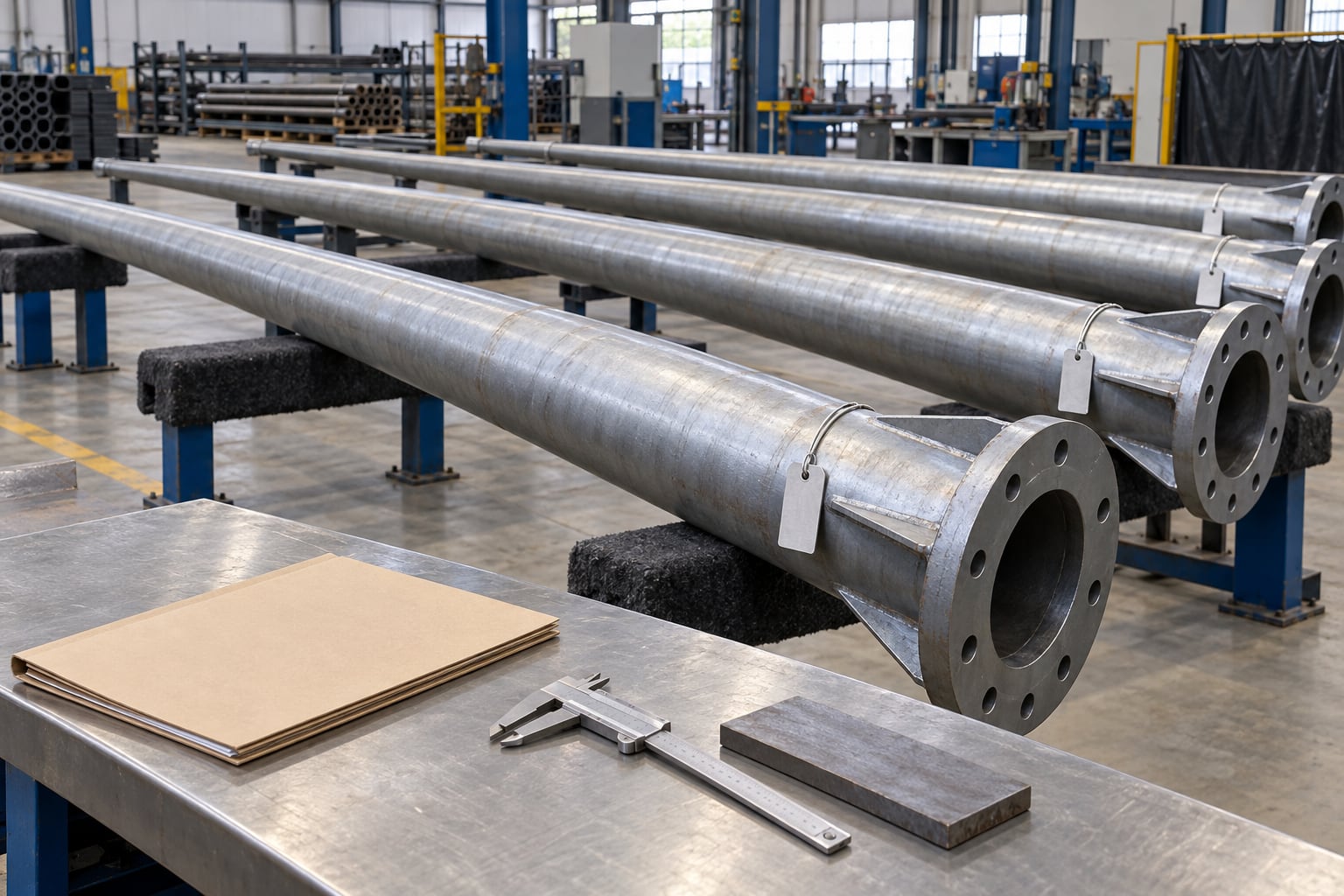
A physical part mark should remain linked to the corresponding material and production record.
The owner may need basic grade identification for a routine pole package or a stronger lot/heat-to-finished-part chain for a critical project. The AISC fabrication FAQ on material identification and traceability distinguishes identification of specified grade and size from traceability of an individual piece to its MTR. That distinction is a useful specification principle, though the governing project standard and local contract control the actual Jieyao deliverable.
Write down the material standard, grade, product form and thickness/size for the shaft, arm, base plate, stiffeners and any other specified steel part. Do not assume all components came from one heat merely because they share a pole mark. Bolts and accessories may follow different product standards and certificates. If substitution is allowed, state who approves it and what comparison evidence is required before fabrication.
| Component | Minimum purchase definition | Traceability decision |
|---|---|---|
| Shaft plate or tube | Product standard, grade, nominal thickness/section and approved drawing | Grade/lot or individual heat link as contract requires |
| Arm or bracket | Material and geometry tied to arm detail | Keep part identity with matching pole type and load schedule |
| Base plate and stiffeners | Steel grade, thickness and base-detail revision | Link to receipt record; heat-to-part map if specified |
| Anchor rods and nuts, if supplied | Product and mechanical requirements from civil design | Preserve supplier certificate and batch/part identification separately |
| Repair or replacement steel | Same controlled definition as original or engineer-approved alternative | Record the deviation and resulting new material identity |
This table is not a claim that every listed part is included in every order. The purchase scope should distinguish supplied items from civil- or electrical-contractor items.
At receiving, check the report issuer, product description, standard/grade, heat or batch identity, dimensions and the results required by the applicable material specification. The AISC FAQ on mill reports lists typical report elements for certain structural steel products, including grade, heat number, nominal size and specified mechanical/chemical results. The exact report fields vary by material standard; an MTR should be checked against the ordered product, not judged by a generic certificate template.
Compare the physical marking and delivery documentation before a plate is cut into multiple blanks. If the marking is unclear or the report cannot be linked to the stock, quarantine the material or resolve identity under the agreed quality procedure. A scanned certificate bearing the right grade but no credible connection to the physical steel is not adequate traceability.

The ordered grade and part identity are checked against the approved pole type.
Once a plate is divided into shaft blanks, its original heat mark may remain on only one remnant. The fabrication plan should transfer identification or record a controlled cut map before the pieces move. When the blank is formed into a tapered shaft, its part mark must stay linked to the approved pole type and drawing revision. Avoid writing on a visible finished surface in a way that would damage the coating or create a false permanence claim.
The shop drawing checklist defines the approved geometry and part marks. Weld records should refer back to the same physical assembly. A traceability system succeeds when a later reviewer can follow one pole mark to its material and manufacturing records without guessing which similarly shaped shaft was used.
At galvanizing or duplex coating, the pole may leave the original fabrication area. The contractor should maintain a robust temporary ID that survives handling and can be cross-checked at return. A coating batch record is useful, but it does not replace the steel material record. Recheck the marks and counted components before final inspection and packing.
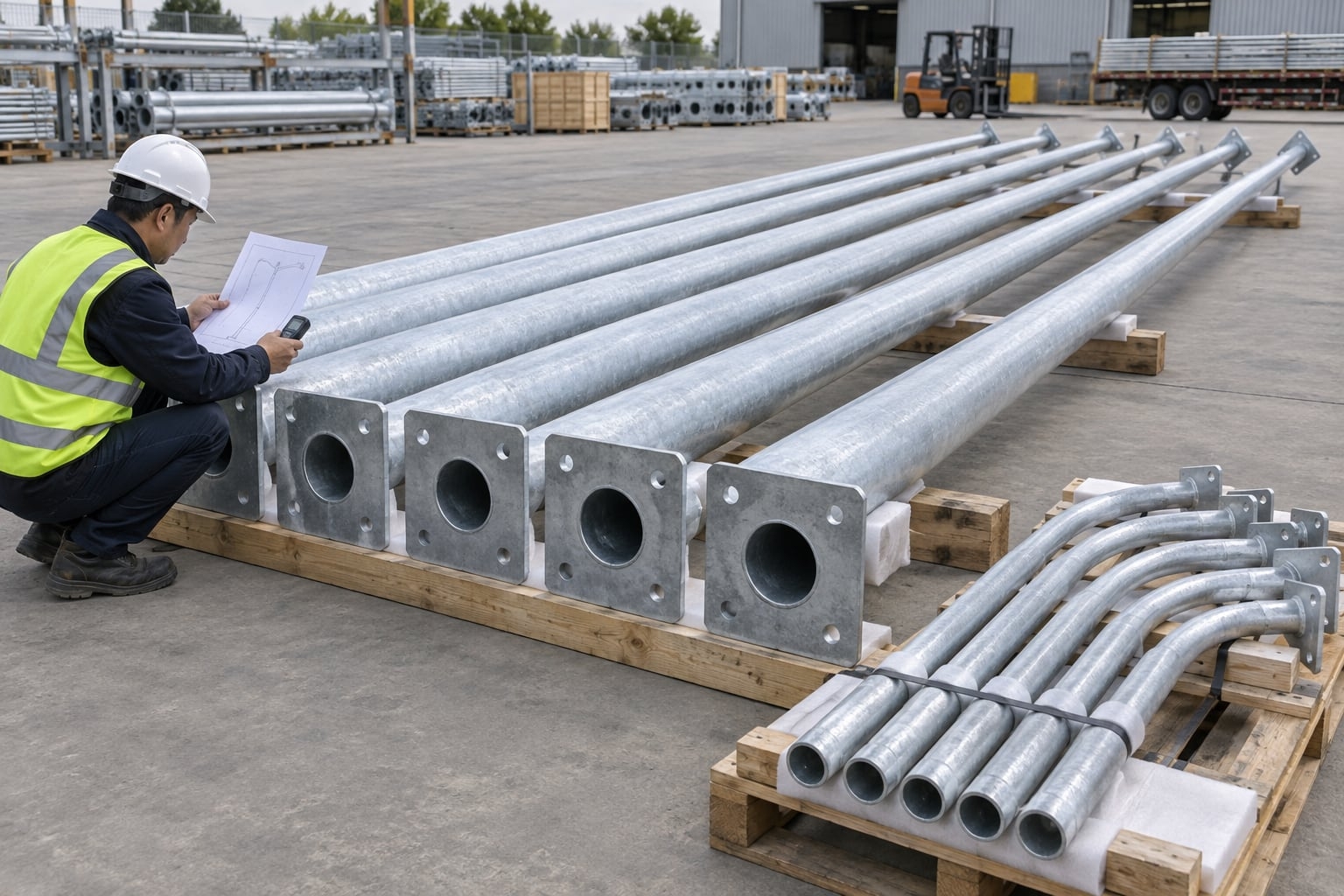
Finished assemblies need a mark that can be followed into the release record.
| Stage | Physical identifier | Required record linkage |
|---|---|---|
| Steel receipt | Mill/stock mark or controlled lot ID | Purchase line, material standard, MTR/certificate and receiving result |
| Cut and forming | Transferred blank/part mark | Cut map or production traveler linking blank to parent stock |
| Fabrication | Pole/arm type and individual or batch mark | Drawing revision, part list, weld/inspection records as specified |
| Coating | Handling-safe item/lot mark | Coating process/batch evidence and return count |
| Packing and shipment | Durable pole/bundle/crate mark | Release sheet, packing list, destination and accessory reconciliation |
The factory acceptance checklist is where the buyer reconciles the final assembly with the approved release documents. The export packing checklist continues the chain into loading and receiving.
If a physical pole mark, cut traveler and MTR disagree, do not silently choose the most convenient document. Isolate the affected material or assembly, investigate the chain and document an approved disposition. The same principle applies when a base plate or arm is replaced during fabrication: its new material record must be added to the assembly map. If the contract allows batch rather than individual traceability, the final certificate should clearly state that scope rather than implying a one-to-one link that was never maintained.
Buyers should also keep record requests proportional to risk and budget. Individual-part heat tracing, witness points and special certificates require planning and may affect price and schedule. Ask for them in the inquiry, not after galvanizing and packing. The street light pole cost guide explains why documentation scope belongs in quotation comparison.
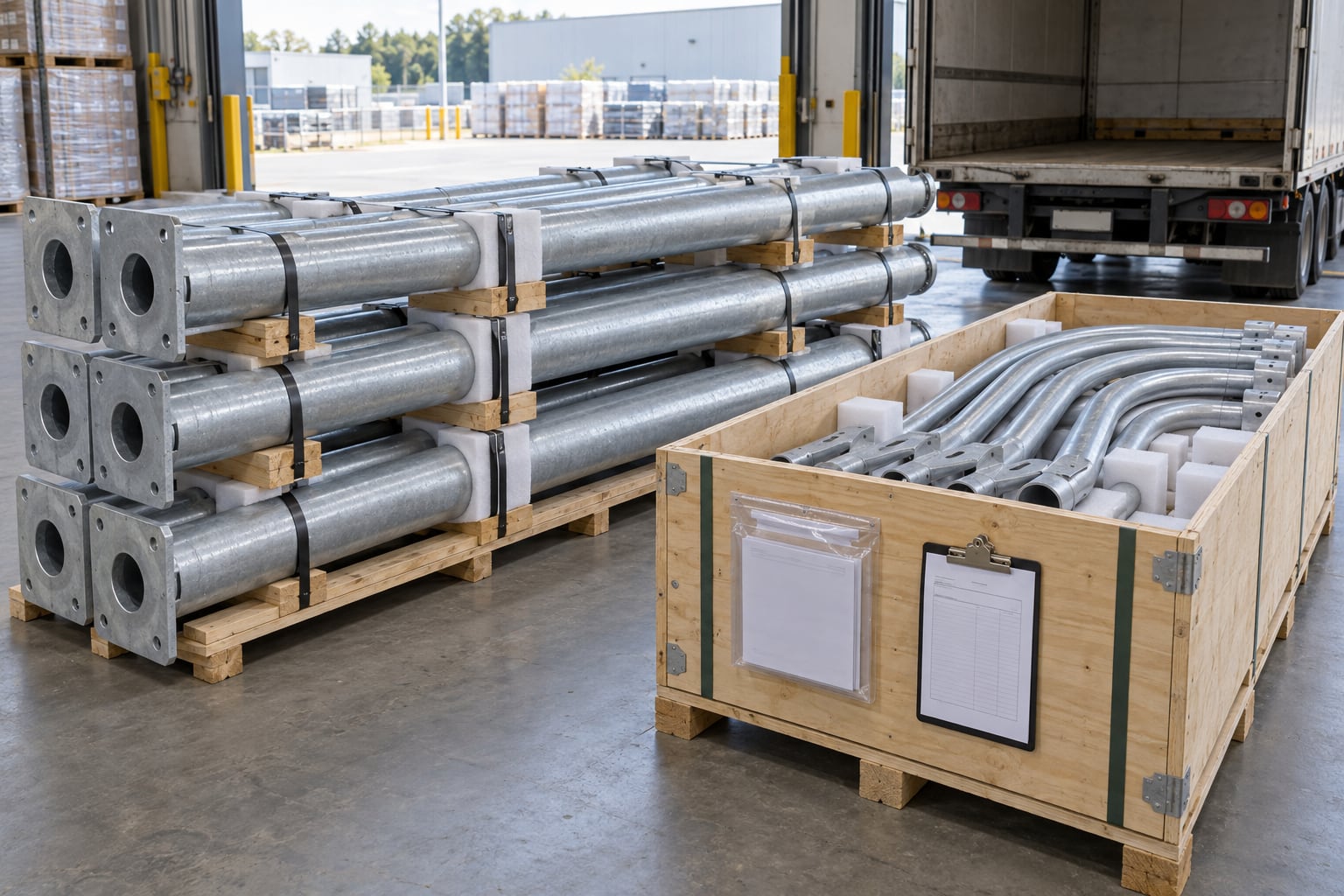
Bundle and crate marks carry the identity chain into shipment and receipt.
Provide the pole schedule, steel standards/grades, material record level, heat/part traceability requirement, required inspection and certificate formats, accepted substitutions and final document index. Identify whether anchors, luminaires and accessories are included in the supplier's scope. The steel street light pole range shows configurable assemblies; send the actual project package through contact for a reviewable response. No website article by itself expands the contracted certification scope.
No. An MTR reports information about a supplied material product. Finished-pole dimensions, welds, coating and assembly need their own applicable checks.
Only if the project requires that level and defines how it is maintained. Grade identification and full heat-to-part tracing are different requirements.
Use the approved cut map and controlled transfer mark to restore the link, or hold the part until identity is resolved. Do not infer grade from appearance.
Not automatically. The engineer must review all relevant properties, thickness, welding, coating, availability and design assumptions, then approve any substitution.
An index linking pole/bundle marks to the approved drawing, material records, required fabrication/coating inspection evidence and packing list, at the traceability level agreed in the contract.
Contact Us
Get a custom lighting solution and quotation for your project. Outdoor lighting manufacturer in Yangzhou, ChinaAbout Jieyao LightingYangzhou Jieyao Lighting Equipment Co., Ltd. is an outdoor lighting manufacturer focused on solar street light systems and high mas... Do you have any questions or requests?
Email: jay@jieyaolighting.com

Click to Chat.
Im online now.