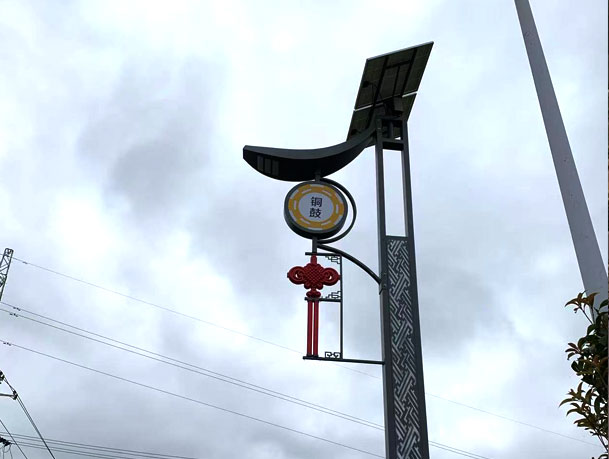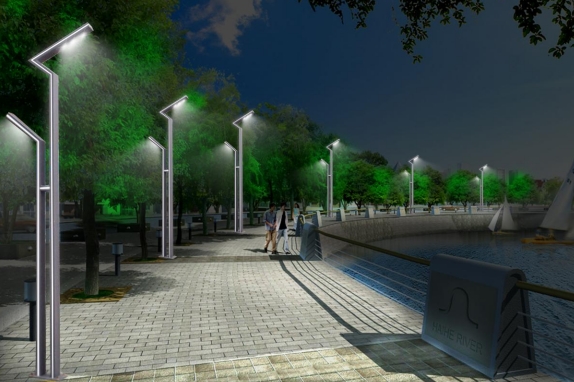


Solar street lighting has become a standard solution for off-grid roads, parking areas, campuses, and remote infrastructure projects. However, when selecting a system, buyers often face one key decision: Should you choose an integrated solar street light or a split solar street light?Although both use solar energy, their structure, performance, and application scenarios are significantly different. Choosing the wrong type can lead to higher maintenance costs, poor lighting performance, or unnecessary installation complexity. This guide breaks down the differences in a practical, engineering-focused way to help you make a clear decision. |
|
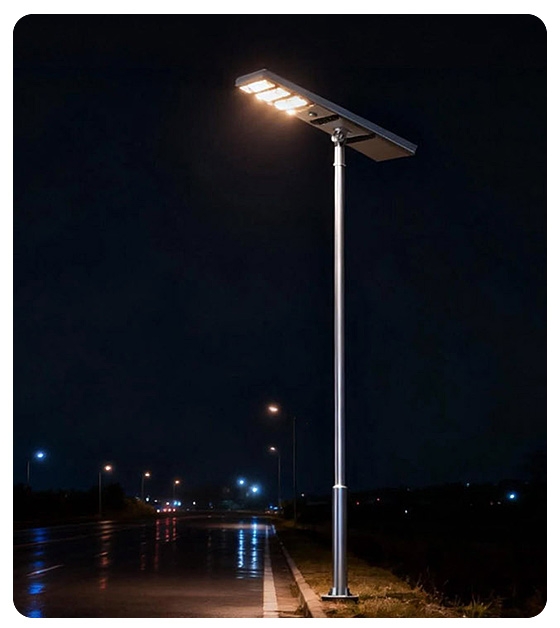
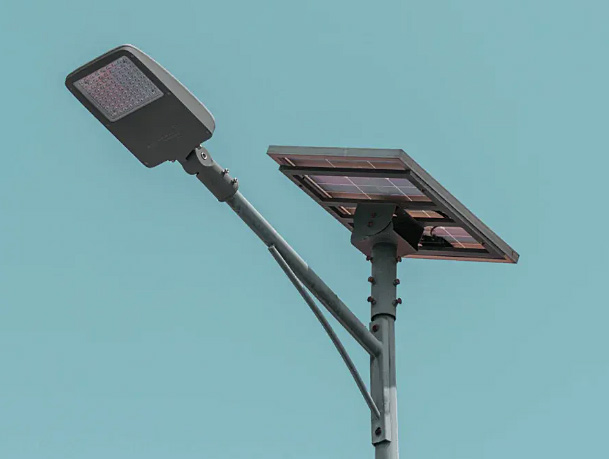
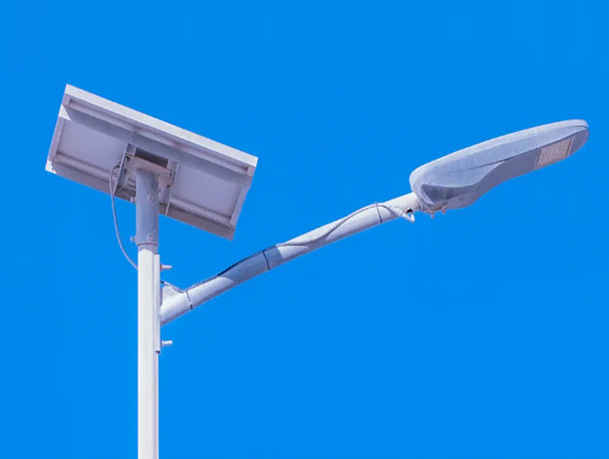
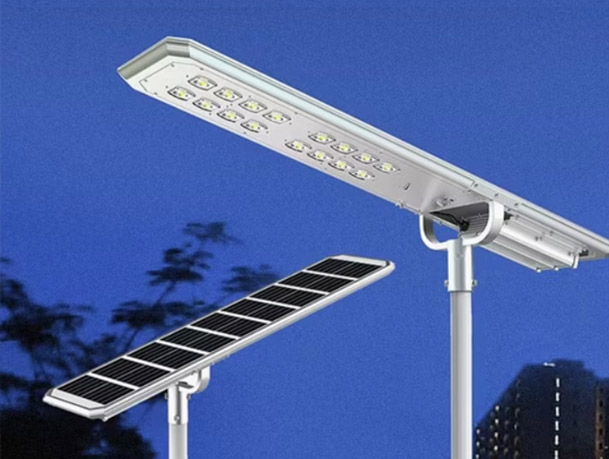
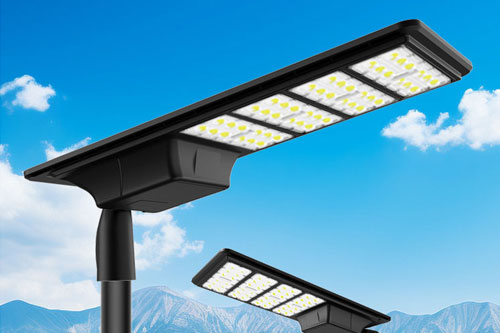
An integrated solar street light is a compact lighting system that combines all essential components into a single structure. The solar panel, LED lamp, lithium battery, and controller are all built into one unified housing, typically mounted directly on top of the lighting pole. This design eliminates the need for external wiring between components, which significantly simplifies installation and reduces on-site labor requirements. Because of its all-in-one structure, the integrated solar street light is widely used in projects where fast deployment and cost efficiency are important. It is especially suitable for residential roads, rural pathways, gardens, parking lots, and temporary lighting applications. However, due to its compact size, the system is generally optimized for moderate power output and is less flexible in terms of battery capacity and solar panel expansion compared to split systems. What Is a Split Solar Street Light? A split solar street light is a modular lighting system where the main components are installed separately rather than being integrated into one unit. In this configuration, the solar panel is typically mounted on the top or side of the pole, the LED lamp is installed independently as the light source, and the battery is placed inside the pole or in an underground battery box. The controller is also positioned separately within the system for better heat management and operational stability. This separated structure allows each component to be optimized individually, making split solar street lights more suitable for high-demand and large-scale lighting projects. They are commonly used in highways, urban roads, industrial areas, stadiums, and public infrastructure projects where higher brightness, longer working hours, and stronger system stability are required. Compared with integrated models, split systems offer greater flexibility in design, larger energy storage capacity, and better performance in challenging environmental conditions. |
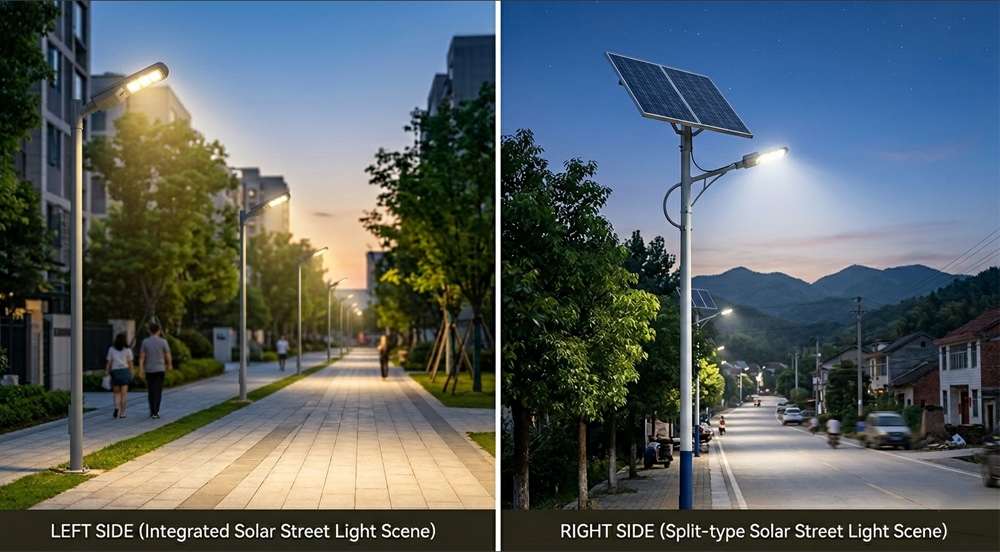
Feature | Integrated Solar Street Light | Split Solar Street Light |
Structure | All-in-one design | Separated components |
Installation | Fast, simple, low labor cost | More complex, requires wiring |
Lighting power | Medium (limited by size) | High (customizable system) |
Battery capacity | Limited | Large capacity available |
Maintenance | Easier replacement but compact design | Easier component-level maintenance |
Wind resistance | Moderate | Strong (better for harsh weather) |
Project scale | Small to medium projects | Medium to large infrastructure |
Initial cost | Lower | Higher but more scalable |
Installation Comparison (Practical View) Installation efficiency directly affects the total project cost of a solar street lighting system, especially for municipal projects, commercial developments, and remote-area deployments where labor and transportation costs are significant. For integrated solar street lights, installation is much simpler because all major components are pre-assembled into one unit. The installer only needs to fix the lighting pole, mount the integrated lamp, and complete the basic setup. Since there is no external wiring between the solar panel, battery, and LED fixture, the risk of installation errors is lower, and the overall process is faster. In most small to medium projects, a single unit can typically be installed within 30 to 60 minutes, making it an ideal solution for fast-delivery projects and areas with limited technical labor. For split solar street lights, the installation process is more detailed because each component must be mounted and connected separately. The solar panel requires its own bracket and angle adjustment for maximum charging efficiency, while the battery system and controller need proper positioning for safety, heat dissipation, and long-term performance. Additional wiring and testing are also necessary to ensure stable operation. Depending on project conditions, installation time usually ranges from 1.5 to 3 hours per unit. Although the process is more complex, this structure provides better flexibility for large-scale engineering projects that require higher lighting performance and customized system design. From a practical investment perspective, integrated systems help reduce short-term labor costs, while split systems are often preferred for projects where long-term performance and maintenance efficiency are more important than initial installation speed. |
Performance and Lighting Stability Lighting performance is one of the most important factors when choosing between integrated and split solar street lights, especially for roads, parking areas, and public infrastructure projects that require reliable nighttime illumination. Integrated solar street lights are designed with all components inside one compact housing, which limits the size of the solar panel and battery capacity. This makes them suitable for moderate lighting needs such as residential streets, pathways, and small outdoor spaces. In normal weather conditions, they provide stable performance, but during long rainy seasons or continuous cloudy days, lighting duration may be affected because of limited energy storage. Split solar street lights offer stronger performance because the solar panel, battery, and lamp are installed separately, allowing larger system capacity and more flexible configuration. Bigger solar panels improve charging efficiency, while larger batteries support longer working hours and higher brightness output. This makes split systems more reliable for highways, industrial zones, and municipal road projects where lighting stability is critical and continuous operation is required throughout the night. |
Cost Difference from a Real Project Perspective When comparing integrated solar street lights and split solar street lights, the real decision should not be based only on the unit price. Buyers should also consider installation cost, maintenance expenses, replacement frequency, and the total lifecycle cost of the project. For small projects with limited budgets, integrated solar street lights usually offer a lower initial investment and faster return. For large municipal or commercial projects, split solar street lights often provide better long-term value because of stronger performance and lower maintenance costs over time. |
Cost Comparison Factor | Integrated Solar Street Light | Split Solar Street Light |
Initial Product Cost | Lower upfront price due to compact all-in-one design | Higher initial price because of separate components and larger system capacity |
Installation Labor Cost | Lower labor cost with faster installation and no external wiring | Higher labor cost due to panel mounting, wiring, and battery setup |
Transportation and Logistics Cost | Lower shipping cost because of simplified packaging and fewer parts | Higher transportation cost because of separate solar panels, batteries, and accessories |
Maintenance and Repair Cost | Medium cost, but some failures may require replacing the full unit | Lower long-term cost because individual components can be repaired or replaced separately |
Battery Replacement Cost | Limited flexibility depending on integrated structure | Easier battery replacement with more configuration options |
Long-Term Operating Cost | Suitable for short-term or small-scale projects | Better for large projects requiring stable long-term operation |
Total Lifecycle Cost | Cost-effective for residential and small road lighting projects | Higher return on investment for highways, industrial zones, and municipal lighting |
In short, integrated systems are often chosen for quick deployment and budget-sensitive projects, while split systems are preferred when buyers focus on durability, stable lighting performance, and lower total ownership cost over 5 to 10 years. |
Application-Based Selection Guide Choosing between integrated solar street lights and split solar street lights depends on the actual project environment, lighting requirements, and long-term budget planning. There is no single “best” option—only the most suitable system for your application. Integrated solar street lights are ideal for projects that require fast installation, lower initial investment, and moderate lighting performance. Split solar street lights are better for large-scale infrastructure projects where higher brightness, longer working hours, and stronger system stability are essential. |
Application Scenario | Recommended Type | Main Reason |
Residential Roads | Integrated Solar Street Light | Easy installation, lower project cost, sufficient daily lighting |
Rural Roads and Villages | Integrated Solar Street Light | Fast deployment in remote areas with minimal labor requirements |
Garden Pathways and Parks | Integrated Solar Street Light | Compact design with clean appearance and simple maintenance |
Small Parking Lots | Integrated Solar Street Light | Suitable brightness with cost-effective investment |
Urban Main Roads | Split Solar Street Light | Higher brightness and stronger lighting stability |
Highways and Express Roads | Split Solar Street Light | Large battery capacity and long continuous working hours |
Industrial Zones | Split Solar Street Light | Better durability and performance in demanding environments |
Stadiums and Public Squares | Split Solar Street Light | Supports high-power lighting and wide coverage |
For buyers, the key is to match the system design with real project needs rather than simply choosing the lower-priced option. A well-matched solar street lighting system can significantly reduce future maintenance costs and improve long-term project performance. |
Need a Reliable Solar Street Light Supplier? Choosing the right solar street light is not only about price, but also about long-term performance and maintenance cost. Whether you need integrated solar street lights for residential roads or split solar street lights for highways and municipal projects, JieYao Lighting provides customized solutions based on your project needs. We support OEM and ODM service, project-based design, fast quotation, and global export delivery. Send us your project requirements today and get professional recommendations with competitive factory pricing. customized lighting solution |
FAQ – Integrated vs Split Solar Street Lights
1. What is the main difference between integrated and split solar street lights? The main difference is the system structure. An integrated solar street light combines the solar panel, LED lamp, battery, and controller into one compact unit. A split solar street light installs these parts separately, which allows larger battery capacity and stronger lighting performance for bigger projects. 2. Which is better for road projects: integrated or split solar street lights? For small residential roads and rural streets, integrated solar street lights are usually enough because they are easy to install and cost-effective. For highways, urban main roads, and municipal projects, split solar street lights are a better choice because they provide higher brightness and longer working hours. 3. Are integrated solar street lights cheaper than split solar street lights? Yes, integrated solar street lights usually have a lower initial cost because of their compact all-in-one design and simpler installation. However, split solar street lights may offer better long-term value for large projects because maintenance and component replacement are more flexible. 4. How long can a solar street light work at night? Most solar street lights can work for 8 to 12 hours per night under normal conditions. Split solar street lights with larger batteries can support longer lighting hours, especially in areas with cloudy weather or high lighting demand.
5. Which type of solar street light is easier to install? Integrated solar street lights are much easier to install because there is no need for external wiring between the solar panel, battery, and lamp. This makes them ideal for fast project delivery and remote areas with limited labor resources. 6. Do split solar street lights last longer? In many cases, yes. Split solar street lights often have a longer service life because each component can be maintained or replaced separately. This reduces long-term maintenance costs and improves overall project reliability. 7. Can solar street lights work during rainy or cloudy days? Yes, both integrated and split solar street lights can work during rainy days if the battery capacity is properly designed. Split systems usually perform better because they support larger solar panels and stronger energy storage. 8. How do I choose the right solar street light for my project? You should consider road width, required brightness, lighting hours, local weather, installation conditions, and project budget. For small projects, integrated solar street lights are often the best option. For commercial roads and municipal lighting, split solar street lights are usually more reliable and cost-effective in the long run. |
Contact Us
Get a custom lighting solution and quotation for your project. About Jieyao Lighting: Leading Manufacturer of Energy-Efficient LED Street Lights1. Manufacturing Background & ScaleEstablished in 2017 and backed by a 20-year manufacturing heritage, jieyao lighting ... Do you have any questions or requests?
Email: mr.xu@yzldzm.com

Click to Chat.
Im online now.