

Lighting systems work well at proper current. LEDs operate under suitable current.
Correct current reduces energy use and cost. Businesses save money through current optimization.
Key Takeaways

l Use a formula to calculate current.Current equals watts divided by volts.
l Check rated lamp current.Prevent overheating and reduced lifespan.
l Keep total current under 80 percent.Avoid circuit overload risk.
l Choose proper wire gauge.Prevent wire overheating.
l Check lighting system regularly.Fix issues early.
Current in Lighting
What Is Amperage?
Current shows how much electricity flows in lighting.It is measured in amperes.
Amperes show electron flow amount.Current indicates wire capacity.A 20 amp breaker limits current.Exceeding current causes overheating risk.
Why Are Amperes Important?
Current control keeps lighting safe.
Excess current causes heat damage.Insulation can fail and cause fire risk.LEDs work better at low current.High current reduces performance and lifespan.Heat control improves LED efficiency and energy saving.
Tip: Check rated current before use.
Watts, Volts, and Amperes
Voltage current and power connect through a formula and calculate lighting current.
Power (watts) = Voltage (volts) × Current (amps)
l amperes = watts / volts.
l volts = watts / amperes.
l watts = volts × amperes.
Results are used to select wires and breakers and avoid overload and faults.
Current Calculations
Basic Formulas
You use a formula to calculate lamp current and determine circuit load.
Current = power / voltage.
You calculate resistance by voltage divided by current and adjust circuit parameters.
Voltage changes current and affect measurement readings.
Total Power
Sum lamp power and calculate total current. Use total power divided by voltage for amperes.
For example: 300W / 120V = 2.5A.
A 15A circuit limits power and controls available lamps.
Multiple Fixtures
You use circuit current and voltage to calculate total capacity.
Total capacity equals current multiplied by voltage.
You compare total wattage with capacity and control available load.
Example Calculation
Let’s look at a real example: a room with several types of equipment.
Equipment | Quantity | Wattage per Unit | Total Wattage |
LED Grow Lights | 5 | 300W | 1500W |
Exhaust Fans | 2 | 200W | 400W |
Air Conditioner | 1 | 1500W | 1500W |
Total Watts | 3400W | ||
Amperage | 15.45A |
Use power and voltage to calculate current.
3400W ÷ 220V = 15.45A.
Compare LED and incandescent wattage and evaluate load.
Check circuit capacity and confirm safety margin.
Safety Tips
Breaker Ratings
You match lighting current to breaker rating using load power divided by voltage.
Current load increases as total wattage rises under fixed voltage.
For example, a 15A breaker supports over 150 LED lamps at 10W each. A 13W LED bulb allows about 100 units on one circuit. For safety, a 15A circuit limits connected devices to about 10–12 when other loads exist.
Overload raises conductor current and increases wire temperature. Insulation failure can lead to electrical fire risk. Excess load shifts voltage and affects connected devices.
Before adding new lights or equipment, check the circuit breaker rating.
Wire Gauge
Choosing the correct wire gauge and breaker is equally important. Wire gauge indicates safe current capacity. Use this table to help you choose:
Wire Gauge (AWG) | Ampacity (Amps) | Common Applications |
14 | 15 | Lighting circuits, small appliances |
12 | 20 | General purpose circuits, small AC units |
10 | 30 | Water heaters, window AC units |
8 | 40-55 | Large AC units, electric ovens |
6 | 55-65 | Electric heaters, large AC units |
Wire gauge mismatch increases electrical resistance in the conductor under load current.
Higher resistance produces heat rise and voltage drop along the cable path.
For example:
l Wires overheat when current exceeds their conductor capacity.
l Lights flicker when voltage drops along undersized wiring.
l Breakers trip repeatedly when wiring cannot sustain load current.
l Thin wires fail under high current and damage connected equipment.
Overheating can reach insulation limits and create fire risk. Voltage drop reduces stable operation of lighting systems. Repeated breaker tripping indicates unsafe load or wiring mismatch.
Common Mistakes
Lighting circuit errors increase total load current beyond breaker capacity margin.
Current overload occurs when connected wattage exceeds safe circuit limit.
For example:
l Too many lamps on one circuit raise total load above safe range.
l Incorrect wire gauge cannot carry required current and increases heating.
l Ignoring the 80% rule reduces safe headroom on circuit capacity.
l Mismatched breaker rating and wiring rating leads to unsafe load conditions.
Overload can trigger breaker trip under sustained current draw. Undersized wiring increases thermal stress in conductors. Ignoring rating limits reduces safety margin in electrical distribution.
Lighting system stability depends on load planning aligned with circuit rating and conductor capacity. Correct material selection maintains current flow within safe electrical limits.
Checklist and Verification
Step-by-Step Checklist
Lighting safety verification uses checklist-based load estimation aligned with circuit rating and conductor limits.
Total current is calculated from total wattage divided by supply voltage.
For example:
l List all fixtures and sum wattage before calculating load current.
l A 20A circuit limits usable current to about 16A safety margin.
l Clamp meter measurement requires a single conductor for accurate current reading.
l More than 10% deviation between measured and calculated current requires system recheck.
Circuit rating defines maximum continuous current capacity.
Voltage drop changes measured current under operating load.
Incorrect clamp setup increases measurement error in current reading.
Here is a quick table to help you recall each step.
Step | Description |
1 | Use the formula: Load (W) = Voltage (V) × Current (A) × Power Factor |
2 | Count fixtures and check if the circuit can handle the load |
3 | Add safety margin and check for voltage drop |
4 | Double-check circuit numbers and loads on your plans |
Verifying Calculations
Lighting verification uses safety margin scaling between total load power and circuit current rating.
Continuous lighting design applies a reduced current limit based on circuit capacity margin.
l Multiply total load by 1.25 for continuous operation safety margin.
l A 20A circuit limits usable current to about 16A maximum design threshold.
l Long wiring runs increase voltage drop and change measured load current.
l Sum all simultaneously operating device wattages before circuit evaluation.
l Local electrical code such as Title 24 may impose additional constraints.
Circuit rating defines maximum allowable continuous current flow.
Voltage drop increases with conductor length and affects load stability.
Exceeding calculated load indicates need for wiring upgrade or circuit separation.
When to Get Help
Sometimes you may need a licensed electrician. This helps keep your home safe and ensures the lighting system works properly. Below are common mistakes and reasons to seek help.
Common Mistakes in Amp Calculations | Implications |
Not counting all wires that carry current | Can cause unsafe measurements and hazards |
Using the wrong amp rating for wires | May lead to overheating and fire risk |
Ignoring voltage drop | Can make your lights dim or cause wrong amp readings |
Electrical uncertainty in load calculation requires professional verification before system operation.
Professional electrician inspection ensures circuit safety under rated load conditions.
Lighting setup follows voltage–current–power relationship using Ohm’s law and load summation across fixtures.
Electrical load increases as total wattage increases under fixed supply voltage.
l Sum all fixture wattages before calculating total electrical load.
l Apply Ohm’s law to compute current from voltage and resistance per lamp.
l Add safety margin to breaker rating to prevent continuous overload.
l Select wire gauge based on expected current to avoid conductor heating.
l Choose power supply with headroom above total calculated load.
Voltage drop increases with conductor length and affects load stability.
Undersized wire increases thermal stress under high current flow.
Breaker rating limits maximum safe continuous current in the circuit.
Use a checklist to verify lighting load matches breaker capacity.
Consult a licensed electrician to review uncertain circuit design and wiring plans.
FAQ
How do you know a lighting circuit is overloaded?
Lights flicker, outlets feel warm, breakers trip.
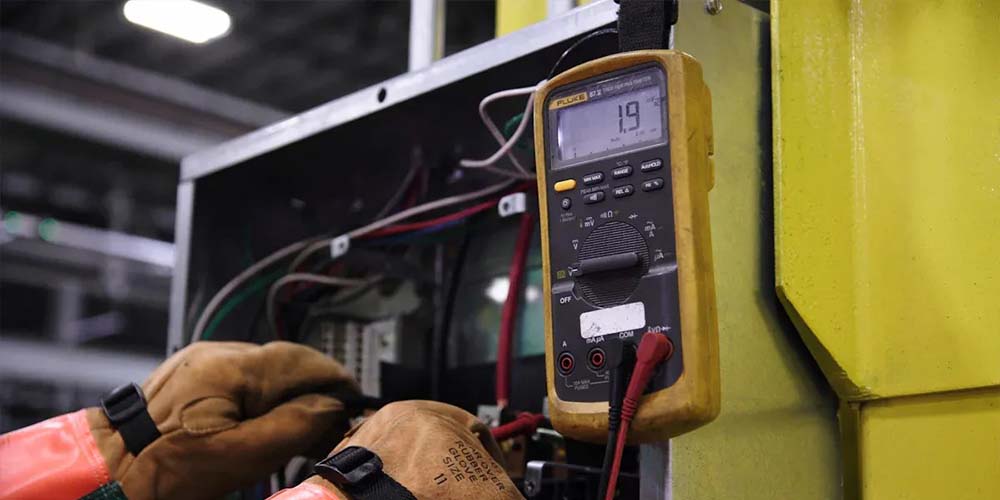
Use a clamp meter to check current.
If readings near the limit, reduce load.
Can LED and incandescent bulbs be mixed?
Yes, they can be mixed.
Keep total wattage under 80% of circuit capacity.
LEDs use less power, so you can add more.
What happens with the wrong wire gauge?
Thin wire overheats.
It can cause fire risk.
Wire size must match current rating.
Wire gauge reference:
Wire Gauge | Max Amps |
14 | 15 |
12 | 20 |
How often should lighting be checked?
Once a year.
Check wire damage, loose connections, heat marks.
Early checks keep the system stable.
Contact Us
Get a custom lighting solution and quotation for your project. Outdoor lighting manufacturer in Yangzhou, ChinaAbout Jieyao LightingYangzhou Jieyao Lighting Equipment Co., Ltd. is an outdoor lighting manufacturer focused on solar street light systems and high mas... Do you have any questions or requests?
Email: jay@jieyaolighting.com

Click to Chat.
Im online now.