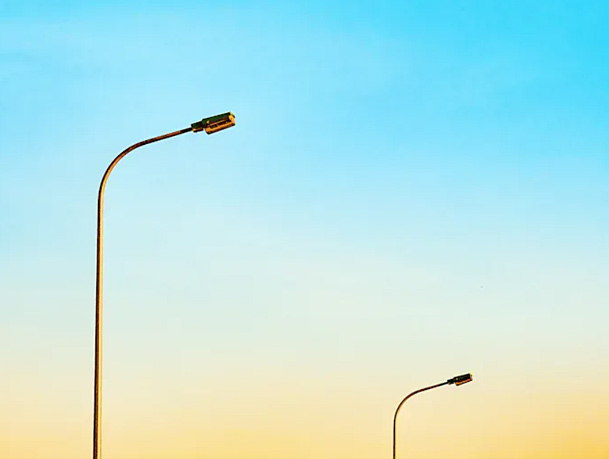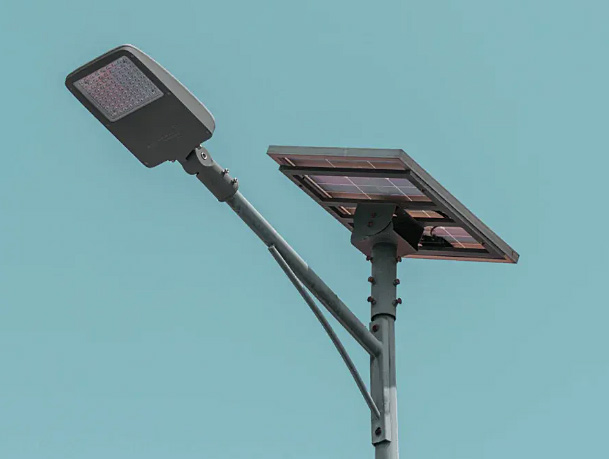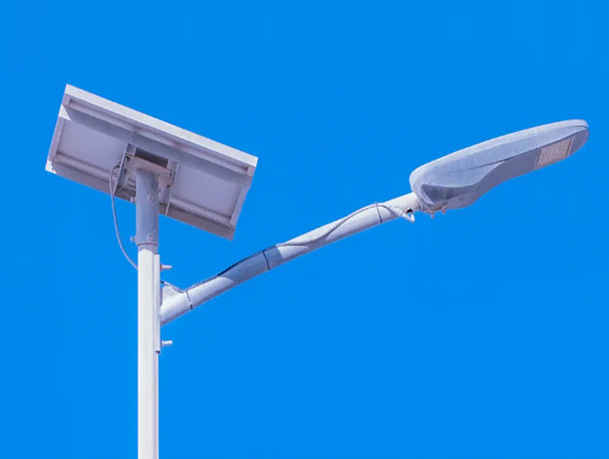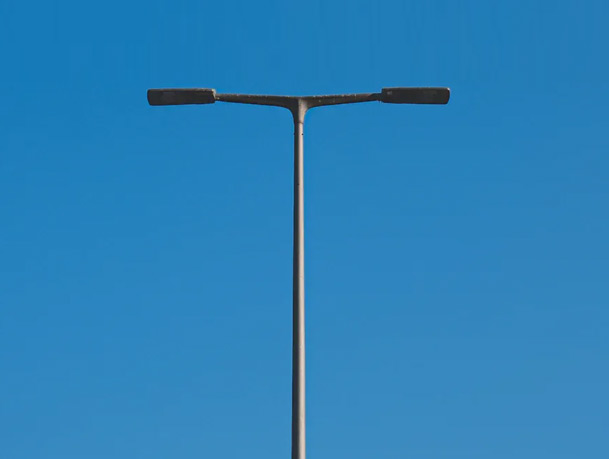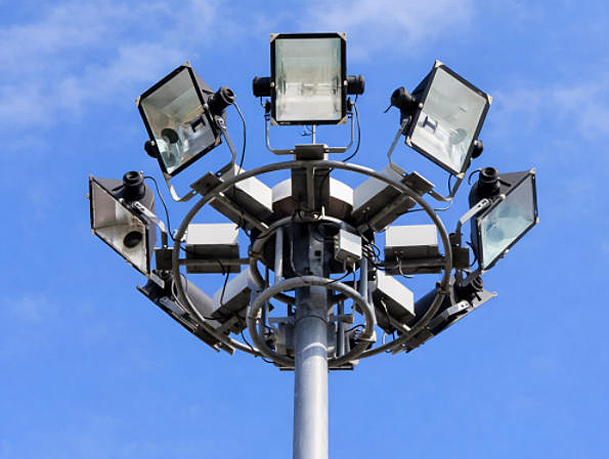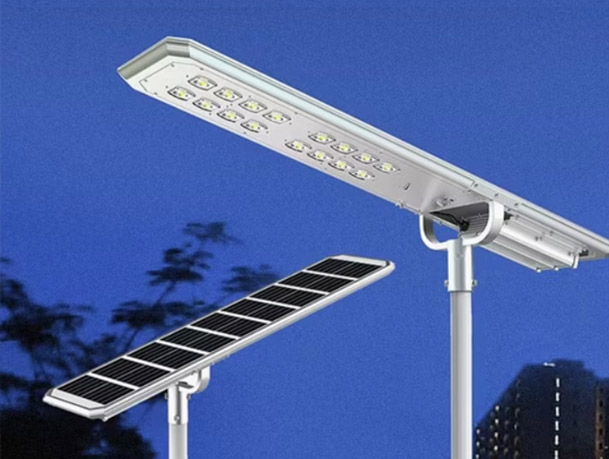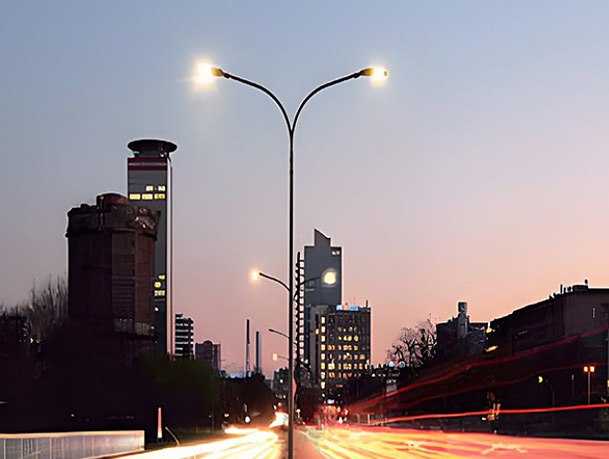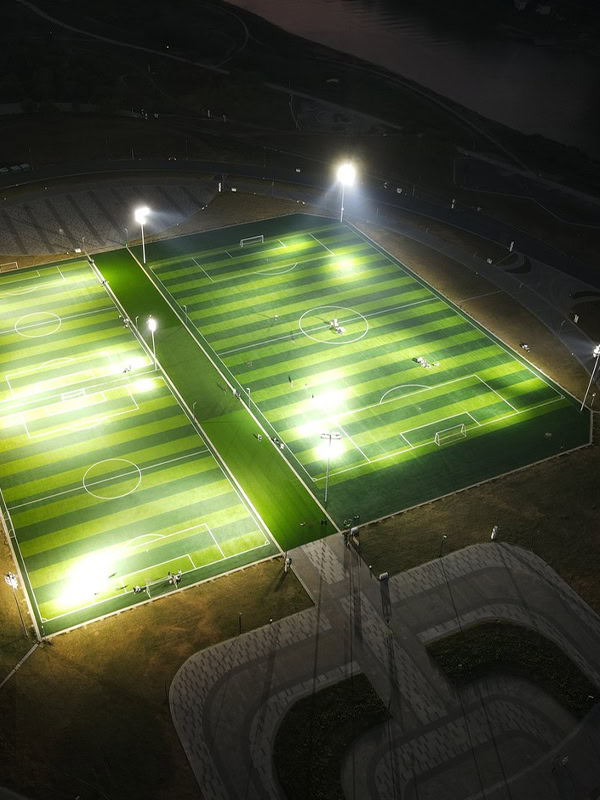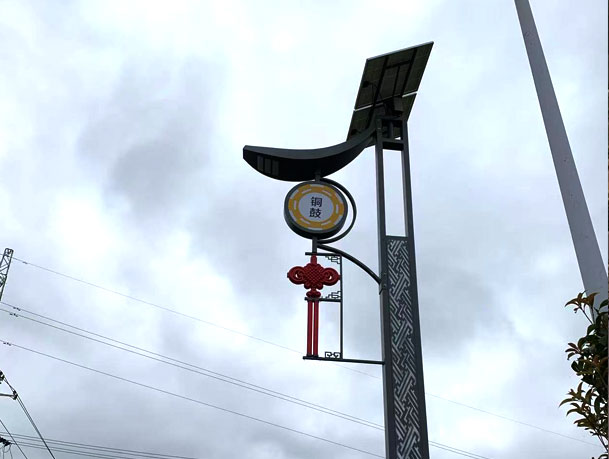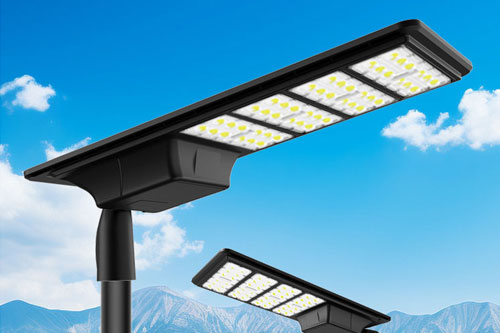


LED streetlights are mainly used for roads, parking lots, and public areas. This type of roadway lighting fixture utilizes LED arrays and driver circuits. It converts power from the grid or solar energy into directional white light.
When buying these lights, the smartest thing you can do is to stop trusting the efficiency numbers on the spec sheets. Instead, ask to see the underlying test reports. Before comparing lumens per watt (LM/W), make sure to request three items from any supplier: an LM-79 photometric report, IES files, and LM-80 chip data. Take our own streetlights as an example. According to an independent LM-79 report (Certificate No. LCSB08185046S), our fixtures measure 119.37 lumens per watt. We specifically use this report number as a key selling point. Verified data on paper is always better than a larger, unproven number on a label.
Distinguishing fact from fiction is crucial in 2026. Right now, high-end LED streetlights reach 130 to 200 lumens per watt across the industry. Many catalogs simply list the highest value in this range. However, very few suppliers will provide an integrating sphere report, IES photometric files, or LM-80 lumen maintenance data to back up their claims. This guide introduces the specifications that truly matter. We show you how to compare suppliers based on solid evidence rather than marketing hype. Furthermore, we explain when the structure under the lamp might be overlooked at your expense.
What an LED street light is and the specs that matter
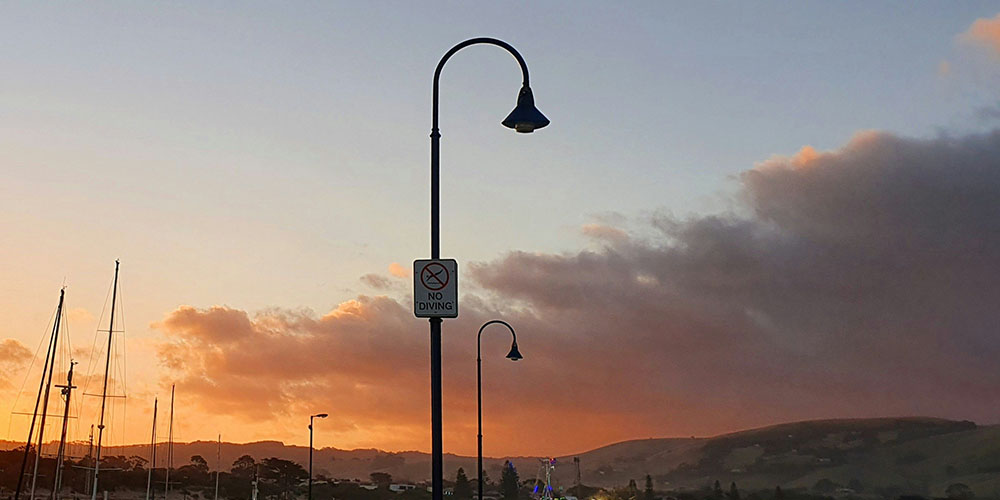
An LED streetlight is a directional outdoor lighting fixture. It consists of three main subsystems: an LED light engine that determines efficiency and color; a driver that regulates current and controls dimming; and a sealed thermal housing mounted on the pole arm to protect against ingress and impact. When all three systems are built correctly, you get a fixture that lasts a decade outdoors.
The choice of chips inside the light engine drives most of its performance. Our fixtures use Lumileds LUXEON 5050 LEDs. Their photometric behavior is clearly detailed in the manufacturer's spec sheets rather than guessed. Using a brand-name, data-supported chip matters because efficiency, color consistency, and lumen maintenance are all tied to the diodes. When suppliers fail to specify the LED chip, you cannot independently verify any numbers they quote.
Four key specifications dictate whether an LED streetlight fits an application. Luminous efficacy (lm/W) measures how much light you get per watt. Total luminous flux (lumens) measures the overall light output. CCT (Correlated Color Temperature, in Kelvin) sets a warm or cool tone, typically ranging from 3000K to 5700K for roadways. CRI (Color Rendering Index) measures how accurately colors appear under the light. Energy efficiency and flux size determine electricity bills and pole spacing, while CCT and CRI set comfort and visibility.
Color temperature carries impacts that go far beyond visual appearance. Roadway projects increasingly lean toward 3000K to 4000K to limit blue light bleeding into homes and the sky. Conversely, parking lots and security sites usually use the 5000K range for brightness. Our fixture was captured under LM-79 testing at 3000K, yielding a total luminous flux of 7170.6 lumens in the report. Always check the actual tested CCT with suppliers because efficacy shifts with color temperature.
The short rule for reading any LED streetlight spec sheet is this: numbers without testing methods are marketing claims, not engineering values. Efficacy comes from LM-79. Lifespan comes from LM-80 and TM-21. Ingress protection comes from IP testing. If a document references a number without specifying a standard next to it, consider that value unverified until the actual report arrives.
Fixture types and where each fits
Outdoor LED lighting fixtures come in many shapes. Different form factors fit different jobs. Choosing the wrong type will waste both light control and your budget.
Cobra head fixtures (also called shoebox lights) are heavy-duty roadway lights. They are mounted on horizontal pole arms to project a controlled, forward beam onto streets or main roads. Our own roadway lineup, such as the LED Streetlight LSL090 and the High-Output LED Streetlight LSL099, is built exactly for this purpose.
Other common outdoor fixtures serve different areas:
l Wall packs mount directly onto building surfaces for perimeter and entrance lighting.
l Floodlights aim a wide beam at facades, yards, or sports fields.
l Post-top lights install on vertical poles for plazas and walkways, where visual appearance matters just as much as light output.
Always match the fixture type to the IES distribution pattern your site requires. Then, use photometric files to verify the data rather than simply assuming the form factor provides that exact pattern.
Verify efficacy by test report, not by the label
Luminous efficacy is the most debated number in LED street lighting. That is exactly why it deserves the strictest scrutiny. The honest way to state efficacy is to reference the actual LM-79 report, including the testing lab and certificate number. Under independent IES LM-79 photometric testing, our streetlight measured 119.37 lm/W at 3000K. This value is officially recorded in report LCSB08185046S, not just claimed on a sales sheet. We cite it this way because the data can be verified.
LM-79 is a standardized method published by the Illuminating Engineering Society to measure the electrical and photometric performance of a complete LED fixture using an integrating sphere or goniophotometer. It reports the total flux, input power, efficiency, CCT, and CRI of the entire light rather than a bare chip. The charts in an LM-79 report describe the actual product you receive. In contrast, charts in a chip datasheet only show the component before driver and thermal losses are deducted.
The second document you need to request is the IES file. An IES file is a photometric data file that describes how a fixture distributes light in a space. Lighting designers load these files into software like DIALux to simulate actual footcandle levels on a roadway or lot. Suppliers who can email you an IES file have actually measured their fixtures. Those who cannot typically have not tested them, which tells you how carefully you need to weigh their lumen claims.
Here is the reality in our manufacturing line: the gap between the theoretical efficacy of a chip and the measured performance of a finished fixture is real. Drivers, optics, and operating temperatures all subtract from the baseline numbers. A headline-grabbing 200 lm/W rating almost always refers to a chip tested at 25 degrees Celsius with low drive current, not a sealed housing heating up on a summer night. Always compare finished fixture LM-79 numbers against finished fixture LM-79 numbers. Otherwise, you are comparing fiction to fact.
How to compare LED street light suppliers
The table below is the request list we will give to our procurement team. Each row shows the required document or specification, along with the reason it separates real manufacturers from simple re-labelers.
Specification | What to demand from the supplier | Why it matters |
Luminous efficacy (lm/W) | LM-79 report with lab name and certificate number | Confirms the efficacy is measured on the finished fixture, not a chip datasheet |
Photometric distribution | IES file usable in DIALux or AGi32 | Lets your designer model actual road coverage and pole spacing before buying |
Rated lifetime | LM-80 chip data plus TM-21 L70 projection | Replaces vague “50,000 hour” marketing with a standards-based projection |
Ingress protection | IP test report with rating and cert number | Verifies dust and water sealing for outdoor service, not a printed IP claim |
Impact resistance | IK test report with rating and cert number | Confirms vandal and debris resistance for street-level mounting |
LED chip identity | Named chip brand and model plus datasheet | Without a named chip, no quoted number can be independently checked |
RoHS / materials | RoHS test report under IEC 62321 | Confirms restricted-substance compliance for EU and many global markets |
Pole and fixture fit | Confirmation the head and pole are engineered together | Avoids arm, bolt-circle, and load mismatches when sourced separately |
The pattern across this entire table is consistent. A supplier who answers every row with real documents is selling an engineered product. On the other hand, a supplier who responds with vague adjectives is simply selling a label. Buyers who have used this checklist rarely go back to comparing raw lumens-per-watt headlines.
Wattage and lumens by application
When choosing the wattage of an LED street lamp, do not just follow the habit of matching old fixtures. You should decide based on the actual lighting effects you need. The correct approach is to determine the target illuminance and pole spacing first. Then, you can calculate the required output power.
This sizing logic also applies to off-grid solar streetlights. The limits of solar panels and batteries determine the upper capacity. Therefore, you must weigh these constraints when selecting the wattage. You can refer to our guide, Choosing the Wattage of All-in-One Solar Street Lights, for detailed trade-offs.
In standard industry practice, typical roadway LED fixtures range from 100W to 300W. The lumen output you need is proportional to the road classification and mounting height.
As a planning guide from typical industry experience, a residential street fixture usually produces about 5,000 to 10,000 lumens. Meanwhile, highway and main intersection lights often exceed 20,000 lumens. Please note that these are industry reference numbers, not specs for a single product. The only way to confirm if a specific light meets these standards is to check the total lumen value in its LM-79 report. You can use these ranges to short-list products and then verify them with the test data.
LED street light application | Typical wattage (industry range) | Typical lumen output (industry range) |
Residential / minor street | 60W to 120W | ~5,000 to 10,000 lm |
Collector road / urban arterial | 120W to 200W | ~12,000 to 22,000 lm |
Highway / major intersection | 200W to 300W+ | 20,000+ lm |
Parking lot / area lighting | 80W to 240W | ~9,000 to 28,000 lm |
Higher luminous efficacy directly changes the energy calculation. To achieve the same brightness goal, a fixture at 150 lm/W consumes less wattage than one at 110 lm/W. That is why verified efficacy values are critical. They directly affect your power budget and the scale of electrical services.
Conversely, inflated efficiency ratings on a label are expensive. You would have to size your wiring and circuit breakers around lumens that you never actually receive.
LED vs HID and HPS: why the retrofit math works
Technology Upgrade and Benefits
Most streetlight replacement projects swap out traditional High-Intensity Discharge (HID) sources. These are usually High-Pressure Sodium (HPS) or metal halide lamps. The choice for LEDs relies on physics and maintenance, not marketing.
HPS lamps emit light in all directions and need a reflector to aim it. This design wastes a lot of light inside the housing. In contrast, LED arrays direct light straight from the diodes. According to the U.S. Department of Energy, this solid-state lighting is much more efficient than the old HID technology it replaces. Furthermore, old lamps dim gradually over time instead of failing suddenly. HPS bulbs also have poor color rendering (CRI), which causes the orange glow on old highways. They run hot and steadily lose brightness throughout their lifespan.
Practical Performance of LEDs
On the other hand, LEDs maintain their color temperature (CCT) and CRI over time. They dim instantly and can handle frequent switching cycles without breaking. They also pair well with smart controls. An LED fixture like the LSL094 delivers the same road surface brightness as an old HPS cobra head but uses a fraction of the wattage. This difference drives energy savings and utility rebates. When making comparisons, look at the footcandles in IES files rather than nameplate wattage. Because LEDs are directional, a lower wattage can do the exact same job.
New Efficiency Standards in 2026
The baseline for efficiency is moving up in 2026. The DesignLights Consortium (DLC) finalized its SSL Technical Requirements V6.0 in November 2025. Applications opened in January 2026. This update raises the minimum efficacy requirements by about 14% on average across all categories. If your project or utility rebate relies on the DLC Qualified Products List (QPL), the fixtures you buy in 2026 must meet a higher standard than what was required a year ago. Always get written confirmation of the current DLC listing status before buying.
Durability: IP66, IK10, and the enclosure
l Housing Protection and Proof
The housing determines whether an LED streetlight can survive severe storms and rock impacts. It features two ratings: IP for dust and water resistance, and IK for physical impact protection. You should not just trust the "IP66/IK10" printed on a brochure. That is merely a claim. Instead, require an official test report with a certificate number as real proof.
l What is the IP66 Rating?
IP66 is an ingress protection standard. According to the international code, this means the enclosure is completely dust-tight and handles powerful water jets from any direction. For a fixture exposed outdoors for a decade, blocking dust is just as important as stopping water. Fine dust inside the optical chamber dims the light and traps heat. Our housing is independently verified as IP66 under certificate LCSB08185044S.
l What is the IK10 Rating?
IK10 is the highest level of impact resistance. It certifies that the shell can withstand bumps during maintenance, flying debris, and accidental impacts. Low-mounted streetlights face a lot of abuse, and a cracked lens ruins all other specs. Our enclosure is independently certified to IK10 with license LCSB08185045S. Asking for an IK report is the fastest way to separate rugged outdoor fixtures from modified indoor panels.
l Material Compliance and Longevity
Material compliance is also part of the durability discussion because hazardous substances and corrosion shorten a product's lifespan. Our LED components are tested for RoHS compliance under EU Directive 2011/65/EU and its amendment 2015/863/EC. We use the IEC 62321 testing method. For buyers shipping to the EU or markets with similar rules, a RoHS test report is not optional; it is a requirement for market entry.
Lifetime: LM-80 and TM-21, not a marketing hours number
l Measuring Lifespan with Science
When evaluating the lifespan of an LED streetlight, do not rely on round numbers like "50,000 hours." A figure without a testing method is meaningless. Unlike incandescent bulbs, LEDs do not burn out suddenly; they fade over time. Therefore, the real question is how long it takes for a fixture to drop to 70% of its initial brightness. The answer must come from specific tests and projections, not a marketing department.
l Standard Testing and Projection Methods
The industry uses a standard process for this. LM-80 is the IES method for measuring LED lumen maintenance over thousands of hours under controlled temperatures. Then, TM-21 is the companion method used to project that data into an L70 lifespan. We determine our LED longevity through IES TM-21-11, using actual chip metrics from LM-80. This approach prevents anyone from inventing a single hourly figure. The key phrase to ask a supplier is: "Is your L70 projected via TM-21 from your LM-80 data?" This ensures you get real measurements.
l Rejecting Vague Marketing Claims
If a quote only lists "Lifespan: 50,000 hours" without context, consider it undefined. It fails to state the operating temperature, driver current, or lumen maintenance threshold. Once you ask whether it means L70, L80, or L90, or inquire about the chip test temperature, two fixtures with the exact same 50,000-hour label can differ greatly in actual service years. Standards eliminate ambiguity, while marketing numbers maintain it.
Reliability and the driver
l Drivers are the Core Failure Point
The driver is the component most likely to break in an LED streetlight, so it deserves direct inspection. Based on our field experience, lamps flicker or go out mainly because of faulty or low-grade drivers. Voltage fluctuations, loose connections from vibration, poor grounding, or heat damage also cause these issues. Early on, replacing a driver is usually faster and cheaper than swapping out the whole fixture. Suppliers who specify the driver brand and address these failure modes sell a ten-year product, not just a warranty.
l Balancing Specs and Costs
This is why surge protection, driver brands, and thermal designs belong alongside efficiency on a spec sheet. A 200 lm/W light engine paired with a cheap, unprotected driver is just a roadside failure waiting for its first power surge. We view the driver and its thermal path as a reliability decision, not a cost-cutting goal. Replacing a failed component requires a bucket truck and road closures, which gets very expensive.
The integrated pole-and-head advantage
l The Advantage of Combined Sourcing
A streetlight is only as reliable as the structure supporting it. Buying fixtures and poles separately creates a liability gap where no one takes responsibility. We package the pole and light together. The poles meet EN 40 and EN 1090 standards, using S355 steel that is hot-dip galvanized to ISO 1461. This coating outperforms ISO 12944 C4 corrosion specifications. Consequently, the LED head and its mount share a verified wind-load and anti-corrosion system. You get one vendor, one load calculation, and one rust warranty.
l Avoiding Installation Mismatches
Sourcing the head and shaft from a single manufacturer also eliminates common integration headaches. When components come from different suppliers, you must coordinate arm fit, bolt circles, and weight capacities in the field. Often, they do not match. Buying from one source ensures these elements align during the design phase. This prevents the fitment gaps caused by purchasing two separate pieces. Such errors usually lead to field rework, custom adapters, and delayed project completion.
l Structure Determines Final Quality
The structural viewpoint is where quality discussions truly end. Buyers can chase the highest lumens per watt but still end up with a fixture that wobbles in the wind, rusts at the base, or misaligns during setup. Winning a decade of service requires a system-wide design. An optimized light engine, an IP66/IK10 housing, an LM-80 backed lifespan, and an EN 40 pole must be certified together. This setup is the audit-proof version of the "best" product.
l Advice for Commercial Buyers
Therefore, commercial buyers face a simpler choice than the spec-sheet war suggests. Select vendors whose claims include report numbers, whose lifespans use L70 projections, whose housings pass impact tests, and whose poles and heads form a single engineered system. Start by emailing the list of eight document requests to candidates. Make your final decision based on official reports rather than marketing adjectives.
FAQ
1. What is a good efficacy for an LED street light in 2026?
High-end LED streetlamps reach 130 to 200 lumens per watt (lm/W) across the industry. However, the more important figure is whether an LM-79 report for the finished fixture verifies its efficacy.
A certified measurement of 119.37 lm/W is more trustworthy than a 200 lm/W label without test data. Compare the LM-79 numbers of finished fixtures against each other. Do not evaluate a raw chip datasheet against a completed lamp.
2. How do I verify a supplier’s lumens-per-watt claim?
Request the LM-79 photometric test report, IES files, and the LED chip brand. The LM-79 report measures the efficacy, flux, CCT, and CRI of the entire completed fixture in a lab. Meanwhile, IES documents allow your designer to simulate actual road illumination. If a vendor cannot provide both, their cited efficiency is unverified and should be discounted in your comparisons.
3. What IP and IK ratings should an LED street light have?
Outdoor fixtures should meet the IP66 standard for a total dust-tight seal and resistance to powerful water jets. They must also achieve an IK10 rating to withstand maximum impact from vandalism and debris. Independent test reports with certificate numbers must support both ratings. A printed spec on a brochure is just a claim, not proof. IP66 shields the optics and driver, while IK10 protects the lens at street level.
4. What does LED street light lifetime actually mean?
Streetlamp longevity is best expressed as an L70 projection. This indicates the point where the light fades to 70% of its initial output. The calculation comes from LM-80 chip data and is projected using the TM-21 method. A bare "50,000 hours" claim without testing temperatures, drive currents, or lumen maintenance thresholds is undefined. You should not use it to compare fixtures directly.
5. How many watts and lumens do I need for a street light?
Typical roadway LED fixtures range from 100W to 300W as an industry standard. Generally, a residential street requires about 5,000 to 10,000 lumens, while highways and main intersections often exceed 20,000 lumens. Customize your lights based on target brightness, mounting height, and pole spacing rather than matching old wattages. Finally, confirm the specific output using the LM-79 total flux value.
6. What is DLC SSL V6.0 and does it affect my purchase?
DLC SSL V6.0 is the technical requirement for solid-state lighting set by the DesignLights Consortium. Finalized in November 2025, applications opened in January 2026. This update raises minimum efficiency requirements by about 14% on average. If your project relies on utility rebates or the DLC Qualified Products List, get written confirmation that the fixtures meet current V6.0 rules before ordering.
7. Why buy the LED head and the pole from the same manufacturer?
Sourcing both pieces from one manufacturer ensures that arm fit, bolt circles, and load ratings align by design. This avoids field integration gaps that happen when fixtures and shafts come from different vendors. It also places structural load calculations, anti-corrosion systems, and warranties under a single responsible supplier.
Contact Us
Get a custom lighting solution and quotation for your project. Outdoor lighting manufacturer in Yangzhou, ChinaAbout Jieyao LightingYangzhou Jieyao Lighting Equipment Co., Ltd. is an outdoor lighting manufacturer focused on solar street light systems and high mas... Do you have any questions or requests?
Email: jay@jieyaolighting.com

Click to Chat.
Im online now.