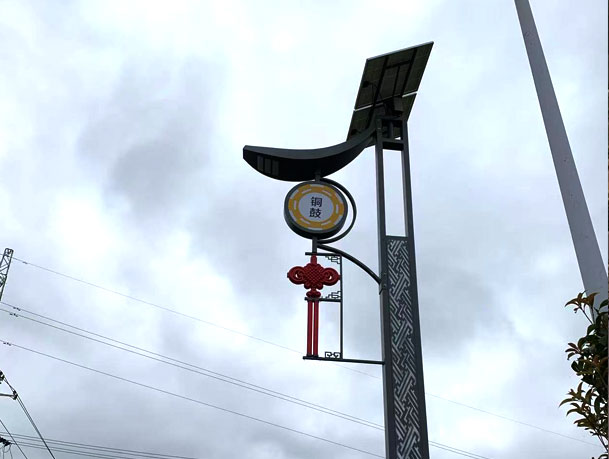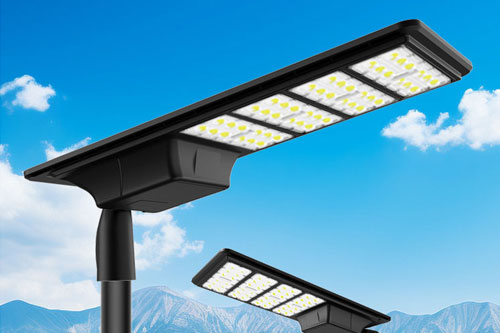


Off-grid solar street lights do not need a grid connection. They also eliminate the need to bury cables. These lighting fixtures feature an independent power system. They run entirely on their own solar panels and batteries. Because of these unique benefits, they are perfect for rural roads. New city corridors and remote projects also use them.
However, two key factors determine if these lights will survive long-term. You cannot find these specs on the product data sheet.
The first factor is the battery autonomy. We must set the backup storage capacity based on the worst cloudy days.
The second point is the pole foundation. Engineers must design the base for actual wind zones and local soil conditions.
Many blogs heavily promote off-grid solar tech today. This article focuses on the two main reasons for their failure.
We once shipped light poles to some road projects. Those sites were only a few miles away from the nearest power transformer.
Smart buyers design their systems around specific roadways and local weather. On the other hand, some customers customize their batteries using an average sunny month. They also stick standard bases into soft ground. As a result, they often face negative feedback after just two winters.
Why off-grid wins on a road corridor
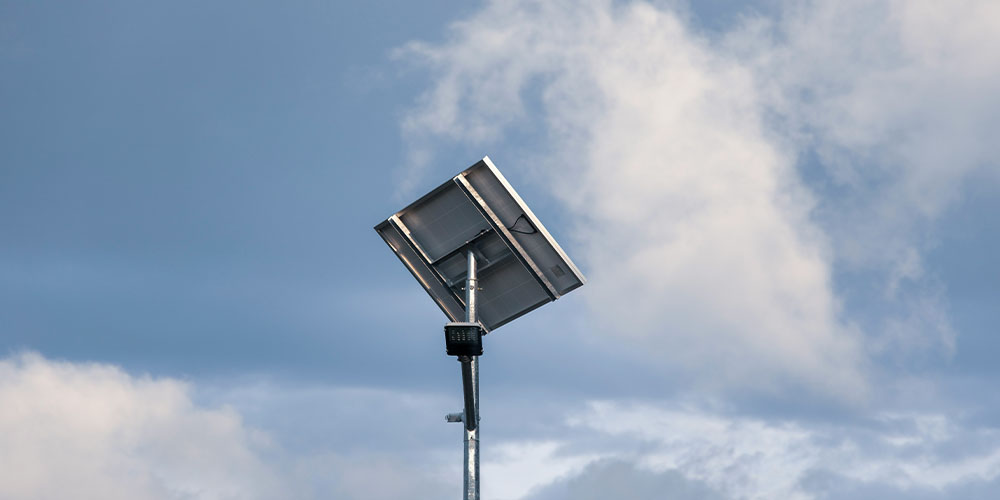
Off-grid solar street lights eliminate trenching. They do not require a grid connection either. Therefore, crews can deploy them one by one. Each light starts charging on the very day of installation. This removes the most expensive budget item in rural lighting projects: bringing electricity to the roadway in the first place. With this tech, there are no cable runs. Workers do not need to restore damaged roads, and nobody has to wait for utility interconnection.
The financial logic depends entirely on grid extension costs. In this industry, pulling medium-voltage lines to remote corridors is very pricey. The expense usually exceeds $25,000 per kilometer once you factor in digging, conductors, and repaving. Consequently, a 4-kilometer rural road might require a six-figure connection fee. This huge cost happens before a single fixture is even installed. Both World Bank energy access studies and International Energy Agency analyses confirm this reality. They document why standalone solar setups are much cheaper than expanding lines for low-density loads far from existing infrastructure. Off-grid solar shifts capital from underground wiring to assets on the pole. This matches the exact reasoning behind all-in-one solar street lights in municipal projects.
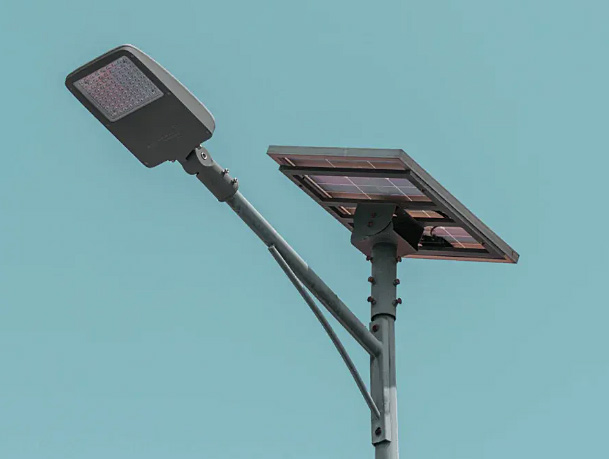
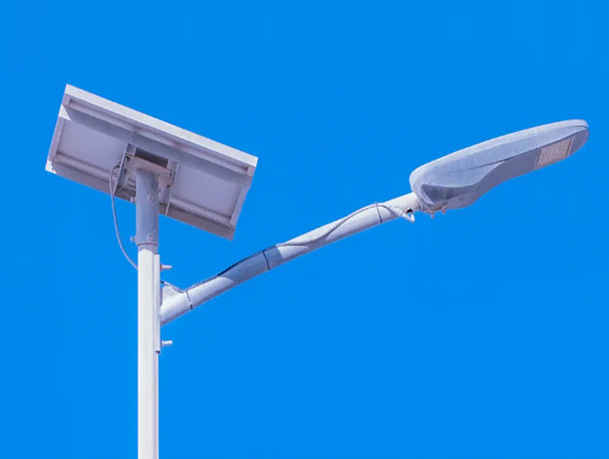
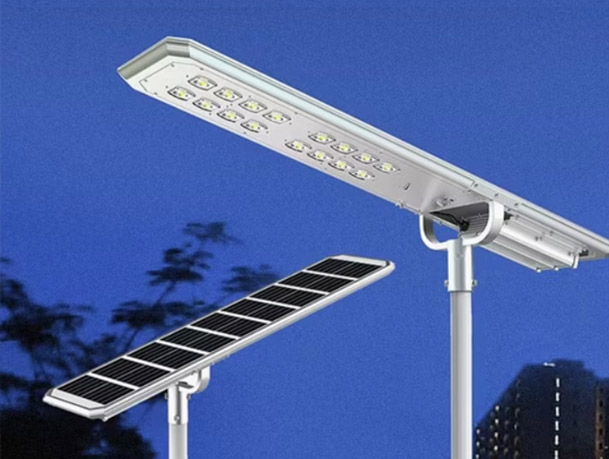
Systems providing this functionality come in two main designs. An all-in-one solar street light integrates the LED head, panel, LiFePO4 battery, and charge controller into a single unit on the pole. Conversely, a split system separates the solar panel and battery storage. This configuration serves heavy loads or sites with low sunshine. For city roadway engineering, the choice depends on local peak sun hours and energy needs. Buyers should not just pick whichever option looks cleaner in a catalog.
Off-grid solar vs grid extension | Off-grid solar street lighting | Grid-extended conventional lighting |
Power to the road | None needed, self-generating | Trenching plus utility interconnection |
Indicative connection cost | Built into each pole | USD 25,000+/km (industry figure) for line extension |
Deployment speed | Pole by pole, energised on set | Sequenced after the full cable run |
Ongoing energy bill | Zero | Metered grid consumption |
Main failure points | Battery autonomy, pole foundation | Cable faults, supply outages |
Best fit | Rural roads, new corridors, remote sites | Dense urban grids already powered |
Autonomy days, not luminaire headline numbers
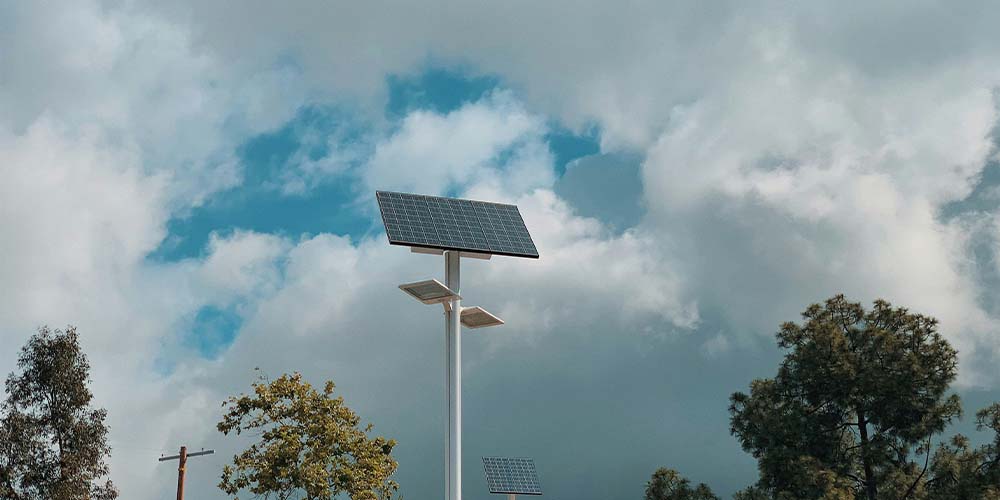
For off-grid road safety, battery autonomy and foundation design matter more than lighting metrics. In real-world applications, battery sizing and pole bases are the actual points of failure. A fixture might hit every single lux target on its datasheet. However, it will still go dim on the fourth cloudy night if the battery is undersized. Autonomy is the true number that keeps the roadway illuminated.
Days of autonomy means how many consecutive nights a light can run without any solar charging. The top cause of solar street light failure is undersizing the setup. Engineers must reverse-engineer the system. They should start with the lux requirements of the road and the worst-case local sunlight. They should not design backward from a catalog. "Worst-case" refers to the gloomiest week of the worst month, not the annual average. Monsoon regions and high deserts require entirely different battery capacities.
Two key inputs sit right beneath that autonomy rating. The first is depth of discharge (DOD). The usable storage capacity equals the total kilowatt-hours on the label multiplied by your allowed DOD. A battery cycled to an 80% DOD offers much less working energy than the label shows. Over-discharging will shorten its lifespan. The second input is sizing the solar panel based on actual sun hours. The array must harvest enough power to run the light all night and replace depleted energy. This must be calculated using the peak sun hours of the worst month at that specific latitude. Our solar sizing guide calculates this in detail. If you underestimate either input, the autonomy claims on the datasheet will never happen in the field.
Chemistry determines how long this capacity will last. Compared to old GEL lead-acid options used in legacy off-grid lights, LiFePO4 batteries maintain usable capacity at deeper DODs and higher cycles. They also handle the cold much better. That is why GEL setups with the same nominal autonomy degrade much faster in remote corridors. Cycle life and temperature behavior are documented in the IEC 61427 standard for solar storage. For municipal off-grid projects, investing in premium chemistry ensures the system still retains its autonomy in year five.
Dimming is the primary lever to extend battery life. Solar equipment should operate on a dimming schedule. They can run at full power after dusk, then drop to 30% to 60% output during low-traffic hours. This prolongs battery autonomy on overcast days. It is also how solar setups drastically reduce energy costs compared to the grid. A proper dimming profile gives you extra run time from the same battery without leaving the road completely dark.
In the context of the industry in 2026, lithium iron phosphate options now offer a lifespan of five to seven years. They perform much better in cold weather than older chemistries. Meanwhile, monocrystalline solar panels reach efficiencies of about 22% to 24%. We describe these as general market data, not Leappole specs. The right battery size for your project depends entirely on your roadway, latitude, and worst-case sunlight. It is never a one-size-fits-all number.
The foundation is the other failure point
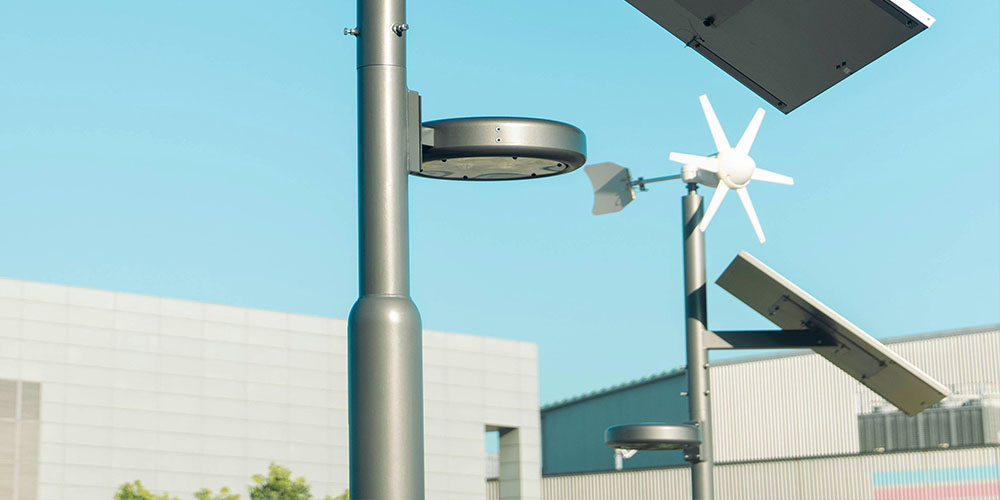
At the end of the day, a solar street light is still a structural pole. We manufacture these columns using S355 steel. We also calculate wind loads to meet EN 40 and EN 1090 standards. This is crucial because solar poles carry an extra cantilever load from the panels. They must withstand severe storms just like standard grid-connected poles. A panel near the top increases the overall sail area. This setup creates a much higher overturning moment during a storm. If you size a pole only for a light fixture, the structure will be severely under-designed once you attach the solar panels.
The foundation must match the actual installation site. You cannot just use a generic blueprint. The local wind zone dictates the load that the pole and base must resist. Meanwhile, the soil class determines how that pressure transfers into the ground. Copying a foundation design from another project is risky. A pole that stands straight for ten years in hard dirt might tilt or pull out in soft or saturated soil. On rural roads, nobody driving by every day will notice a leaning pole until it completely fails.
This reality is exactly why off-grid projects face higher risks. Grid poles on city streets are regularly inspected and repaired. Conversely, solar units on remote corridors might go without maintenance for years. Therefore, the structural and corrosion specifications must be correct right at installation. Wind load calculations and foundation designs are not optional extras for off-grid jobs. They represent the sole difference between a 15-year asset and an immediate warranty claim.
Roadway lighting classes dictate pole spacing and mounting height, not the solar hardware. Spacing is usually 3 to 4 times the installation height. Target illumination and uniformity for different roads are defined by the EN 13201 street lighting standard. The Illuminating Engineering Society provides equivalent recommended practices as well. Light output requirements vary significantly from small rural lanes to major arteries. Going off-grid changes nothing about the lux targets. It simply means each pole must carry its own panel and battery to achieve those metrics. This requirement is exactly why we created integrated units like our Gauda solar-powered smart street lights. They are engineered to match the specific spacing of the corridor, rather than being dropped at fixed intervals randomly.
Galvanizing for sites nobody visits
In rural and coastal areas far from the grid, nobody will spot early rust in time. If anti-corrosion planning is poor during the specification stage, future maintenance becomes a nightmare. Therefore, you must lock in the survival strategy and lifespan upfront. To solve this, we use hot-dip galvanized solar poles that meet the ISO 1461 standard. We also apply a powder coating that exceeds ISO 12944 C4 guidelines. This heavy-duty finish is perfect for remote sites where upkeep is expensive and rare. It shares the exact same durability logic as municipal street lighting columns. In distant or coastal locations, this galvanization and C4 combination buys you extra protection against corrosion. It safeguards assets where you cannot easily return with touch-up tools.
Electronic components demand the same "unattended reliability" mindset. Our outdoor enclosures are independently verified to meet IP66 ingress and IK10 impact ratings. This protects the batteries and charge controllers from water, dust, and vandalism. These two components are where real-world field failures actually happen. In this context, IP66 is not just a marketing gimmick. On unmonitored rural poles, inferior seals let moisture seep into the controller. When that happens, you get a dim light that stays unreported for weeks. The IP code accurately defines the guaranteed protection against dust entry and powerful water jets.
Material compliance is also vital for winning government and municipal tenders. The electronics inside the fixture must follow the EU RoHS directive, which limits hazardous substances. Furthermore, the optical design should align with recognized industry practices from organizations like the Illuminating Engineering Society. You should not guess performance based on wattage alone. Proper lux design ensures that you light the roadway to correct, safe levels, instead of just making a bulb glow.
Our take: what we tell municipal buyers
Whenever a municipal department or EPC contractor submits a road design to us, the first thing we do is challenge their average sunlight assumptions. We flatly refuse to ship batteries based on average irradiance to areas facing monsoons or heavy cloud cover. Instead, we configure battery autonomy according to the worst recorded cloudy periods for that specific road segment. We also overlay dimming curves on top of that storage capacity. If a street light goes dead on the fourth gloomy night, it fails to deliver its only true duty.
The second thing we firmly insist on is proper foundation engineering. The base design must rest on real-world wind zones and local soil classes. These specifications must be calculated and officially signed off, rather than blindly copying standard blueprint details. Solar poles carry huge sail loads from the panels, whereas traditional grid poles do not. Furthermore, at these off-grid locations, no maintenance crews are nearby to straighten a tilting column. We would rather argue over a baseplate design right now than replace a collapsed pole after a major storm.
Third, we specify heavy-duty galvanization and ingress ratings tailored for a zero-maintenance reality. If a technician only visits the site once every few years, the corrosion and seal specifications must sustain themselves over time. This is why we treat C4-plus hot-dip galvanizing and verified IP66 protection as the baseline for rural and coastal projects. We never view them as promotional gimmicks. If you buy enough autonomy and secure a solid foundation, the fixture metrics will take care of themselves.
FAQ
1. What is off-grid solar street lighting?
Off-grid solar street lights are a self-powered road illumination system. They do not require a grid connection. There is also no need to bury cables under the ground. These fixtures generate their own electricity through solar panels and store the power in batteries. This technology is ideal for rural roads, new municipal corridors, and remote areas. In those locations, extending traditional power lines is usually too slow or expensive.
2. Why do municipalities choose off-grid solar over grid extension?
Municipalities choose off-grid solar because it eliminates trenching. It also cuts out utility interconnection. These two tasks are usually the most expensive parts of remote roadway lighting. Extending the regular power grid often costs over $25,000 per kilometer. On the other hand, standalone solar poles can be deployed all at once. They even begin charging on the very day of installation.
3. How many autonomy days should an off-grid solar street light have?
System autonomy should be measured by the worst cloudy periods of a specific corridor. You must not calculate it using the annual average sun hours. The correct metric depends on local climate conditions and road lighting needs. For this reason, the entire setup must be reverse-engineered from these actual data points. Buyers should not simply pick a model out of a catalog.
4. What is the most common reason off-grid solar street lights fail?
The most common cause of failure is an undersized battery. This happens when designers ignore the worst-case sunlight hours. The second issue involves pole foundations that fail to match local wind zones and soil conditions. Ultimately, battery autonomy and base engineering are the true points of field failure. The headline metrics of the lighting fixture matter much less.
5. Does a solar street light pole need the same structural design as a grid pole?
Yes, and they actually require more. Solar columns carry an extra cantilever load from the panels. This configuration significantly increases the overall sail area during severe storms. We manufacture these structures using high-strength S355 steel. We also perform precise wind load calculations to meet EN 40 and EN 1090 standards. This engineering ensures that the poles can survive the exact same hurricanes as standard grid-connected columns.
6. What corrosion protection do off-grid rural poles need?
Standalone columns in countryside and coastal areas need hot-dip galvanizing that meets the ISO 1461 standard. On top of that, workers must apply a powder coating exceeding ISO 12944 C4 guidelines. This heavy-duty finish is necessary because maintaining remote locations is highly expensive and rare. Therefore, the anti-rust specifications must be robust enough to endure years of unattended exposure in harsh weather.
7. How does dimming affect off-grid solar street light performance?
Implementing a smart dimming profile extends battery autonomy during overcast weather while keeping the roadway illuminated. For example, the fixtures can run at full output right after dusk, then drop to 30% or 60% capacity during low-traffic hours. This intelligent operation is also the primary way standalone solar lighting slashes energy costs compared to using grid electricity.
8. Why does IP66 matter for off-grid solar street lights?
It matters because the battery and charge controller are the components that actually fail in the field. Having an independently verified IP66 and IK10 enclosure shields these sensitive parts from rain, dust, and vandalism on unmonitored poles. In remote areas, inferior seals allow moisture ingress, which quickly knocks out the light. Once that happens, the fixture can stay dead for weeks before anyone reports it.
Contact Us
Get a custom lighting solution and quotation for your project. Outdoor lighting manufacturer in Yangzhou, ChinaAbout Jieyao LightingYangzhou Jieyao Lighting Equipment Co., Ltd. is an outdoor lighting manufacturer focused on solar street light systems and high mas... Do you have any questions or requests?
Email: jay@jieyaolighting.com

Click to Chat.
Im online now.