

Quick answer: calculate the nightly LED energy from actual input power and dimming hours; size usable battery energy for the required autonomy and operating limits; then size the solar panel from the lowest-design-month solar resource, recharge requirement and total system losses. Final values must be verified for temperature, controller limits and the selected components.
For each operating stage, multiply LED input power by hours, then add th
Use the sizing method above when comparing these project-configured products:
e stages:
Nightly energy (Wh) = Σ [input power at stage (W) × stage duration (h)]
Example: a light uses 60W for 5 hours and 30W for 7 hours. The simplified LED load is 510Wh per night. Add controller and other loads if they are not already included.
Multiply the nightly load by the required autonomous nights, then allow for relevant system efficiency. The selected battery's nameplate energy must also account for permitted depth of discharge, low-temperature capacity and BMS operating limits.
| Battery input | Question to answer |
|---|---|
| Chemistry | What charging, temperature and safety limits apply? |
| Nominal voltage | Is it compatible with the LED driver and controller? |
| Rated energy | What is the verified Wh value, not only Ah? |
| Usable depth | How much energy is available without exceeding the project limit? |
| Temperature | What capacity and charging restrictions apply in the coldest/hottest condition? |
| Autonomy | How many nights must be supported without normal charging? |
Start from the energy that must be returned to the battery each day. Divide by the lowest relevant peak-sun-hours and include module-temperature, controller, wiring, soiling, angle and charging losses. If the project requires recovery after multiple cloudy days, the panel must supply both the current night's load and the agreed recovery energy.
Preliminary panel power (W) = required daily charging energy (Wh) ÷ design sun-hours (h) ÷ total charging efficiency
This is a screening equation. Final design should use a consistent weather dataset and the actual controller/module electrical limits.
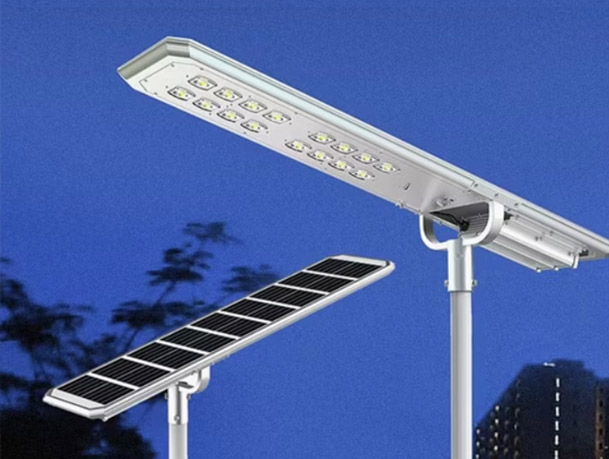
A panel that meets the energy calculation must still fit the bracket, shipping plan and wind design. Confirm orientation, tilt, shading, cable length, cleaning access, theft protection and the wind-exposed area. The pole and foundation must be calculated with the selected module and bracket.
Suppose the simplified nightly lighting load is 510Wh and two nights of autonomy are required. The load alone represents 1,020Wh. The selected battery nameplate energy must be higher after permitted depth of discharge, conversion efficiency and temperature are considered. If the system needs 650Wh of charging energy in a normal design day and the site has 4 design sun-hours with an assumed total charging efficiency of 75%, the preliminary module requirement is about 217W. These figures are illustrative only; project design must replace every assumption with verified inputs.
Provide the project coordinates, road lighting target, real nightly schedule, required autonomous nights, ambient temperature range, panel orientation constraints, pole height and quantity. Jieyao can combine the energy calculation with a lighting layout and pole design for a consistent system proposal.
It can hide the weakest season. Use the agreed lowest-design-month or another conservative project basis.
No. Voltage is required to convert Ah to Wh, and usable energy still depends on discharge, temperature, losses and BMS settings.
The required recovery period is a project decision. State it explicitly because faster recovery needs additional solar capacity.
No. Every real system has temperature, conversion, wiring, soiling and battery losses. Use declared efficiencies and appropriate margins.
Compare the 6m, 8m and 10m solar systems, or request a calculated configuration.
Contact Us
Get a custom lighting solution and quotation for your project. Outdoor lighting manufacturer in Yangzhou, ChinaAbout Jieyao LightingYangzhou Jieyao Lighting Equipment Co., Ltd. is an outdoor lighting manufacturer focused on solar street light systems and high mas... Do you have any questions or requests?
Email: jay@jieyaolighting.com

Click to Chat.
Im online now.