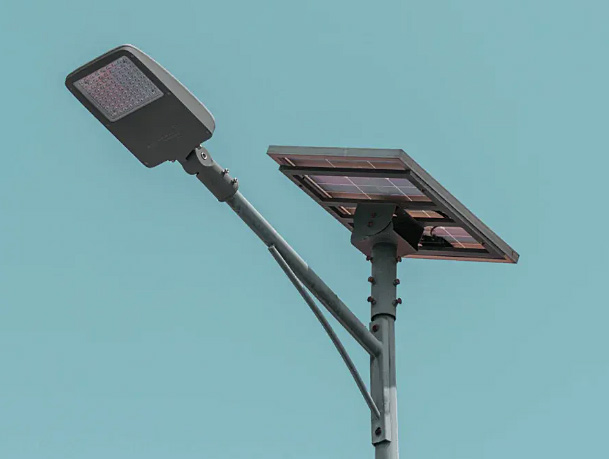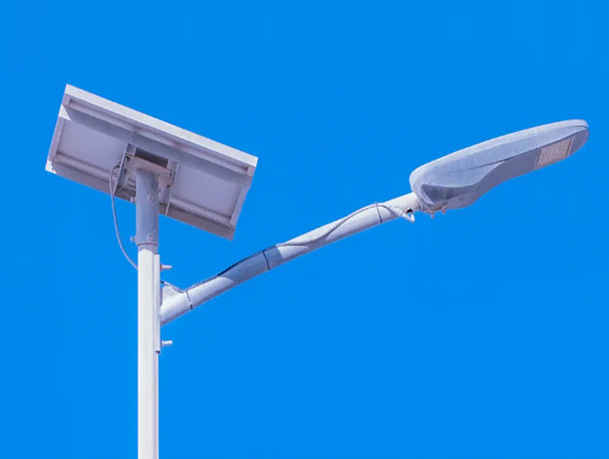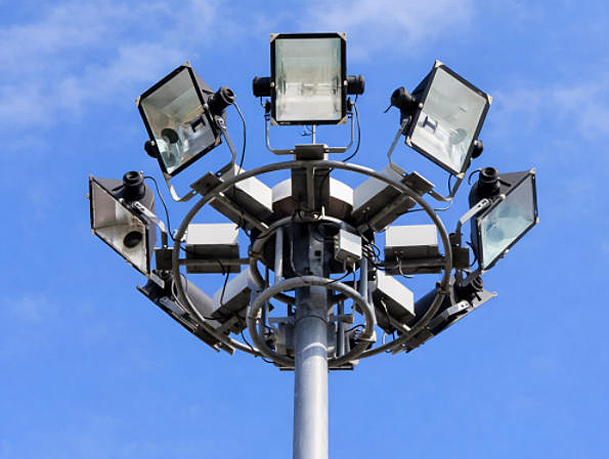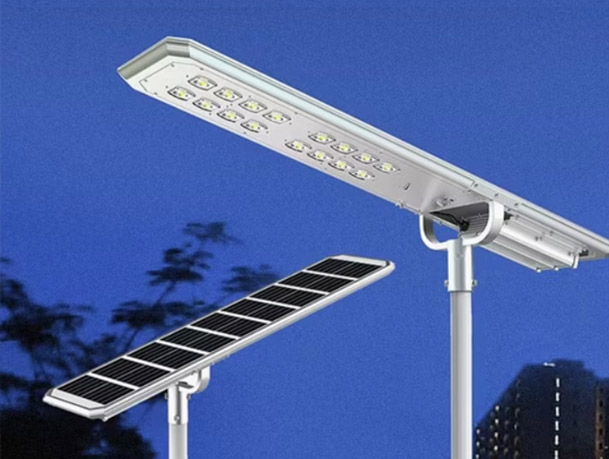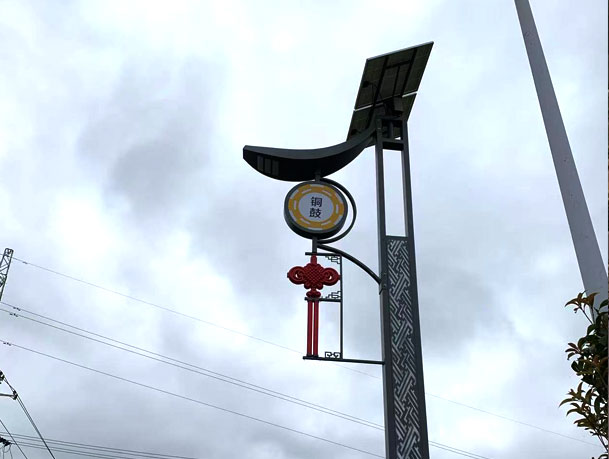


As smart city development progresses, lighting infrastructure along major thoroughfares in cities such as Dubai, Shanghai, and Barcelona is rapidly transitioning to “smart poles.” As a new type of integrated roadside infrastructure, smart poles combine a single steel structure and ground foundation with a wide range of functions, including LED lighting, 5G micro-base stations, video surveillance, environmental monitoring, EV charging, and information displays.
Currently, there are still misconceptions regarding the true nature of smart poles among procurement professionals. To address this, this article will deconstruct the technical core of smart poles from a manufacturing and engineering perspective and provide professional criteria for distinguishing between “system-level smart poles” and “traditional streetlights with simple add-on components.”
What a smart pole actually is
Smart poles (also known as multifunctional poles or smart light poles) achieve system-level integration by combining traditionally separate roadside infrastructure—such as lighting, telecommunications, surveillance, and signage—into a single steel structure, power supply, and data transmission system. Their core economic value lies in the “multi-pole-in-one” design, which significantly reduces costs associated with repeated excavation, foundation pouring, utility line installation, and post-deployment operations and maintenance, thereby transforming public infrastructure into a platform that can be shared by sectors such as telecommunications, transportation, and public security.
Currently, this sector is experiencing a surge of capital investment. According to forecasts by authoritative industry organizations, the global smart pole market is projected to reach between $15.51 billion and $28.86 billion by 2026, and will continue to grow to between $46.92 billion and $71.65 billion during the period from 2031 to 2034. Although there are differences in statistical benchmarks between various organizations (such as Coherent Market Insights and Precedence Research), both forecasts clearly indicate that the smart pole market will maintain a strong upward trend in the medium to long term.
The service layers on one column
Smart poles are physically supported by a unified steel structure and can be architecturally broken down into five functional layers, each corresponding to different stakeholders:
Lighting Layer (Base Layer): Ensures that road illuminance meets standards, and LED lamp heads often serve as core nodes in the smart control network.
Communication Layer (Top Layer): Deploys 5G micro-base stations, leveraging the pole’s height to ensure line-of-sight (LoS) signal coverage.
Sensing Layer: Integrates air quality, weather, noise, and traffic flow sensors to support urban data platforms.
Security Layer: Equipped with surveillance cameras and emergency call systems to enhance nighttime street safety.
Service Layer (Ground Level): Provides public services such as electric vehicle charging, public Wi-Fi, and information displays.
For network operators, the core value of this architecture lies in its robust remote monitoring and operations and maintenance (O&M) capabilities. Through an automatic fault early-warning mechanism, O&M teams can precisely locate faulty nodes before citizens file complaints, significantly improving the operational efficiency of streetlight assets on a scale of tens of thousands.
|
Smart pole layer |
Typical equipment |
Who uses it |
|
Lighting |
LED luminaire, dimming controller, photocell |
City lighting department |
|
Communications |
5G small cell, Wi-Fi access point |
Telecom carrier |
|
Sensing |
Air-quality, weather, noise, traffic sensors |
City data / environment office |
|
Safety |
HD cameras, emergency call point |
Police, public safety |
|
Services |
EV charger, info display, signage |
Transport, commercial tenants |
Buyers should treat this structural diagram as a “space leasing plan.” Each row in the table corresponds to a different tenant department or third-party operator and covers hardware installation, power commissioning, and uptime assessments. Therefore, before welding the structural components, smart pole suppliers must first complete the system-level design for the entire solution, including cable routing, internal compartments, access panels, and overall load capacity.
Real smart pole vs a tube with gadgets bolted on
Specification tables often overlook a key factor that determines a product’s lifespan (such as whether it remains upright for 15 years versus tilting within 3 years): Smart modules are standard commodities that any integrator can procure and install; however, the structural body itself—which must withstand wind loads, salt fog, and vandalism over the long term—is the core technological barrier.
At its core, a smart pole is first and foremost a structural engineering product. The communication and monitoring equipment mounted on its exterior generates bending moments and torsional loads that traditional light poles were not designed to handle. Therefore, the pole body must undergo precise structural calculations based on the wind load standards of the installation site to ensure the appropriate steel grade and wall thickness. Our steel smart poles strictly comply with EU standards EN 40 (Design and Load Ratings for Lighting Poles) and EN 1090 (Welding and Manufacturing Inspection of Steel Structures), and have consistently maintained CE certification.
Verifying a product’s authenticity through compliance testing is straightforward: simply request that the supplier provide structural mechanical calculation reports for specific project components. Manufacturers with in-house R&D capabilities can immediately deliver signed compliance reports, whereas assembly-and-resale businesses lacking structural design capabilities cannot. This criterion is a more effective way to quickly identify qualified suppliers than any list of features.
How the network and the rest of the system fit together
As physical hardware, the core of a smart pole’s intelligence lies in network convergence and a multi-layer software architecture. Whether it’s a telecom operator’s 5G small cell, a municipal environmental sensor, or a public security surveillance camera, each service tenant operates independently based on its own backend system. The smart pole uniformly provides power distribution, mechanical mounting, environmental protection enclosures, and cable ducts, while the data integration and lighting control platforms are hosted on the City Brain or the telecom operator’s core network.
This multi-tenant nature dictates a diversity of management responsibilities. Asset ownership of smart poles is typically held by local governments or concessionaires, with joint operation and maintenance carried out by multiple parties under the framework of a “Unified Usage Agreement (ULA).” High-standard smart pole design must support physical isolation, providing independently lockable maintenance compartments for different tenants to ensure that the operational paths of communications technicians and lighting maintenance personnel do not interfere with one another.
From the perspective of investment and financing models, streetlight retrofits serve as the primary anchor business and cost-structuring foundation for the implementation of smart poles. By leveraging the window of opportunity presented by upgrades to the urban lighting system and centralized road excavation projects to simultaneously deploy 5G base stations and sensor networks, synergies can be maximized. This evolutionary logic represents the practical path for smart pole projects, which “begin with lighting upgrades and succeed through platform empowerment.”
In summary, a smart pole can be defined as a system-level engineering structure that supports a variety of municipal and telecommunications services. The success of its construction depends on the engineering mechanics and structural design of the pole itself, rather than the mere stacking of peripheral devices. Before reviewing specific equipment parameters (such as camera resolution), evaluating the supplier’s structural load calculation report is the primary prerequisite for mitigating project risks.
FAQ
What is a smart pole in simple terms?
A smart pole is a multifunctional, integrated roadside infrastructure that combines LED lighting, 5G micro-base stations, video surveillance, environmental sensors, charging stations, and information displays. Through a “multi-pole-in-one” shared platform, it replaces traditional, independent single-purpose poles and enables the intensive use of resources by both urban management authorities and telecommunications operators.
How is a smart pole different from a normal streetlight?
While conventional streetlights are limited to basic lighting functions, smart poles achieve a deep integration of communications, security surveillance, environmental sensing, and value-added municipal services. The core difference between the two lies in their structural design: smart poles require complex mechanical modeling to accommodate the additional cantilevered equipment, as they must bear bending and torsional loads for which conventional lighting poles were not designed.
What equipment goes on a smart pole?
A typical smart pole integrates components such as LED lighting, 5G micro-base stations, security surveillance systems, Wi-Fi hotspots, environmental sensors, EV charging stations, and information display screens. As a multi-tenant shared platform, this structure can accommodate equipment and assets independently owned by various entities, including local governments, telecommunications operators, and public security agencies.
What makes a real smart pole different from a streetlight with gadgets added?
Compliant smart poles undergo rigorous structural mechanical calculations during the design phase and fully comply with the dual certification standards of EN 40 (Load-bearing Capacity of Lighting Poles) and EN 1090 (Quality of Steel Structures). In contrast, conventional streetlights assembled using “bolt-on” components—which have not undergone fatigue or stress analysis for externally applied loads—are highly prone to deformation, tilting, or structural failure under long-term loads and wind loads.
Who manages the network on a smart pole?
Smart pole assets are typically owned by local governments or concessionaires, while the services they support are managed by different entities. Under the framework of a “shared-use agreement,” telecommunications operators are responsible for operating 5G base stations, municipal departments coordinate environmental sensing and lighting control, and public safety departments independently manage security surveillance systems.
How big is the smart pole market?
The smart pole market has now reached the tens of billions of dollars in scale and is demonstrating a medium-to-high compound annual growth rate (CAGR). Regarding future market trends, leading industry organizations have provided their own quantitative forecasts:
Coherent Market Insights: The market is projected to reach $288.6 billion by 2026 and grow to $716.5 billion by 2031.
Precedence Research: Forecasts the market size to be $15.51 billion in 2026, expanding to $46.92 billion by 2034.
Although these forecasts differ in absolute terms due to varying statistical benchmarks, both growth models confirm that the smart pole market possesses a high degree of growth certainty in the medium to long term.
Can an existing streetlight pole be upgraded to a smart pole?
Although existing streetlight poles have the physical space to accommodate the installation of micro-sensors or surveillance equipment, they cannot, by their very nature, be considered system-level smart poles. During the initial design phase of traditional poles, the mechanical loads from 5G small cells and extended cantilevers were not factored into the calculations. Retrofitting these components later on can easily exceed the original structural load limits, posing a risk of structural failure and ultimately necessitating the replacement of the entire pole.
What certifications should a smart pole have?
A reliable smart pole must have a comprehensive engineering certification system: the pole structure must comply with the EN 40 (load-bearing design of lighting poles) and EN 1090 (manufacture of steel structures) standards; the equipment housing must meet the applicable IP (dust and water resistance) and IK (impact resistance) ratings; and its lighting performance must be verified through photometric testing in accordance with the IES LM-79 standard.
Contact Us
Get a custom lighting solution and quotation for your project. Outdoor lighting manufacturer in Yangzhou, ChinaAbout Jieyao LightingYangzhou Jieyao Lighting Equipment Co., Ltd. is an outdoor lighting manufacturer focused on solar street light systems and high mas... Do you have any questions or requests?
Email: jay@jieyaolighting.com

Click to Chat.
Im online now.