


Evaluate street-light-pole proposals on one documented technical basis, expose missing scope and assumptions, and carry the accepted configuration into post-award drawings without relying on price, total mass or generic catalogue claims.

A road lighting tender can return several proposals that appear similar on the cover sheet but price different structures, equipment interfaces and document packages. One bidder may include anchors and calculations, another may assume anchors are by others, and a third may use a smaller luminaire or a different wind interpretation. Comparing only total price, pole height or steel weight can therefore reward an incomplete scope rather than a suitable solution.
Road lighting tender evaluation should reconstruct the technical basis behind every offer. The purchaser needs to confirm that pole marks, geometry, attachments, wind inputs, finish, civil interfaces, documentation, inspection and logistics are aligned. The goal is not to declare a universally best supplier. It is to identify the proposal that meets the defined project requirements with visible assumptions and manageable deviations.
Create a controlled baseline that lists the issued drawings, schedules, specifications, addenda and clarification answers. Record revision numbers and issue dates. If one bidder priced an earlier drawing, its offer cannot be compared directly until the difference is identified. A simple tender document register prevents reviewers from treating inconsistent inputs as supplier performance.
Separate mandatory requirements from preferences and items open to proposal. Mandatory items might include the governing structural basis, fixed road geometry or required document format. Open items might include a proposed shaft profile, packing method or fabrication detail. This distinction lets the evaluation team accept a useful alternative without silently relaxing a critical project condition.
| Gate | Evidence to review | Release decision | Do not substitute |
|---|---|---|---|
| Bid validity | Document register, addenda receipt, signed schedules and bid validity | Accept for detailed review or request correction | A cover letter cannot replace returned schedules |
| Technical basis | Pole marks, geometry, all equipment loads, wind basis and materials | Comparable, clarified or technically nonconforming | Total mass alone does not prove equivalence |
| Interface scope | Luminaire, arm, door, base, anchors, foundation, cable and earthing boundaries | Responsibility gaps closed before award | A generic inclusion statement is insufficient |
| Evidence package | Drawings, calculations, inspection plan, records, packing and delivery schedule | Evidence and timing written into award conditions | A certificate list does not prove project coverage |
Use one register for questions, bidder answers, purchaser responses, open actions and final status. Give every item an identifier and link it to the tender clause, drawing or schedule row. Verbal discussions should be converted into a written answer before award. Otherwise the supplier, consultant and commercial team may remember different outcomes.
Distinguish a clarification from a deviation. A clarification explains an offered detail that remains within the requirement. A deviation proposes a different material, geometry, interface, document or process. The evaluator should state whether it is accepted, rejected, conditionally accepted or still open. A proposal with fewer listed deviations is not automatically better if its hidden assumptions have not been exposed.
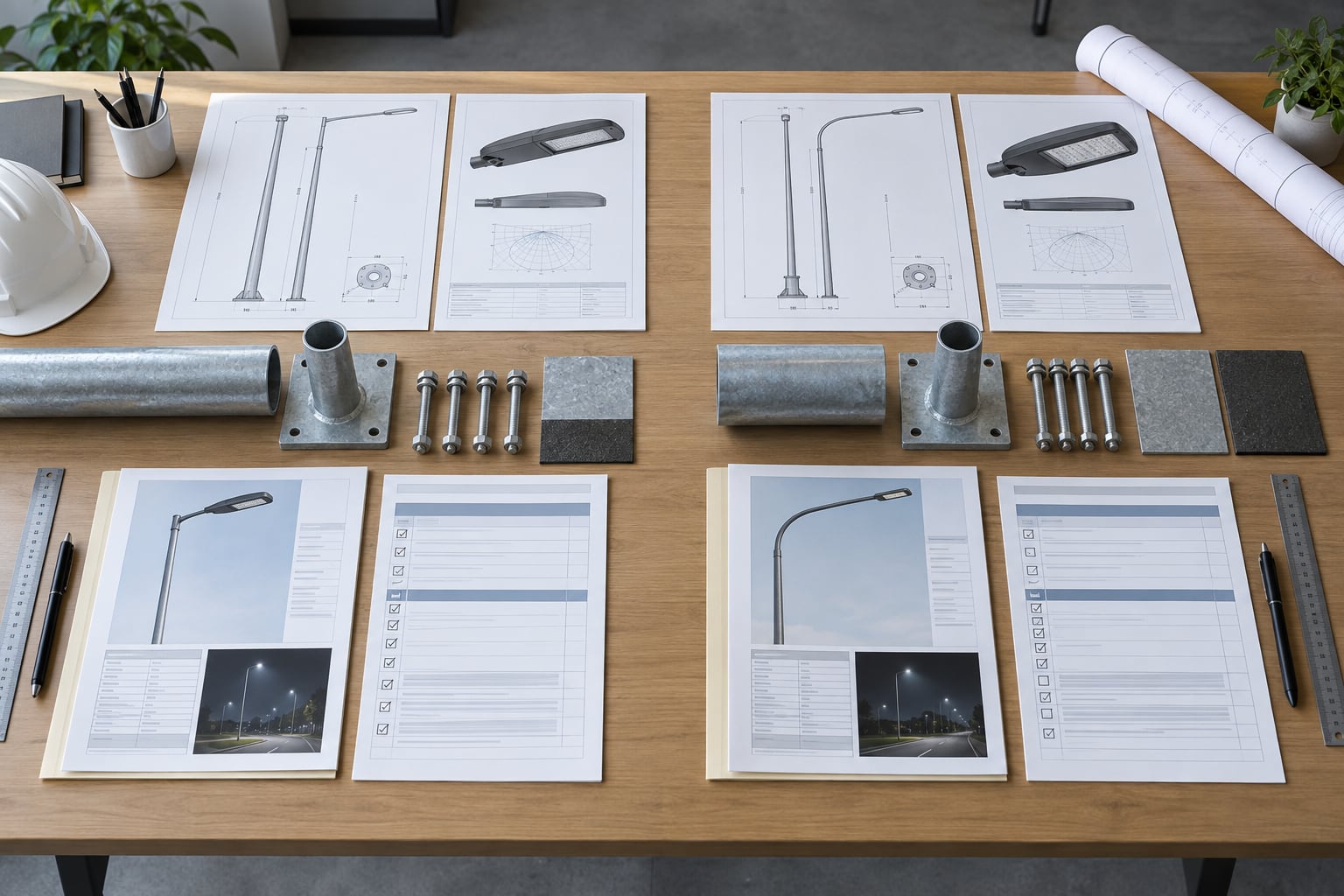
The evaluation schedule should preserve the project pole marks. For each mark, compare quantity, mounting-height reference, shaft shape, lower-end arrangement, arm count, outreach, rise, tilt, luminaire mounting and finish. Keep single-arm, double-arm, median, junction and special-equipment poles separate even if their nominal heights match.
A buyer reviewing roadside configurations can compare the offered interface with the 10m single-arm pole, while divided-road median work may need the distinct 10m double-arm arrangement. These product examples support geometry discussions; the tender schedule and project design remain controlling.
List every luminaire, arm, sign, camera, antenna, banner bracket and other attachment by pole mark. The schedule should include quantity, weight, projected dimensions or approved EPA, mounting elevation, offset and orientation. Electrical wattage is not structural load data. A compact high-output fixture may have less exposed area than a larger lower-wattage housing.
Check whether a bidder used the issued equipment or substituted another item. A substitution can change photometrics, arm fit, weight, wind area, cable entry and maintenance access. Require the offered equipment schedule and structural calculation to reference the same revision. Future attachments should be included only when the project has defined their loads and positions.
The pole tender may be part of a wider lighting package or may rely on luminaires supplied by another contract. In either case, confirm the photometric file, lumen-output setting, mounting height, outreach, tilt, orientation, calculation geometry and maintenance factor behind each submitted result. Two reports cannot be compared when they use different road widths, pole coordinates, surface grids or operating assumptions.
Check normal, reduced, emergency and any other required control state separately. A proposal that meets one summary value may still create a weak transition, unacceptable glare or an unreviewed dark condition when circuits dim. The lighting designer remains responsible for the adopted criteria and calculation acceptance. The pole evaluation should verify that the accepted mounting arrangement and structural equipment schedule match the photometric proposal.
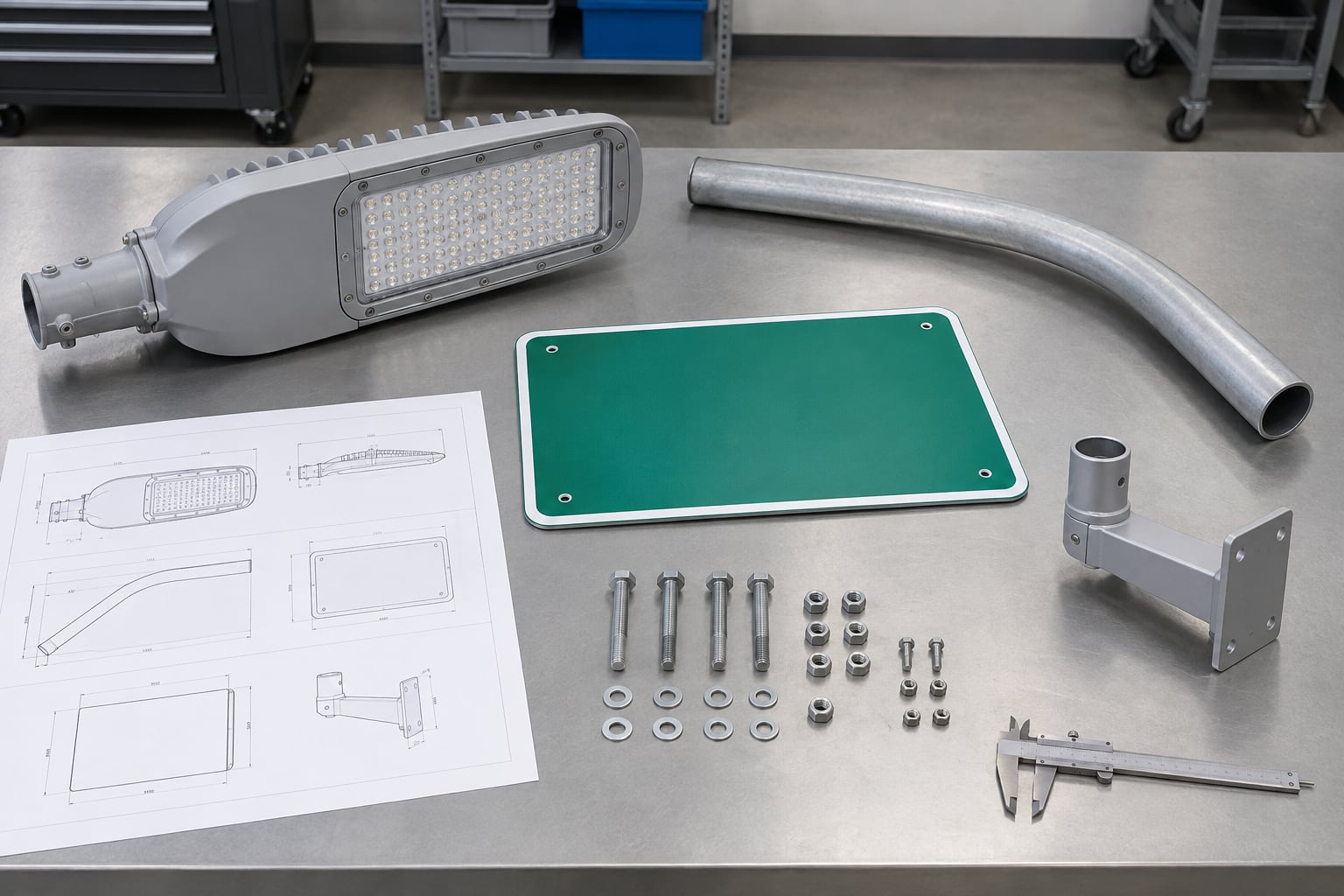
Confirm that each bidder used the same governing standard, wind-speed definition, terrain or exposure, topography, importance requirement and serviceability criteria. A context-free wind-resistance number is not a comparable design basis. The complete shaft, arm and attached equipment must be assessed together for the specified site conditions.
Review whether calculations cover strength, deflection, vibration, fatigue or other project requirements where applicable. The tender should define the required calculation format, responsible signatory and review stage. The wind-load and EPA checklist provides a useful model for organizing equipment and exposure inputs even when the project uses conventional road poles.
Wall thickness is one part of a designed assembly. Shaft width, taper, shape, segment length, steel grade, openings, arm connection, base detail and load distribution also influence performance. A thicker shaft is not automatically better, and a lighter shaft is not automatically inadequate. Compare the calculation basis and complete configuration rather than applying one universal thickness rule.
If the tender permits alternative shaft geometry, require the bidder to identify all changed dimensions and interfaces. Confirm transport length, slip-joint details, field assembly, door reinforcement and bracket fit. A commercially attractive alternative should not transfer an unresolved structural or installation problem to the site.
Compare the offered material specification with the design assumptions and tender requirements. Material names can vary by standard, so the proposal should state the applicable grade and properties rather than rely on an informal equivalence. Identify material certificates, traceability, weld procedure information and inspection records required by the contract.
Evidence should be proportionate to the project. A certificate title alone does not show that the supplied pole type is covered. Define which records are submitted with the technical bid, which follow after award and which accompany delivery. The evaluation should not claim that a document proves more than its stated scope.
The finish comparison should describe the complete system: fabrication before treatment, vent and drain provisions, hot-dip galvanizing requirement, any compatible organic layers, color, masking, handling, inspection and repair. Two proposals that both say “galvanized” may include different evidence, touch-up procedures or packing protection.
Coastal or salt-exposed projects may require a defined duplex system rather than an undefined marine-grade label. The coastal duplex-coated pole explains the additional interface questions. The project specification still determines the accepted exposure category, coating system and inspection criteria.
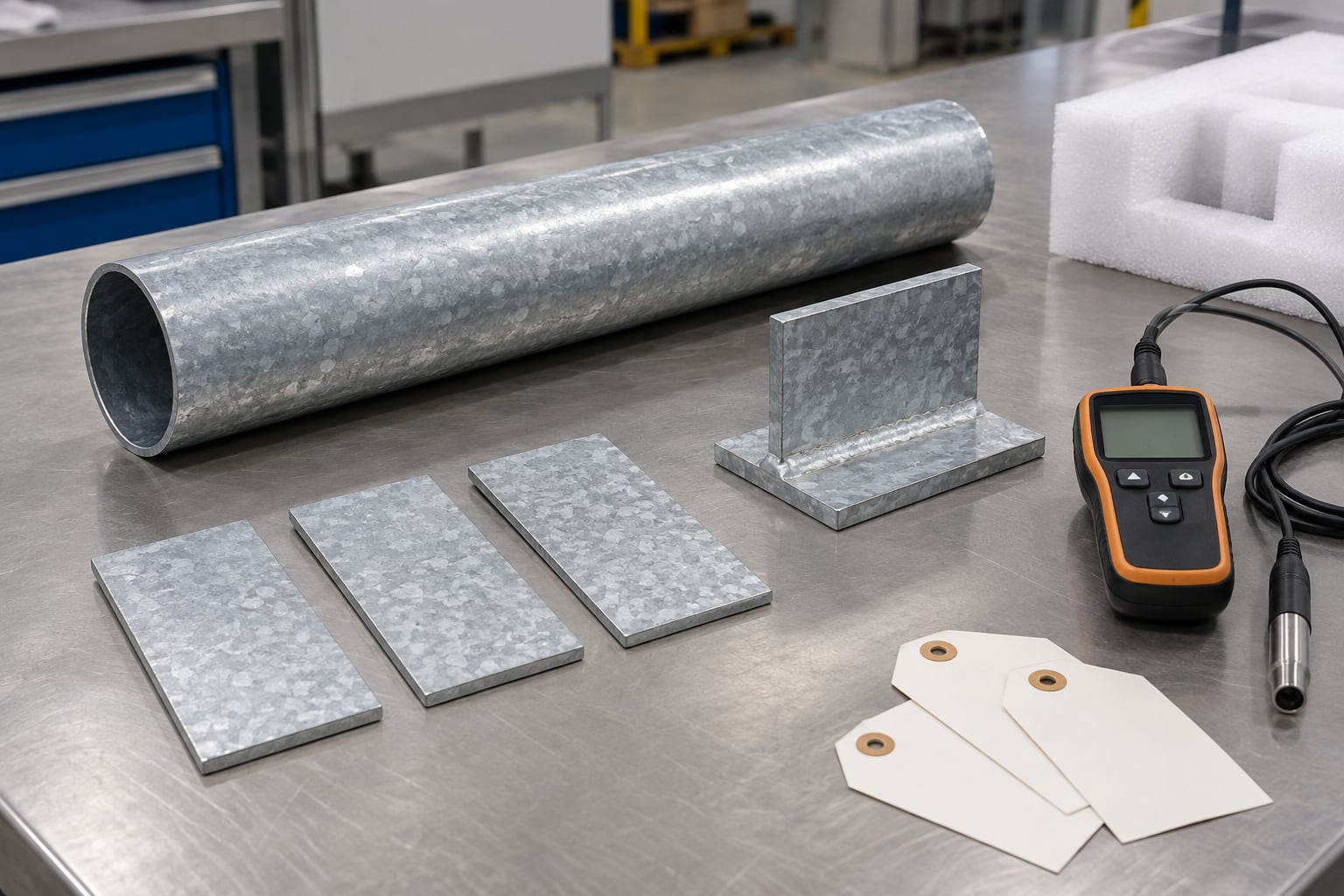
Compare outside diameter, insertion length, fixing method, tilt, rotation control and cable path at the luminaire connection. Review arm reach, rise, bend radius, flange or spigot detail and field assembly. A bidder should not assume that a nominal mounting diameter guarantees fit with the selected fixture.
Request a coordinated interface drawing before fabrication release. If luminaires are supplied under another contract, identify who confirms the mechanical and electrical fit. Record whether trial fitting, loose brackets or installation hardware are included. These details are small compared with the shaft but frequently control site readiness.
Review access-opening dimensions, position, orientation, reinforcement, cover, fasteners, gasket, internal earthing point and terminal-equipment allowance. The door should be reachable without forcing technicians into active traffic where the project layout provides an alternative. It should also remain clear of barriers, landscaping and the finished ground level.
Clarify whether terminal blocks, fuse gear, cable supports, earthing conductors or internal wiring are included. Structural drawings and electrical schedules should use the same opening and cable-entry arrangement. A large door does not automatically provide a better solution if reinforcement, sealing or working space is unresolved.
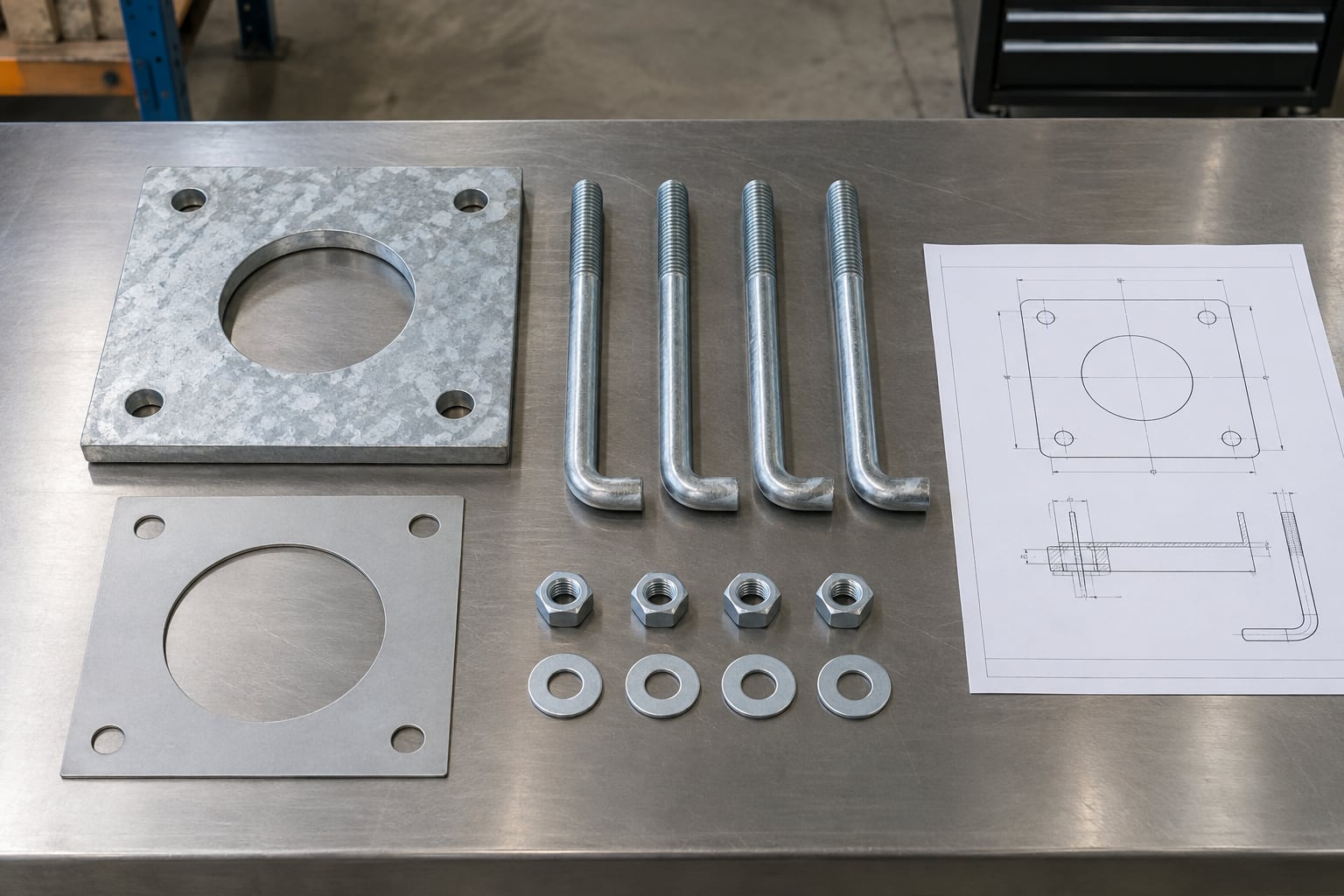
Confirm base-plate dimensions, bolt circle, hole size, stiffeners, grout allowance, anchor diameter, length, projection, material, nuts, washers and template. Identify whether anchors are supplied with the poles or procured locally. The civil design should use the accepted pole reactions and actual anchor interface rather than a catalogue sketch from another configuration.
The foundation and anchor-bolt guide explains the information handoff between the pole supplier and foundation designer. Tender evaluation should close that boundary before award, including responsibility for soil data, foundation calculations, templates, conduits and pre-pour checks.
Create a responsibility matrix for poles, arms, luminaires, brackets, anchors, foundations, ducts, cables, earthing, unloading, erection, connection, testing and commissioning. Every bidder should mark inclusions, exclusions and information required from others. This prevents a low offer from appearing complete while moving important work into an undefined by-others category.
Use the same matrix for all suppliers. If a bidder proposes additional scope, price and evaluate it separately from the compliant base offer. Interface ownership should be assigned to a named contract package or responsible party, not left as a general coordination note.
A document list is useful only when issue stages are defined. State which drawings accompany the bid, which are submitted after award, which require approval before material purchase and which release fabrication. Include review cycles, response periods and acceptable formats where the contract needs them.
After award, detailed review moves to the street-light-pole shop-drawing checklist. The tender evaluation should therefore capture all accepted deviations and assumptions so they are not rediscovered during shop drawing review. The approved commercial offer, technical schedule and clarification register must agree.
Define required inspection stages, records, witness points and release documents. These may cover material receipt, dimensions, welding, galvanizing, color coating, trial fitting, markings, packing or other project-specific checks. State who reviews records and whether third-party attendance is required.
Do not treat an unrelated factory certificate as evidence for the project lot. Conversely, do not demand unnecessary records without defining an acceptance criterion. A clear inspection and test plan connects each check to a requirement, method, frequency, responsibility and record.
Compare more than the promised delivery date. Review the sequence for design inputs, supplier questions, drawing submission, calculation review, material release, fabrication, coating, inspection, packing and shipment. A short quoted lead time may assume immediate approval of unresolved fixture, wind or anchor data. Record those assumptions so the program risk is visible.
Identify long-lead inputs and the latest date for purchaser information. Foundation work may need anchor drawings before pole fabrication is complete, while luminaire data may be required before structural calculations can close. The award schedule should state which documents may be released early, which approvals control manufacturing and how late project changes affect delivery.
Warranty wording should identify the supplied items, start point, duration defined by the contract, exclusions, notification process, evidence required and available remedy. It should not be compared through a headline period alone. A broad statement may exclude coating damage, third-party luminaires, installation errors, altered attachments or inaccessible sites.
List required spare doors, fasteners, gaskets, terminal components, repair materials or special tools separately. Confirm whether they are included in the base offer, packed with a particular shipment or priced as options. Assign responsibility for damage found at receipt, during erection and after commissioning so the project does not discover an undefined boundary when a replacement is needed.
Pole marks should connect the layout, schedule, drawing, calculation, fabrication record, packing list and site position. Review the proposed marking method and location so it remains legible without damaging protective finishes or confusing similar pole types. Segments, arms and anchor cages may need matched identifiers.
Traceability should be practical for the project. The tender should specify which materials, welds, coatings or inspections need linked records. Avoid vague demands for full traceability when no retrieval method or acceptance purpose is defined.
Compare bundle size, separators, wrapping, end protection, accessory crates, anchor packaging, container loading and marking. Confirm maximum shipping length and whether shafts are one piece or segmented. Packing should prevent abrasion, water traps and component mixing while remaining practical for unloading and inventory.
The delivery schedule should follow installation priorities rather than only factory convenience. If a project opens work fronts in phases, poles, anchors and accessories need compatible sequencing. Clarify whether spare parts, touch-up materials, lifting points and special handling instructions are included.
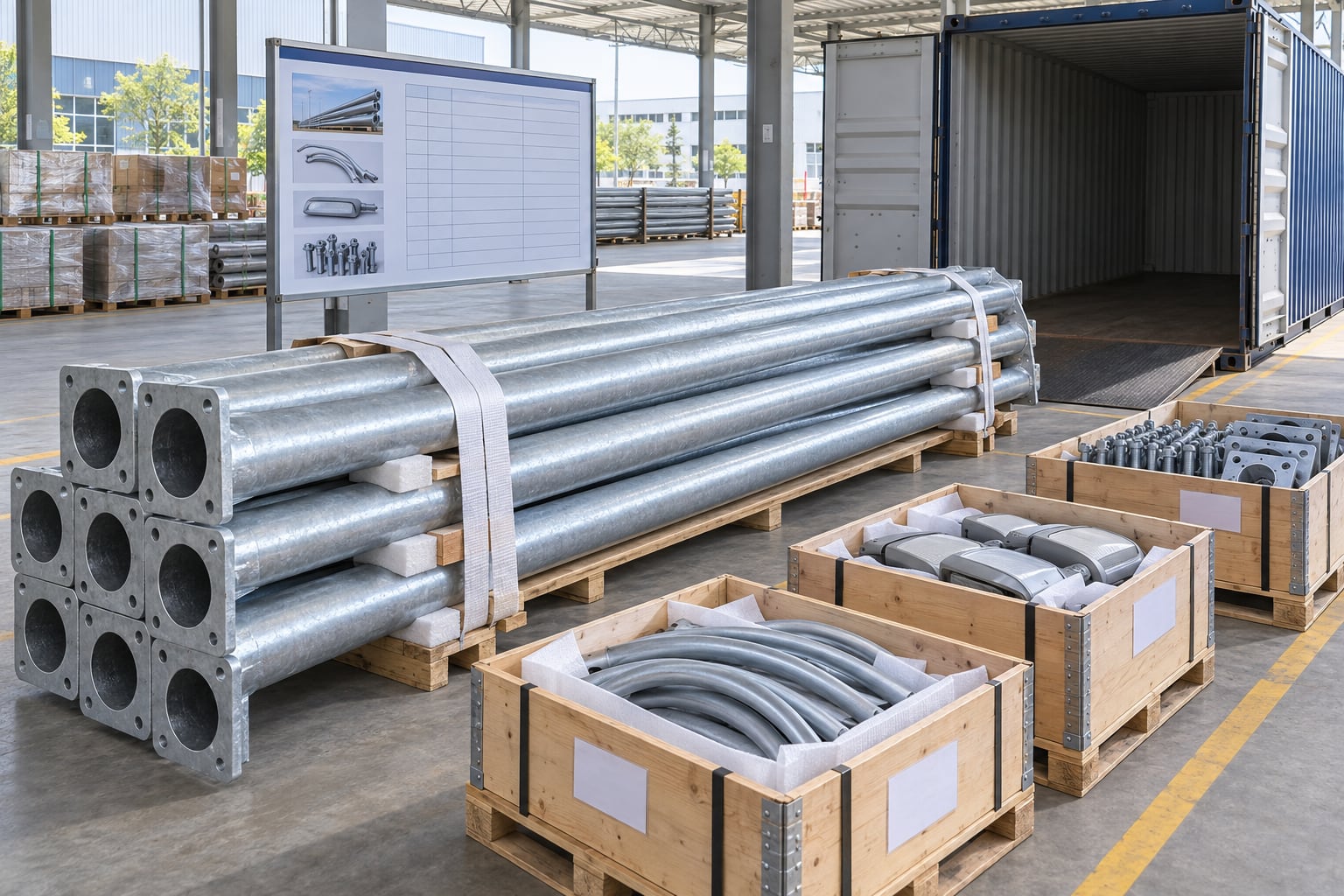
Technical equalization identifies the common compliant scope and the value of additions or omissions. The commercial team can then compare prices, payment, delivery and warranty conditions against the same technical package. Public unit-price tables or context-free supplier rankings do not replace project-specific evaluation.
Record the cost and schedule effect of accepted alternatives separately. An apparently lower bid may exclude anchors, calculations, inspection attendance, packing or inland delivery. An apparently higher bid may include scope that another bidder left open. The award recommendation should make these differences visible rather than hide them in a single adjusted total.
A weighted technical score can help a multidisciplinary team compare complete proposals, but it should not average away a critical nonconformance. Define pass/fail gates for mandatory loads, interfaces, safety-related criteria and document commitments before scoring preferences such as packaging detail, optional support or proposed workflow. Record the evidence behind each score rather than relying on reviewer impressions.
Use consistent weighting and independent review where the procurement procedure requires it. Resolve unusually high or low scores through a documented moderation step. The final recommendation should show mandatory compliance, open risks, accepted deviations and normalized commercial scope alongside the score, allowing decision makers to understand why the preferred proposal is supportable.
| Comparison field | Common tender basis | Bid evidence | Evaluation output |
|---|---|---|---|
| Pole assembly | Marks, quantities, height reference, shaft, arm and top connection | Returned schedule and preliminary arrangement | Compliant, alternative or missing data |
| Design inputs | All attachments, wind basis, materials and serviceability criteria | Load schedule, assumptions and calculation index | Comparable or clarification required |
| Interfaces | Luminaire, door, base, anchors, conduits, earthing and foundation | Interface drawings and responsibility matrix | Gap owner and closure date |
| Finish and quality | Finish system, inspection stages, acceptance evidence and repair | Process proposal, ITP and sample records | Accepted evidence plan or deviation |
| Delivery package | Drawings, records, packing, spares and phased delivery | Document schedule, packing method and delivery plan | Included scope and award condition |
Supplier evaluation can review relevant manufacturing processes, engineering resources, quality controls, document capacity, production planning and export packaging. Request evidence that relates to the proposed scope. A large factory image, long customer list or broad certification claim does not by itself prove ability to deliver the defined pole package.
Use consistent questions and record the evidence reviewed. Where a site audit, sample, trial fit or reference check is required, define the purpose and acceptance method. Avoid publishing subjective supplier league tables. The award record should explain how project-specific risks were assessed and controlled.
An alternative proposal can create value when it reduces interfaces, simplifies transport or improves maintainability, but it should not blur the compliant base offer. Require the bidder to state every departure, affected drawing, calculation, quantity, program item and responsibility. Evaluate photometric, structural, civil, electrical and maintenance consequences together.
If the alternative is accepted, incorporate it into the final technical schedule and award conditions. Do not rely on a presentation slide or meeting note. The post-award drawing package must reflect the accepted alternative from its first revision.
Open items should have an owner, due date and contractual treatment. Some may be conditions precedent to award; others may be controlled post-award submissions. The team should know which items could change price, program, structural design, foundation work or luminaire compatibility.
Avoid awarding on an assumption that a missing calculation, anchor detail or finish procedure will be resolved later without consequence. Early closure is especially important for long-lead materials, anchor procurement and civil works. The industrial application workflow in the industrial park road-lighting guide shows how operational zones and interfaces should remain linked through procurement.
Create a final technical award schedule that lists the accepted pole marks, equipment, wind basis, materials, finish, interfaces, documents, inspections, packing, delivery and deviations. Reference the final clarification register. This schedule becomes the bridge between tender evaluation, purchase order and shop drawing review.
Changes after award should use a controlled request that identifies affected poles, drawings, calculations, foundations, cost and program. Keep superseded information out of the fabrication release package. A stable handoff reduces the risk that a commercially agreed change appears only after steel or concrete work has started.
Confirm every bidder used the same drawings, pole schedule, equipment loads and wind basis.
No. Compare the complete designed assembly, calculations, interfaces and specified requirements.
List each departure against the tender requirement and record its status before award.
Not alone. Shaft geometry, grade, openings, arms, loads and design basis also matter.
The responsible foundation designer uses accepted pole reactions, anchors, soil and site data.
Technical equalization comes first; commercial comparison follows on the normalized scope.
Review the specified system, process, inspection evidence, repair method and packing protection.
After award under the agreed schedule, before fabrication release and affected civil work.
Yes, when every technical, commercial and program effect is identified and approved.
Include the accepted schedule, clarifications, deviations, responsibilities and evidence timing.
Send the issued pole schedule, equipment data, wind basis, finish requirement, anchor and foundation boundary, document register, inspection scope, quantities and delivery destination. Jieyao can organize the technical response around the defined project basis and identify inputs that remain open before quotation comparison.
Request a Technical Proposal Review
Street Light Pole Height Guide: How to Select Moun
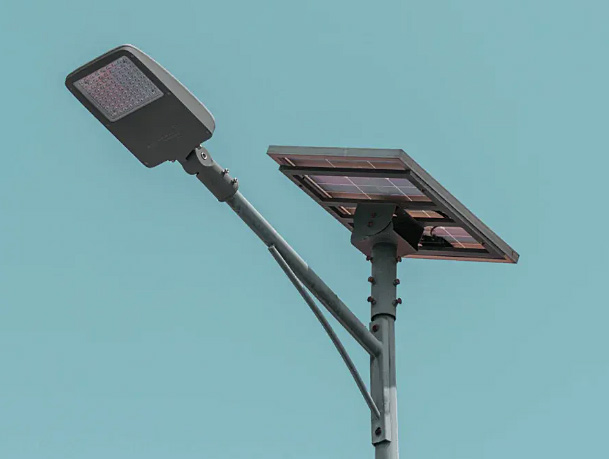
Integrated and Split Solar Street Lights Compariso

How to Choose the Right Solar Street Light Pole

Street Light Pole Cost Factors and Quotation Compa
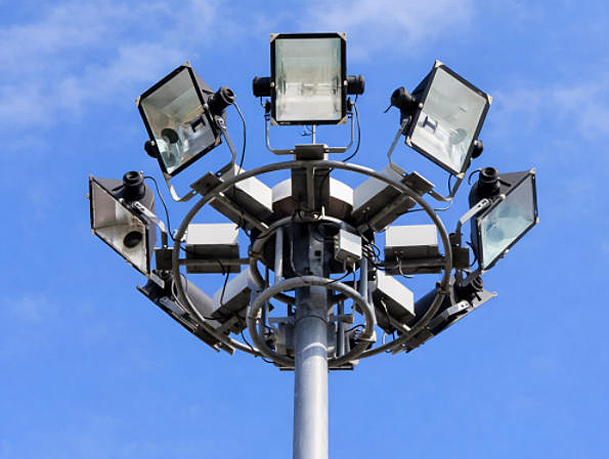
High Mast Light Specifications and Selection Guide
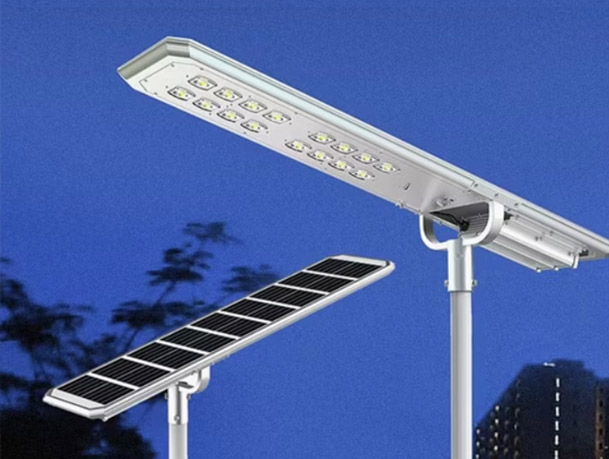
Features of All in One Solar Street Lights

How to Choose the Right LED Street Lights for Your
Select the Right LED Stadium Light for Football Pi
6-meter steel lamp post, 150W solar landscape ligh
Solar Street Lights Installed at Baybay Black Sand
Contact Us
Get a custom lighting solution and quotation for your project. Outdoor lighting manufacturer in Yangzhou, ChinaAbout Jieyao LightingYangzhou Jieyao Lighting Equipment Co., Ltd. is an outdoor lighting manufacturer focused on solar street light systems and high mas... Do you have any questions or requests?
Email: jay@jieyaolighting.com

Click to Chat.
Im online now.
Hey, I'm Xu Jie from Jieyao Lighting. What can I do for you? Welcome to contact me, WhatsApp: +86 13815843784
WhatsApp Us
🟢 Online | Privacy policy